Farmer Confidence Wavers Despite Decade-High Profits – Feds Survey
Will the good times last? That's one of the key issues to come out of the latest Federated Farmers confidence survey.




 increase font size
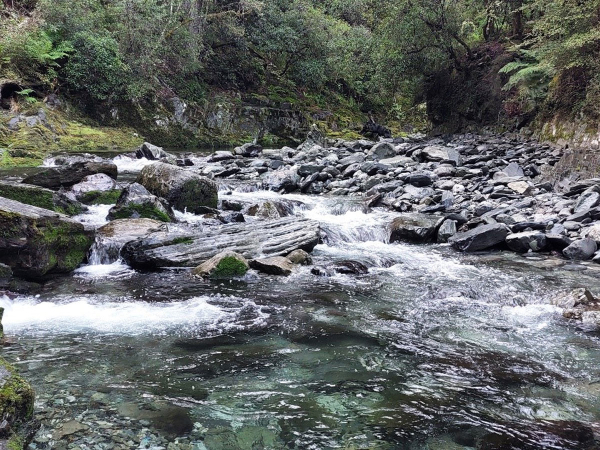 Freshwater farm plans will need to be certified and audited.
Farmers are urging the Government to simplify freshwater farm plans and make the whole process simpler and more affordable for them.
Federated Farmers wrote to the Government this week, calling for “urgent and significant changes”.
Freshwater farm plans, legislated under the Resource Management Act 1991 (RMA) and the Resource Management (Freshwater Farm Plans) Regulations 2023 regulations farmers to do an on-farm freshwater risk assessment and identify actions to either manage or mitigate those risks.
Freshwater farm plans will need to be certified and audited. The results of certification and auditing will be reported to the respective regional council.
Federated Farmers national vice president Colin Hurst says that with the right settings farm plans present a huge opportunity to improve environmental outcomes, reduce duplication and remove the need for farmers to obtain expensive and time-consuming consents.
Unfortunately, the current framework is ‘a complete dog”, he says.
“It’s put in place an impractical and inefficient system where it’s incredibly expensive to write, certify and audit the plans.
“To make matters worse the rules go too far and capture all properties over 20ha, and existing industry or council farm plans are not recognised.
“There is a frustrating level of duplication with most farmers still required to get a resource consent in addition to their farm plan.”
Federated Farmers wants the Government to put in place a practical, pragmatic and effective system that will improve environmental outcomes while reducing the regulatory burden and unnecessary cost.
Hurst says they don’t want to see another expensive ‘box ticking’ exercise that ties farmers up with endless and arbitrary paperwork for very little environmental gain.
“What we’ve asked for is a tiered system that takes a risk-based approach, where the level of plan you need to put in place is determined by your specific catchment and farming activity.
“These plans should be a replacement for, not in addition to, expensive resource consents for things like winter grazing and stock exclusion.
“They should also replace the need for some of the impractical one-size-fits-all regulations applied nationally and allow farmers and catchments to tailor their environmental improvement actions to match local needs.”
Will the good times last? That's one of the key issues to come out of the latest Federated Farmers confidence survey.
Mid Canterbury Federated Farmers arable chair, Bevan Lill, said Beef + Lamb NZ data indicated that for the last six years, the average arable return on investment was about 0.8% while inflation ran about 4% - so the average arable farm was going backwards at about 3% a year.
For the first time in a quarter of a century, Federated Farmers has something positive to say about the Labour Party’s climate change policy leading into a general election.
Rural leader Mark Hooper has been appointed as an independent director to the NZPork board, bringing extensive farming, governance and advocacy experience to the role.
The terrible floods that hit the Wairarapa may have subsided, but the danger to farmers still exists, according to local Federated Farmers president Rob Hickson.


A spate of southerly winds bringing cold temperatures has presented challenges for Taranaki dairy farmers.
Converting a longstanding cropping farm to dairy was the only way to ensure the land stayed in the family long term, says new dairy farmer Rod May.
As the election heats up, Organics Aotearoa New Zealand (OANZ) has launched its election scorecard designed to help voters wanting to support policies that grow organic and New Zealand's organic sector.
A 'tsunami' of milk from key exporting countries is winding down and this may be good news for New Zealand dairy farmers.
Will the good times last? That's one of the key issues to come out of the latest Federated Farmers confidence survey.
Outgoing Fonterra Co-operative Council chair John Stevenson says that it has been a privilege to represent the co-op's farmer shareholders.




OPINION: The same mainstream media muppets that brought you Jacindamania in 2017 have been flat out pimping for the Opportunities…
OPINION: Your old mate reckons the atrocious way farmers in the UK are treated by their lords and masters in…




