New Zealand Wine Vintage 2026: Regional Harvest Results and Industry Outlook
Vintage 2026 yielded excellent fruit for most New Zealand wine regions.




 increase font size
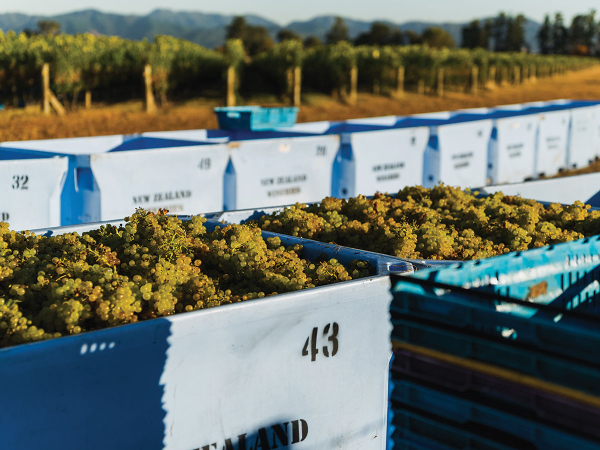 Jules Taylor Wines’ Clone 95 Chardonnay harvest at Meadowbank Vineyard, vintage 2026. Photo Credit: Fold in the Map Photography
As a harvest buzz rolls down the country, Sophie Preece gets some vintage views.
Harvest kicked off earlier than ever for vintage 2026, with Northland growers picking by 23 January, Hawke’s Bay starting a week ahead, and Marlborough’s sparkling harvest bright and early, with a mid-February start date. Central Otago is running behind a typical year, thanks to challenging conditions, but a run of warmer weather has ramped up ripening, says winemaker Matt Connell on 20 March. “I don’t think we’ll be too far behind normal. And when we get started, it will probably be a bit of a condensed vintage.”
Michael Brajkovoch, from Kumeu River in West Auckland, started with sparkling base wine on 4 February, “which is about normal these days”. Chardonnay’s harvest ran from 16 February through to 13 March, and “the wines are outstanding”, he says. January was quite wet in comparison to most years, but February and March were particularly dry “and allowed for very nice finishing of the fruit on the vine”, Michael says.
Kumeu River also grows fruit in Hawke’s Bay, which was wetter than usual in January, “but with some particularly warm days as well”. Kumeu River’s harvest there started with Pinot Noir on 18 February, around a week earlier than usual, followed by Chardonnay on 24 February. “Harvest was completed under very dry conditions and finished on 10 March,” Michael says, noting that Rays Road in Hawke’s Bay was “superb” for both Pinot Noir and Chardonnay. “We are looking forward to seeing how these wines develop over the next weeks and months.”
Ian Quinn, from Two Terraces (see page 19), says Hawke’s Bay’s weather offering was “kind” this season, with “a very warm spring and great flowering, some rain in January, keeping moisture in the soil profile, but relatively dry and settled since”. They had an early start with Chardonnay, on 23 February, followed by other varieties coming on in ripeness “pretty quickly”. Speaking on 20 March, Ian says they finished Chardonnay and Albariño on 15 March, and are working on Chenin Blanc, with Syrah looking “great” for picking before the end of March. A string of three strong vintages, from 2024 to 2026, “should enable Hawke’s Bay to keep building its reputation at the quality end of the market”, he adds.
Te Mata Estate Viticulturist Brenton O’Riley, says fruit quality looks “outstanding” across all the estate vineyards. “White varieties are coming in beautifully, showing great purity, balance and freshness, which is always encouraging early in the season,” he says on 24 March. “That said, the real excitement is building around the full‑bodied red varieties, with Cabernet Sauvignon, Merlot, Cabernet Franc and Syrah all showing excellent concentration, structure and depth as they approach the tail end of harvest. Everything we’ve seen so far points to an excellent 2026 vintage of outstanding wines.”
Wairarapa winegrowers dodged an onslaught of bullets this growing season, escaping spring frosts fairly lightly, a pre-Christmas hail event without major damage, then big warm winds in January, which threatened to dry vineyards out. Rainfall came just in time and freshened up vines, holding vineyard health steady, says Wairarapa Winegrowers Association Chair Wilco Lam. The region had good flowering conditions, but many have controlled their crops this year, following a “bumper” 2025 season, Wilco adds, “and it was really the year to do it”.
There was speculation that harvest would begin very early, in February, but cooling weather slowed things down at the end of January, and dates settled a little closer to a typical season. Wilco’s Oraterra harvest started at the end of the first week of March, along with others, “then really got into it mid-March”. After all that dodging, the region had a “really great” finish to the season with beautiful harvest weather, he says on 24 March. “It’s been magnificent, especially in the last three or four weeks.”
Nature made up for a somewhat absent summer in Marlborough as well, with perfect conditions leading into the grape harvest. “What a glorious time, so far,” says winemaker Jules Taylor on 20 March. “Autumn feels like it has come early with beautiful crisp, clear mornings and lovely warm days.” Flavours across all varieties are “superb”, and acids are holding up well with cooler nights, she adds. “Crops are ripening nicely and I’m super excited to see how the flavours transform.”
Tohu winemaker Bruce Taylor is similarly enthused, talking of the weather “playing ball”, with big blue March days on the tail of a cool summer. Tohu started its harvest on 16 March in the lower Dashwood, followed by blocks in the lower Awatere Valley, then Waihopai Valley. It’s the earliest harvest Bruce has seen in 16 years with the company and, even with a pause until the Upper Awatere Valley is ready, he expects to be done by the end of March, rather than the first week or two of April, as is typical. With fewer grapes coming in, and a long late summer for ripening, the winery is relatively relaxed, he says on 23 March, with half the harvest done, and a chilled switch to overnight harvesting only. There’s rain on the horizon, but Bruce is relaxed about the clean fruit still ripening in the cooler climes of the upper Awatere Valley.
Managing Supply
Tohu has brought forward a vineyard redevelopment in the upper Awatere to help manage supply this season. “We really wanted to respect the contracts that we’ve got with growers, and make sure we’re looking after our long term partners,” Bruce says. “One of the levers that we could pull was bringing forward redevelopment.” They had already started a replanting programme on the 50-hectare Sauvignon Blanc block, with 25ha replanted by last spring. In winter 2025 they pulled out another 25ha, which will be left to fallow under cover crops until 2027 or 2028, depending on demand. That was two years earlier than planned, but helped reduce supply for this harvest and protect grower relationships, while also reducing costs for the 2025 and 2026 pruning seasons.
Bruce says Tohu still has “pretty solid” sales, if not the growth trajectory of the early 2020s. “We realise that we’re going to need more fruit in the coming years, but we also have lease blocks and other developments coming on stream, including the 25ha we’ve replanted in the last couple of years, which will start feeding us more fruit from 2027 onwards.
Hamish Morrow, a director at WK Advisors and Accountants in Blenheim, has a spread of wine clients, from small growers to vertically integrated wineries.
He says the challenging period being faced by the wine industry follows a series of good financial years, so “their balance sheets are in a position where can probably handle a couple of lower profitability years”.
Many Marlborough growers without contracts are choosing to remove or mothball their vineyards, while others are reducing operating costs “as best they can”, with reductions in labour, sprays and fuels. Meanwhile, branded Marlborough wine companies are performing pretty well, thanks to a “reasonable diversification of customer bases” and the cost of fruit coming down significantly, he says. Companies exposed to the bulk wine market will have felt more pain from the oversupply, but such a dip in fortunes is typical of the corrections that happen in agricultural sectors when supply gets out of balance, he says. “It’s still a fantastic product, and it still performs very well.”
Down in Central Otago, on the cusp of a later-than-typical season, winemaker Matt Connell is similarly buoyant. “It’s that old adage that pressure makes diamonds. So people that have been in wine for a long time and know what they’re doing and are making a good product are finding a home for it.”
When summing up this season, Matt notes that “Mother Nature has a funny habit of trying to even things out”, Winegrowers were nervous in February, thanks to cooler weather and lower than average growing degree days, he says. “But in my experience, grapevines don’t care too much about growing degree days. They just want to get ripe.” And that’s what they’re doing. Speaking on 20 March, with two weeks of good weather bolstering ripening, harvest dates are inching closer to average, he says. Vintage has potential to be compressed when it arrives, “because a lot of things seem to be tracking along with the same sort of numbers”.
Matt, who makes his own label, as well as contract winemaking, says 2025/2026 was the most mixed weather season he has seen in his 21 years in Central Otago. Flowering was good across subregions, apart from Gibbston Valley, which is carrying significantly lower crops – perhaps fortuitously given the season, he says. But that spell of mostly fine weather was followed by more rain and wind than a typical season, and less heat in January and February. “We have had a lot of nice days, but not the block of a month or so of pretty intense heat we normally look for,” he says. “After a good run of pretty consistent vintages, weather wise, it’s definitely been a bit of a change.”
He’s nonetheless positive about the harvest, noting that companies have been strategic with crop loads, which are mostly “decent” but not excessive. The spell of improved weather in mid-March improved the outlook and the long term forecast is for a summery autumn, with conditions set to be “a bit warmer and a bit drier than average”, he says. “So I’m pretty optimistic.”
Matt started picking for sparkling wine on 12 March, with fruit riper than he’d expected, and anticipated starting harvest on his own vineyard in Lowburn by the end March, five days later than typical. There’s mixed berry size across the region, along with some hen and chickens, but “really good flavours out there”, he says.
Despite challenges, in wine and beyond, the Central Otago wine community remains buoyant, Matt says. “If you have been in it for a while and you’ve got good relationships with your distributor, your agents, and restaurateurs around the world, not just domestically, you need to keep putting effort into that. I think, if anything, some of that’s improved just through honest and open conversations… People are still smiling, and getting on about it, and working hard to sell their product. And we’re doing the best we can to make worldclass wine.”
BRIght Ideas
Harvest is “full speed ahead” at the Bragato Research Institute research winery, with nearly 20 projects and more than 200 ferments for vintage 2026. Viticulture and Innovation Lead Ross Wise MW says things have been very busy since getting into “Sauvignon Blanc territory” in mid-March, when the winery went into two 12 hour shifts. “The fruit’s been really good,” he says. It’s looking like a great vintage. Some of the flavour we’re seeing on the early Sauvignon Blanc is incredible.”
The main project for the harvest is the second year of the Next Generation Viticulture programme winery trials, which will see 85 ferments in the winery’s 17-litre tanks. The fruit comes in by the crate rather than the truckload, but once at the winery, they mimic the conditions of commercial winemaking. Fruit is destemmed into bins, then left to sit, and occasionally shaken, to emulate skin contact over a truck ride.
As well as a series of commercial trials, BRI is also running its own yeast trials on Sauvignon Blanc, to evaluate the impact of different non-Saccharomyces yeasts on alcohol levels of wine. They will also make some reduced alcohol wine, at around 7-8%, and then trial different mouthfeel enhancers, working to replace the body taken away when alcohol is removed from wine, Ross says. “So sort of two trials in one for that project.”
Vintage 2026 yielded excellent fruit for most New Zealand wine regions.
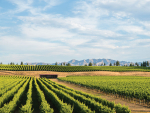
Grape growers who failed to sell their crop this year will be considering their options for vintage 2026, says WK Blenheim director Hamish Morrow.


One of Australia's most decorated winemakers will speak at the Aotearoa New Zealand Chardonnay Symposium in Hawke's Bay this September.
The third Aotearoa New Zealand Chardonnay Symposium will be underway in Hastings, Hawke's Bay, on 17-18 September.
Vintage 2026 yielded excellent fruit for most New Zealand wine regions.



