
Federated Farmers Welcomes ACT’s New Farming Policies
Federated Farmers has welcomed new rural policies released by ACT, saying they align closely with its own election priorities.




 increase font size
 Rotorua Farmers bracing for rule changes.
PASTORAL FARMERS in the Lake Rotorua catchment await with trepidation the outcome of new rules on the amount of nitrogen they will be able to leach from their land.
Federated Farmers President for Rotorua/Taupo Alan Wills says dairy farmers in the catchment tell him they expect to have to farm differently when the rules take effect next year.
Bay of Plenty Regional Council has a set of rules out for consultation, on which submissions will close shortly, leading to a final version next March or April.
Wills says the many lifestyle farmers living in the catchment weren’t aware the proposed rules would affect them. Under the proposed rules dairy farmers are allocated a nitrogen discharge allowance of 35 units, dry-stock farmers 13 and lifestylers (2-40ha) 10 units. Lifestylers are getting a shock as they discover the changes they will have to make to meet the new requirements.
Says Wills, “This issue has been going on for a long time and even into the late 1960s when an American named Dr Fish described Lake Rotorua as ‘an unflushed toilet’. For many reasons it is a complicated catchment where 2.5m of rain falls and this combined with free draining pumice soils and the rolling contour of the land add to the problem.
Most of the dairy farmers have made changes to reduce their nutrient loss since 2007 when rule 11 was implemented and there has been a reduction of stocking rates and feed pads have gone in.”
Wills says dairy farmers are well aware of the issue and recognise the need to ‘farm within limits’. He hopes the issue with lifestyle farmers can be settled amicably but accepts there is tension between them and the dairy farmers.
The regional council will have to take into account the effects of the rules on the ‘economic and social fabric’ on the region around Lake Rotorua and the city itself.
Federated Farmers has welcomed new rural policies released by ACT, saying they align closely with its own election priorities.

Federated Farmers is backing Feilding High School’s call to keep Agriculture and Horticultural Science as a standalone subject in Year 11.
National’s pledge to introduce 19 new national standards shows the party is serious about getting Wellington out of farming, Federated Farmers says.
Mobile phone coverage and reliability are deteriorating in rural areas, and farming families are bearing the cost, according to a Federated Farmers survey.
Central Otago District Council (CODC) has voted against a plan to spread treated sewage sludge from Cromwell and Alexandra on farmland near Lauder, a decision Federated Farmers says reflects strong opposition from rural residents.


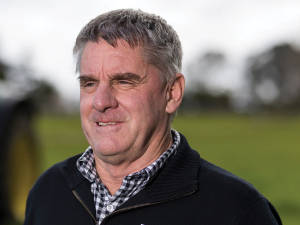
Federated Farmers has welcomed new rural policies released by ACT, saying they align closely with its own election priorities.

Rural Contractors NZ says proposed changes to land transport rules for agricultural vehicles are a welcome response by the Government to out of date regulations which have seen members hit with huge fines.
Alliance is calling for final applications for its 2027 Graduate Programme, with applications closing on Sunday 25 October.
Decades piloting planes has ensured vet and farmer David Hayes is focused on safety. So, after a serious accident while welding on farm, he is sharing his experience so others can learn from it.
Canterbury milk processor, Synlait Milk has confirmed Leon Fung as its chief executive officer.
OPINION: Making it easier to collect rainwater and use it to grow crops and livestock is a no brainer.




OPINION: It seems Canterbury processor Synlait is still in the doldrums.
OPINION: Get offside with New Zealand First leader Winston Peters at your own peril.




