Federated Farmers Welcomes ACT’s New Farming Policies
Federated Farmers has welcomed new rural policies released by ACT, saying they align closely with its own election priorities.




 increase font size
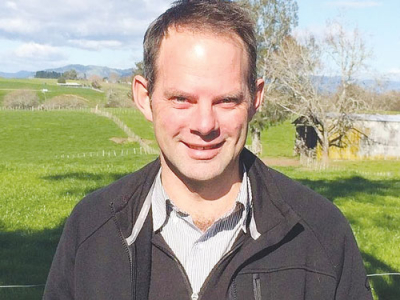 James Allen, AgFirst.
If problems now facing sharemilkers aren’t sorted out soon others will be put off entering the dairy industry, says an agribusiness consultant.
James Allen, from AgFirst, told the Federated Farmers dairy annual meeting last week of a steady decline in the number of herd-owning sharemilkers.
He points out that sharemilking is integral to the dairy industry and notes there are new agreements being developed which have merit, including a variable order agreement with a contract milking price as a base -- a good idea, says Allen. And he sees the emergence of flexi-rate herd-only agreements.
But farmers signing these must do due diligence and seek advice from friends and experts, he says.
“There is too much running on good faith when entering into new sharemilking agreements. Unfortunately the farm owner often holds the balance of power, and we don’t want people making an agreement under which the relationship was never going to work -- ultimately bad for both parties.”
A challenge with sharemilking is that in high payout times a farm owner may tend to feel he is not getting just reward for his invested capital. But at low milk prices, the sharemilker feels he is getting burnt and going broke. A way is needed to smooth out the highs and lows, Allen says.
Richard McIntyre, who represents sharemilkers in the Feds dairy executive, says the biggest challenge facing sharemilkers today is the volatility of the dairy market and huge highs and lows. In the days when prices were more stable the high-low problems did not exist; the incomes then helped sharemilkers progress to farm ownership. But with the volatility, sharemilkers face financial pressure and many may have little cash to ride out bad times.
“Many don’t start out with much money; some may have borrowed to buy even their farm bike.”
A movement back to contract milking from variable order sharemilking is now occurring because it carries less risk. McIntyre notes that on some smaller farms contract milking does not necessarily provide enough income for people to progress further in the industry.
“It’s now a big step to be a herd owning sharemilker and once people are in that position they are staying in their jobs longer because there are fewer opportunities.”
Nowadays it appears that sharemilkers progressing to farm ownership is the exception rather than the rule, McIntyre says. While ownership is still possible, people are having to be creative and develop income sources off farm to gain the necessary equity.
Federated Farmers has welcomed new rural policies released by ACT, saying they align closely with its own election priorities.
Federated Farmers is backing Feilding High School’s call to keep Agriculture and Horticultural Science as a standalone subject in Year 11.
National’s pledge to introduce 19 new national standards shows the party is serious about getting Wellington out of farming, Federated Farmers says.
After almost two decades of sharemilking, saving and building equity, Aaron and Marcia Flay this year realised their long-held dream of settling on their first dairy farm.
Mobile phone coverage and reliability are deteriorating in rural areas, and farming families are bearing the cost, according to a Federated Farmers survey.


Federated Farmers has welcomed new rural policies released by ACT, saying they align closely with its own election priorities.

Rural Contractors NZ says proposed changes to land transport rules for agricultural vehicles are a welcome response by the Government to out of date regulations which have seen members hit with huge fines.
Alliance is calling for final applications for its 2027 Graduate Programme, with applications closing on Sunday 25 October.
Decades piloting planes has ensured vet and farmer David Hayes is focused on safety. So, after a serious accident while welding on farm, he is sharing his experience so others can learn from it.
Canterbury milk processor, Synlait Milk has confirmed Leon Fung as its chief executive officer.
OPINION: Making it easier to collect rainwater and use it to grow crops and livestock is a no brainer.



OPINION: It seems Canterbury processor Synlait is still in the doldrums.
OPINION: Get offside with New Zealand First leader Winston Peters at your own peril.




