
Federated Farmers Welcomes ACT’s New Farming Policies
Federated Farmers has welcomed new rural policies released by ACT, saying they align closely with its own election priorities.




 increase font size
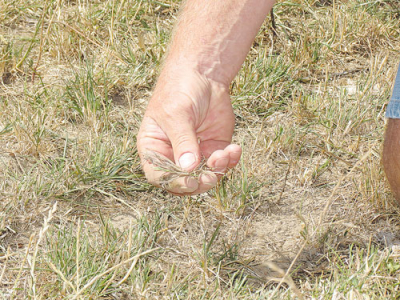 Southland farmers working through drought are facing a dwindling supply of supplementary feed.
A dwindling supply of supplementary feed is one problem facing Southland farmers working through drought.
Federated Farmers Southland president Allan Baird, a dairy farmer near Dipton, says the market for palm kernel (PKE) has tightened because a lot of PKE was fed out in November, December and January.
“A lot of the suppliers’ stocks have been consumed and now they are restricting [what they have] to farmers with contracts; that’s taken away some of the short-term supply. You’re never quite sure how much to contract so you contract 30-40% of what you need and hope to pick up the slack if it’s required.
“Every summer is different in Southland,” Baird says. “Some years you may get away without needing PKE at all whereas this summer is a 15-20-year dry period and it’s really been in demand.”
Reasonable rain fell a couple of weeks ago, with coastal areas getting 50mm and inland 100mm, he says. In Dipton they got about 60mm.
Some parts of the province are worse hit by the drought than others: there are pockets where it is bad and others where it is not as bad. Traditionally there are places where in summer it is relatively easy for dairy farmers -- from the coast up towards Dipton where Baird farms.
“The southwest rains traditionally come in and keep those areas in good shape. But this season the rains have come more from the northwest and so properties in Mossburn through to where I farm here in Dipton have received still below-average rain; but we have had some rain so it’s not as dire as other parts of the province.”
Farmers in Southland have seen their options narrowed. They rely on summer crops such as turnips and grass silage.
Irrigated farms have found themselves in trouble with low river flows causing some irrigation schemes to be shut down; not enough rain has fallen to recharge rivers and groundwater.
Now farmers must wait and see what the rest of February brings, Baird says. Normally it’s Southland’s driest month.
Federated Farmers has welcomed new rural policies released by ACT, saying they align closely with its own election priorities.

Federated Farmers is backing Feilding High School’s call to keep Agriculture and Horticultural Science as a standalone subject in Year 11.
National’s pledge to introduce 19 new national standards shows the party is serious about getting Wellington out of farming, Federated Farmers says.
Mobile phone coverage and reliability are deteriorating in rural areas, and farming families are bearing the cost, according to a Federated Farmers survey.
Central Otago District Council (CODC) has voted against a plan to spread treated sewage sludge from Cromwell and Alexandra on farmland near Lauder, a decision Federated Farmers says reflects strong opposition from rural residents.



Federated Farmers has welcomed new rural policies released by ACT, saying they align closely with its own election priorities.

Rural Contractors NZ says proposed changes to land transport rules for agricultural vehicles are a welcome response by the Government to out of date regulations which have seen members hit with huge fines.
Alliance is calling for final applications for its 2027 Graduate Programme, with applications closing on Sunday 25 October.
Decades piloting planes has ensured vet and farmer David Hayes is focused on safety. So, after a serious accident while welding on farm, he is sharing his experience so others can learn from it.
Canterbury milk processor, Synlait Milk has confirmed Leon Fung as its chief executive officer.
OPINION: Making it easier to collect rainwater and use it to grow crops and livestock is a no brainer.




OPINION: It seems Canterbury processor Synlait is still in the doldrums.
OPINION: Get offside with New Zealand First leader Winston Peters at your own peril.




