El Niño Warning: NZ Farmers Urged to Plan Fert Early
Plan ahead and be patient. That’s the message to farmers and horticulturalists from the chairman of the NZ Agricultural Aviation Association, Kent Weir.




 increase font size
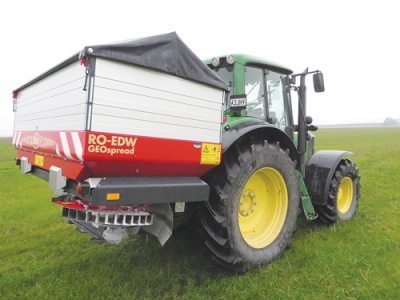 The Geospread allows more accurate spreading of fertiliser.
Automated fertiliser spreading with a Vicon RO XL GEOspread is raising accuracy and cutting tedium on a Canterbury cropping farm.
Simon Lochhead and family grow cereals – wheat, barley and triticale – plus peas for Watties and small-seed crops such as rye grass, white clover, and brassicas on the 340ha property he works with his father Alan.
It was a dryland farm until recently, but now uses a centre pivot irrigator with GPS control to apply water at variable rates, enabling the Lochheads to have square paddocks. The areas are set up in multiples of 24m to match the sprayer and spreader. The Vicon GEOspread can work wider but Lochhead prefers 24m for spreading light products like urea.
He is no stranger to technology, already using GPS for tractor steering, and yield mapping on the combine harvester, so saw the move to variable rate application of fertilisers as the next logical step
A contractor applies base super and lime because of the volumes required, but Lochhead applies nitrogen and compounds such as mag. oxide and potassium chloride with the Vicon GEOspread during the growing season.
In practice, the Lochheads’ consultants Agronomy Solutions Ltd create prescription maps based on intensive soil sampling. These are transferred to a USB stick that plugs into the control screen in the tractor cab, and varies the spreading rate depending on the sampling results.
The Geospread arrived late last season, chosen for its ability to use a double overlap spread pattern for a better spread and the Roto-flow system that pre-accelerates the fertiliser before it drops onto the discs; this results in less damage to the fertiliser and the multi-vaned spreading discs that produce a more even spread.
Simon commented “the hardest part of the job now is doing nothing”. The machine switches the flow on as the headland mark is crossed and adjusts flow in 2m sections to accurately spread on “short” ground, so it’s very easy to operate.
In use the machine uses the integral weigh system to constant re-calibrate and Lochhead uses an app to get guidance on machine setting for any new products being spread. Urea, which is normally applied before rain, is often spread at night, so the GPS and automation are a big help.
With a hopper capacity of 2.5 tonnes (3450L) the machine suits covering large acreages quickly, but if a run has to be suspended for a refill the system will accurately guide the operator back to the resume point.
Lochhead notes that the farm’s annual fertiliser spread costs almost twice that of the machine, and he believes the machine will pay for itself quickly with its accuracy, and make easy a mundane job.
GEOspread features
Plan ahead and be patient. That’s the message to farmers and horticulturalists from the chairman of the NZ Agricultural Aviation Association, Kent Weir.
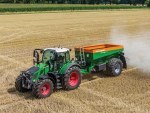
Amazone's ZG-TX combi spreader has been updated with several new features, centred around improved accuracy and easier operation.
When it comes to annual rebates, it's been a long time between drinks for Ravensdown shareholders.
Ravensdown has reported a net profit before tax and rebate of $50.1 million for the year ended 31 May 2026.
A new digital assistant is now helping Ballance Agri-Nutrients farmers speed up nutrient information and ordering.

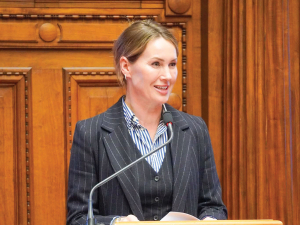
The Government is introducing a new nationwide rural recycling scheme that will significantly increase the recovery of farm plastics from March next year, Minister for the Environment Nicola Grigg announced today.
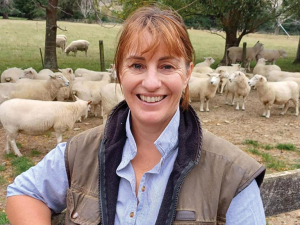
B+LNZ's Wormwise veterinarian Mary Bowron has won the Best Sheep and Beef Vet of the Year Award in recognition of her outstanding contribution to New Zealand’s sheep and beef sector.
Researchers at Massey University are using a special piece of scientific equipment to improve the measurement of greenhouse gas emissions from pasture soils.
More signs of a booming kiwifruit sector.
OPINION: David Seymour and James Meager's plan to make it easier for farmers and orchardists to operate drones can best be described a 'courageous' move.
New Zealand wool is reaching new heights as air filtration companies move away from synthetic products to biodegradable alternatives.


OPINION: After hogging the media limelight for telling a NZ Chinese MP to "go back home", Winston Peters has decided…
OPINION: With fuel prices soaring, one would have expected most farmers to be reclaiming excise duty on petrol.