El Niño Warning: NZ Farmers Urged to Plan Fert Early
Plan ahead and be patient. That’s the message to farmers and horticulturalists from the chairman of the NZ Agricultural Aviation Association, Kent Weir.




 increase font size
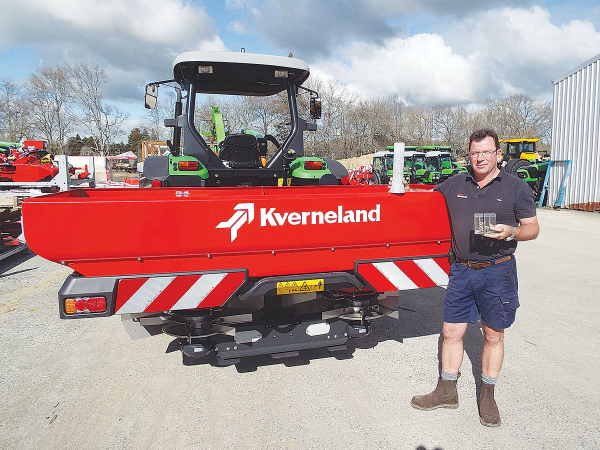 Power Farming product manager John (JP) Chapman suggests fertiliser operators could look at some entry level GPS guidance to keep things on track this spring.
With the cost of fertiliser soaring, Mark Daniel called on advice from Power Farming product manager John (JP) Chapman to understand how to get the best bang for your buck as you set off on your spring application campaign.
Before we get down to the nitty gritty, JP suggests that if operators haven’t already done so, it might be worth a look at some entry level GPS guidance to keep things “on track”, particularly as basic units only cost around the same cost as a tonne of fertiliser.
He says, “As operators look to spread product wider, there is a greater potential for mismatched bouts, so it is worth remembering that even driving a half metre offline can result in 5 to 6% over or under application.”
Looking at spreading basics, firstly make sure the spreader is clean, any shutters open and close freely, while rotors and spreading vanes show no signs of excessive wear.</p
Also, check rotor bearings for signs of excessive wear that might affect target speed, check gearbox oils levels and make sure the PTO shaft is lubricated and undamaged.
Make sure that linkage drop arms are the same length and the machine sits level across the tractor, any front to rear inclination suggested by the manufacturer is set accurately and, lastly, make sure that the recommended rotor height is also achieved.
To achieve accurate spreading results it’s important to understand the influence that properties of the fertiliser have on the target result. Spreading accuracy can be affected by product density, granule size, the shape and surface of the fertiliser particles and the strength of the grains. The other variable that can affect results is wind speed, so always sit on the side of caution if it is very windy.
JP suggests the first point to look at is density, using a vessel of one litre, filling with product and checking the subsequent weight. Typically, an NPK blend will have a density of about 1kg/ litre, so it is important to understand, depending on individual characteristics, lighter density products will likely need larger hopper aperture settings to achieve target rates and vice versa.
The next area to understand is particle size, realising that smaller, dusty particles will “fly” less than larger and heavier particles. Testing the product to understand its properties is achieved by using a shaker box text. Most manufacturers will typically supply a small shaker box divided into areas of 2mm and ranging to 4.75mm and above. Filling the box and agitating for around 30 seconds will indicate the range of particle size, with well made product typically achieving about 80% in the 2-5mm range.
Once we have established the characteristics of the product, we will have an early indication of its likely spreading characteristics, so now it’s time to move to the manufacturer’s database of products, with most carrying out assessments of key materials on an ongoing basis.
Inputting the details of density, particle range, surface type, target application rates, preferred bout width and forward speed will lead to a recommended matrix of machine settings. These will include aperture opening at the hopper, rotor speed and the PTO speed needed to achieve this and any special rotor or spreading vane options, alongside any indications of incompatibility for the desired inputs.
Using the manufacturers recommended settings should result in the best chances of accuracy, although JP suggests this can be improved further by understanding how border spreading options work, to achieve less wastage and lower environmental damage alongside water courses or ponds.
Additionally, he reports that around 60% of new spreaders are being supplied with weigh cells, to confirm application rates, but also variable application applications such as Kverneland’s GEOPOINT that will automatically start and stop spreading as headland marks are crossed.
Plan ahead and be patient. That’s the message to farmers and horticulturalists from the chairman of the NZ Agricultural Aviation Association, Kent Weir.
Amazone's ZG-TX combi spreader has been updated with several new features, centred around improved accuracy and easier operation.
When it comes to annual rebates, it's been a long time between drinks for Ravensdown shareholders.
Power Farming has launched a joint venture in Southland.
Ravensdown has reported a net profit before tax and rebate of $50.1 million for the year ended 31 May 2026.



The Government is introducing a new nationwide rural recycling scheme that will significantly increase the recovery of farm plastics from March next year, Minister for the Environment Nicola Grigg announced today.
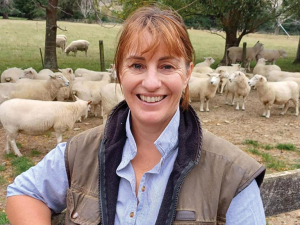
B+LNZ's Wormwise veterinarian Mary Bowron has won the Best Sheep and Beef Vet of the Year Award in recognition of her outstanding contribution to New Zealand’s sheep and beef sector.
Researchers at Massey University are using a special piece of scientific equipment to improve the measurement of greenhouse gas emissions from pasture soils.
More signs of a booming kiwifruit sector.
OPINION: David Seymour and James Meager's plan to make it easier for farmers and orchardists to operate drones can best be described a 'courageous' move.
New Zealand wool is reaching new heights as air filtration companies move away from synthetic products to biodegradable alternatives.


OPINION: After hogging the media limelight for telling a NZ Chinese MP to "go back home", Winston Peters has decided…
OPINION: With fuel prices soaring, one would have expected most farmers to be reclaiming excise duty on petrol.