Coming up to his fourth season with them, Louw says the system has gotten better as it has come to know the cows.
It monitors all their physical activity, whether ruminating, eating, walking, sleeping or standing. It collates it into a graphical form, so the farmer can view activity trends over hours or days. It can compare an individual cow's activity against its own history and against its peers in the herd, and even allows the farmer to benchmark his herd agains the anonymised herd data of other Tru-Test customers.
Louw says the value of constant monitoring is that the system identifies changes early and with a precision unavailable through traditional management.
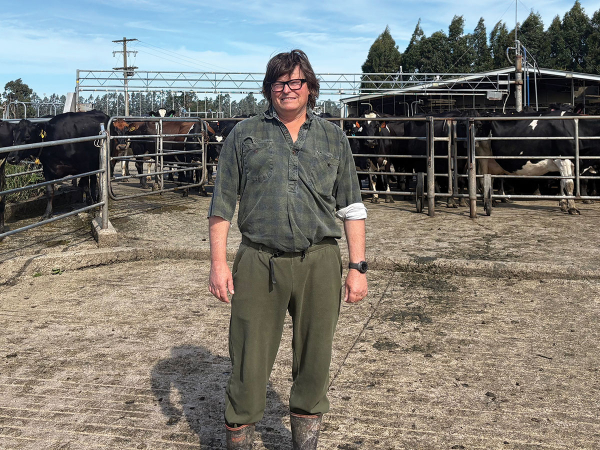
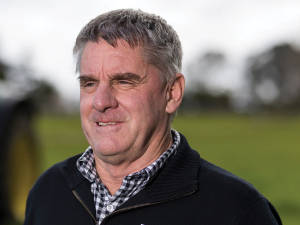
A 50:50 sharemilker, Louw farms at Paretai near the Clutha river mouth in South Otago, milking 650 cows on 215ha effective.
It's a grass-based system supplemented in the shoulder seasons mainly with silage brought in from the farm owner's support block, and wintering is always off-farm.
"No one really winters on farms down here. We're underwater. So they go to a grazier on fodder beet."
Louw says that like most people adopting wearables, his first concern was mating management, and Tru-Test reliably identifies in-heat animals and completely replaces labour-intensive and uncertain methods like tail paint.
"You just arrive at the shed at the end of milking and those cows that are on heat have been drafted out automatically and they are standing in the side yard waiting for you."
Tru-Test detects and records heats, sending out regular reports, long before mating begins, allowing early intervention for any problems.
Louw says that while he has long used CIDRs on cows which appear not to be cycling, Tru-Test has allowed him to reduce CIDR use by 50% because of its very high accuracy. He has moved to a system where his vet comes every Friday to look at the small number of cows with problems of various sorts.
“He’s able to take the CIDRs out that were put in the week before and put in the CIDRs of the few that should have cycled that week.
“That fine-tuned mating is almost impossible to do when you’re doing it manually.
“This mating this year was probably the most enjoyable time on a dairy farm that I’ve had, because I’ve had so much control over it and been so proactive to every little thing, it really made the job so enjoyable and so fantastically easy.”
Louw credits the Tru-Test system with improved farm performance, even despite the serious setback of a major flood in 2024. With the entire farm underwater right at mating time, Louw called it “an absolute disaster”.
“All our production and our mating was severely affected. And I think we had something like a 16 or 17% empty rate.”
But he was “extremely happy” to have brought the empty rate back down to 11.5% and is confident of further improvement.
Similarly with calving, Tru-Test identifies those cows that are ready to calve and those that may be having a problem.
It also helps decide when to return colostrum cows to the milking mob. Instead of just returning them after a set number of days or on the quality of their milk, the collars identify a cow which is not yet ruminating properly and may need another day of rest or metabolic support. Louw says it “makes a world of difference” if they can avoid sending a cow into the milkers while she is still under stress.
Herd health is Tru-Test’s other major advantage, and Louw says that by detecting changes in activity it reliably identifies a cow with a problem two or three days before it would otherwise become noticeable.
“It is absolutely phenomenal.
“Anything that goes out of sync with what she normally is, or out of sync to the rest of the group that she is with, it’ll alert you.”
Early intervention with anti-inflammatories, antibiotics or a metabolic “jump start” with minerals and molasses, as appropriate, usually nips the problem in the bud.
Louw says that nine times out of ten, the cow’s health alert graph starts to turn back up into the green within a couple of hours.
Pasture Management
The system also helps with pasture management because a herd that continues to eat when they should have been satisfied is an indication that the grass they are on has no “guts” to it.
“I don’t need to wait until the cows are moaning at me that they’re hungry because the food’s gone straight through them,” says South Otago sharemilker Kevin Louw.
The data will also show if grass is getting “stemmy” and in need of a mow, five to ten days sooner than it would otherwise be seen.
Louw says the system has paid for itself, and not just financially. He says dairying can be lucrative but it is hard work and the danger is physical burnout.
But the collars have made it enjoyable again.
“All of a sudden you can just keep going and for me, that’s exciting. It just extends your life in dairy and pays for itself over and over.”
That improvement in working satisfaction also applied to his workers. With three permanent staff, Louw explains that Tru-Test could help the farm run with fewer but, at a time when it is getting harder to retain staff, his “point of difference” is generous working conditions as a way to keep staff engaged, supported and happy.
“I have guys who have been with me for 10 years now. It obviously works. If your staff are moving on every season, you need to look at yourself rather than them, you know?”