
Red Meat Farmers Welcome Labour's Emissions Pricing Pledge
Red meat farmers are welcoming Labour’s plan to review the Emissions Trading Scheme and not to campaign on pricing agricultural emissions.



 increase font size
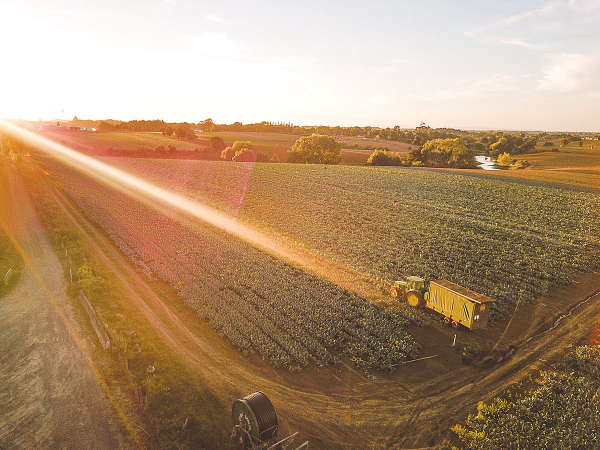 Prices of vegetables will only get pushed up further if vegetable growers are forced into the ETS, say Vegetables NZ and Potatoes New Zealand.
Vegetable growers are warning that an emissions trading scheme (ETS) will only push up prices of produce, lower consumption and make them less competitive in export markets.
In a joint submission to the Ministry for Environment (MfE) two weeks ago, Potatoes New Zealand and Vegetables NZ (VNZ) say they object in principle to being brought into the ETS - either directly or via the mechanisms proposed in the consultation document, Pricing agricultural emissions.
They claim the proposal isn't effective, practical or equitable.
They point out that fresh vegetable and potato growers collectively account for only 0.032% of all agricultural emissions and should be exempt, as are other minor contributors.
"If the emissions levy were to be increased to a point that it would create change, that change would be entirely counter-productive and result in exacerbating the cost-of-living crisis, a loss of national income from vegetable (and corresponding increases in food imports), and a very real threat to New Zealand's food security and health outcomes," the submission says.
"This would be a direct contradiction of the 2015 Paris Agreement to safeguard food security while managing climate change."
The submission notes that vegetable grower input costs have experienced significant inflation ahead of prices.
Labour costs have increased by more than 4.5% per annum since 2015, and fertiliser prices increased by over 63% in the last year alone but farm gate prices for vegetables have lagged below growers' cost inflation.
The submission says a study conducted earlier this year by VNZ concluded farm-gate prices increased ust 1.7% per annum over the period 2015-2022 - this being only half the rate of retail price inflation for vegetables.
"In consequence, we estimate the average vegetable grower's margin may have halved over the last decade."
About 80% of fresh vegetables are grown for the domestic market.
The submission says as a result of tight growing margins, any material emissions levy for growers would simply increase the price of domestic vegetables, with a corresponding reduction in fresh vegetable consumption, especially for the most vulnerable low socio-economic communities.
"Fresh vegetables are a highly price sensitive category.
"Further price increases, especially with the cost-of-living crisis, are estimated to have a significant impact on New Zealanders' welfare and national health costs."
New Zealand vegetable growers could also become uncompetitive in wider export markets, threatening $700m worth of export trade income.
The submission points out that no other nation is bringing their agricultural sector into emissions trading scheme or implementing a similar emissions levy, and so this could be a significant competitive disadvantage for New Zealand growers who supply export markets.
"Even more concerning, other nations may see opportunity to enter and expand vegetable imports into New Zealand.
"The dumping of subsidised European potato products into the New Zealand market during 2020 as Covid hit domestic sales in the EU is a harbinger of what could occur."
Red meat farmers are welcoming Labour’s plan to review the Emissions Trading Scheme and not to campaign on pricing agricultural emissions.
The New Zealand Institute of Forestry (NZIF) says unnecessary changes to New Zealand’s Emissions Trading Scheme (NZ ETS) will seriously erode investor confidence and result in significant reductions in forest planting rates.
New Zealand's Emissions Trading Scheme (NZ ETS) encourages afforestation while not achieving climate goals, says a new report released by the Parliamentary Commissioner for the Environment, Simon Upton.
Conversions of sheep and beef farms to forestry have slowed, however new research from Beef + Lamb New Zealand (B+LNZ) suggests land of value for food production remains at risk.
Potatoes New Zealand has congratulated Peter Reynolds of TA Reynolds Ltd in Pukekohe on being awarded the Horticulture New Zealand Bledisloe Cup, recognising a lifetime of service and contribution to New Zealand horticulture.


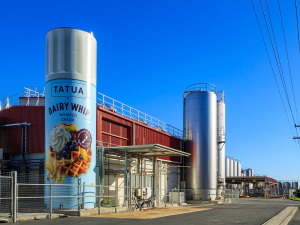
Waikato milk processor Tatua has again declared a record milk payout to farmer shareholders, leaving other processors in the dust.

A Labour-led Government won’t be bringing back the controversial freshwater rules of 2020.
National’s much-touted free trade deal with India featured in the Rural Issues Debate at Mystery Creek, Hamilton on Wednesday night.
New Zealand's 2026-27 freshwater fishing season has opened, with anglers encouraged to head to rivers and lakes over the coming days as conditions look favourable across much of the country.
Central Otago District Council (CODC) has voted against a plan to spread treated sewage sludge from Cromwell and Alexandra on farmland near Lauder, a decision Federated Farmers says reflects strong opposition from rural residents.
Pāmu has released its FY26 Integrated Annual Report, reporting a Net Operating Profit of $113 million, more than double the $49 million recorded in FY25.



OPINION: The same mainstream media muppets that brought you Jacindamania in 2017 have been flat out pimping for the Opportunities…
OPINION: Your old mate reckons the atrocious way farmers in the UK are treated by their lords and masters in…




