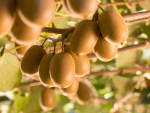
NZKGI Responds to Migrant Worker Exploitation Reports
Where any worker in the kiwifruit industry is mistreated, we expect the authorities to take action.



 increase font size
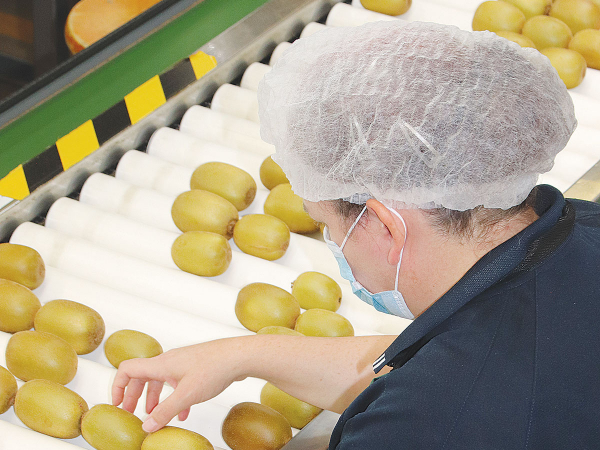 Zespri chief executive Dan Mathieson says quality of kiwifruit for the coming season is looking good.
The quality of kiwifruit for the coming season is looking good.
That's the view of Zespri's chief executive Dan Mathieson. He told Hort News that while there's been a slight delay to the start of the picking season, they are seeing a lot of good quality fruit sizes coming through. But he adds that due to last year's October frost - and to some extent, Cyclone Gabrielle - the 2023 crop will be lower than last season.
"We think it will be in the order of between 15% and 20%," he says.
Mathieson says a huge effort is being made to ensure that fruit quality in 2023 is back to where it should be. He says there is an industry wide response plan to the problem to deal with the issue and all those in the supply chain are cooperating fully.
"This relies on growers making sure that the fruit is coming off the vine into bags in the way it should," he told Hort News.
"Our post-harvest sector is managing the quality well through packing process and Zespri ensuring that the fruit gets out to our customers in the best possible condition. Also, the shipping people managing the condition of the fruit on our vessels to ensure that when it gets to market, it's ready to go and ready to eat state," he adds.
Last season, poor quality fruit cost the kiwifruit sector about $500 million dollars. But worse still, it caused considerable adverse reaction from buyers of our fruit and Zespri was a put on a warning to sort the quality issue out pronto.
Mathieson says Zespri's research shows that one of the main reason for the drop in quality was the shortage of people to pick the fruit, remembering this took place in the middle of a major Covid outbreak compounded by a lack of overseas workers. He says the industry at the time was short of about 7,000 workers and those picking the fruit were under pressure.
"So, we saw a lot of damage coming from picking. A lot of that fruit was going into the bins too quickly, that was creating bruising and physical damage and that was taking about five weeks to show through," he explains.
"Then we started to find that in-market, and we were having to repack a lot of that fruit. As we got into the season, we started to realise the scale of the problem and we began repacking fruit in our packhouses here before it left for market."
Where any worker in the kiwifruit industry is mistreated, we expect the authorities to take action.

Kiwifruit growers are watchful but remain optimistic as concerns around the potential effects of the El Niño weather pattern this season.
More signs of a booming kiwifruit sector.
After delivering a strong financial year, rural trader PGG Wrightson says the coming months will depend on customer confidence and weather.
New Zealand growers have always adapted to changing conditions, but one challenge is steadily gaining ground across the horticulture sector: resistance.


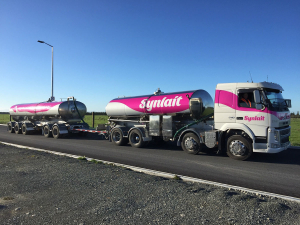
Synlait has swung to second-half profit as operations stabilise, but the dairy processor still posted a $75.4m annual loss.

LIC shareholders have elected a new North Island representative to the co-operative's Board, along with five representatives to its Shareholder Reference Group (SRG), following the company's Annual Meeting held in Invercargill.
Farmers across parts of Southland and South Otago are continuing to deal with difficult conditions after a prolonged run of wet weather, with pressure building around feed supply, stock management, pasture damage, farm infrastructure and everyday workloads.
Federated Farmers says it welcomes Labour's commitment to reviewing the Sharemilking Agreements Act, calling on other major parties to do the same.
For Canterbury dairy farmers Sian Meijer and Rick Wobben, wearable technology has become one of their most valuable on-farm tools - helping manage 1850 cows across an expansive, high-performing dairy operation while improving efficiency, mating outcomes and day-to-day decision making.
Fonterra has unveiled its annual results for the 2026 financial year, posting $27 billion in revenue and close to $20 billion returned to New Zealand farmer owners and unit holders.


OPINION: The same mainstream media muppets that brought you Jacindamania in 2017 have been flat out pimping for the Opportunities…
OPINION: Your old mate reckons the atrocious way farmers in the UK are treated by their lords and masters in…




