
Huge hop garden aims to further milk growing industry
A former dairy farm in a secluded valley on the fringe of Nelson Lakes National Park is set to become New Zealand's biggest hop garden.



 increase font size
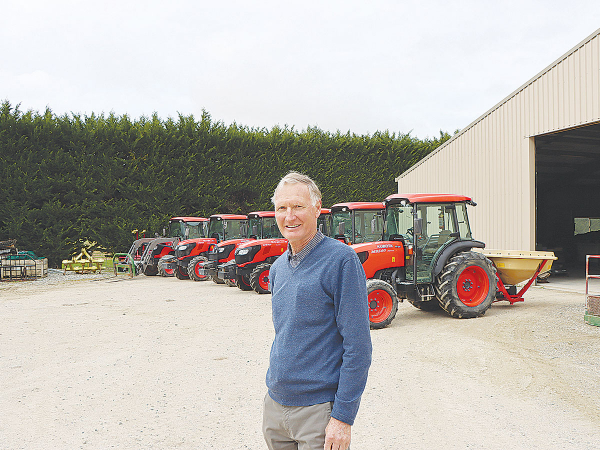 Nelson-based Brent McGlashen, is a fifth-generation farmer where his company – MacHops – harvests over 130 hectares of hops on two separate farms.
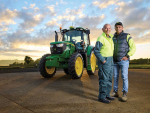
Mac Hops director, Brent McGlashen, is a fifth-generation farmer on his family farm in Nelson.
Nestled at the top of New Zealand’s South Island, the original 30-hectare farm was purchased in the early 1900s. Today, Mac Hops is one of the last original New Zealand family hop growing businesses. It has recently expanded to become one of the largest hop producers in the country, tapping into the world’s insatiable demand for craft beer.
Together with his brother-in-law Owen Johnstone, McGlashan harvests over 130 hectares of hops on two separate farms.
“I have huge respect for the passion of craft brewers. Without them, I wouldn’t be here talking to you,” he says. “Their enthusiasm and skill has created so much excitement for the hopgrowing community.”
McGlashan says he was warned there was no future in hops and that he should look into other forms of farming.
“But having stuck with the crop and watching Mac Hops develop, I wake up every morning ready to give each day my all.”
As the demand for Mac Hops product continues to flourish, so does the business. Recently acquiring an 150-hectare property, a 12-minute drive from their current farm, Mac Hops has significantly increased their production levels and now has established a new and modern infrastructure for harvesting and drying the extra production.
As they have grown, so has their need for extra equipment that can handle the workloads thrown their way. Johnstone is a strong supporter of the six Kubota tractors doing the cultivation work on the new farm.
“I have been using Kubota tractors for about seven years now, as they are reliable pieces of machinery.
“I have four M8540 narrows and two M5101 narrows which are lightweight and perfect for the conditions we have on our farms,” he explains.
“When purchasing the tractors, we were looking for a lighter frame to navigate tough clay conditions. I have had very few issues with my Kubotas, which is a testament to their durability, they handle our needs on a big farm amazingly well.”
Johnstone says the running costs are low and service and parts are also reasonably priced.
“Ultimately that’s all you could want in a tractor, fairly priced with a reliable build. All the tractors are fitted with customised cabs which provide extra comfort to our staff who at times work long hours.”
March is the most important time of the year at Mac Hops, when it’s time to harvest the hops grown over the season. McGlashan has spent many long nights with his NZ family and for a few years also joined his hop grower friends in the USA, fitting in two harvests in a calendar year.
“The most exacting task during harvesting is the hop drying process. The hops are placed in a kiln to dry out and must be carefully checked every 20 minutes towards the end of the kilning process to ensure they are evenly dried,” he explains. “Too little or too much time in the kiln can lead to the precious oils within the hops tainted and the hops are ruined.”
McGlashan says while many outsiders may see hop growing as a stressful and complicated process, he wouldn’t have any other way.
“There’s a craft to it and I enjoy taking good care to produce the perfect hop.”
A former dairy farm in a secluded valley on the fringe of Nelson Lakes National Park is set to become New Zealand's biggest hop garden.
A 175ha dairy farm in Kohatu, Tapawera, 52km west of Nelson, sold in October 2018 for conversion to a hop garden, is another example of change in land use driving sales of rural property.
Low interest rates are driving record enquiries for cash yielding real assets, says the rural syndicate property investor MyFarm Investments.
PLANT & Food Research, in partnership with NZ Hops and Chris Little Engineering, have formally opened a new research brewery at the company's Motueka site.
The 'Hop Lab' has been designed to allow the hops breeding team the ability to create experimental trial brews from promising new hop cultivars in order to evaluate sensory characteristics.


The National Party’s policies to make it easier to grow fresh vegetables, secure reliable water and energy and simplify farm planning are practical changes that will give growers the confidence to invest, according to Horticulture New Zealand (HortNZ).

Fonterra Co-operative Group chief financial officer Andrew Murray has resigned to take up a role outside the dairy giant.
A major move is about to get underway to improve the quality and viability of dairy beef and cattle in NZ.
Veterinarians say changes to the code of welfare for dairy cattle provides a positive foundation for improved cattle welfare across the country.
Today, 15 October, is the International Day of Rural Women, which recognises rural women’s contribution to farming, communities and the environment.
Global dairy giant Lactalis has integrated its Australian operations with the Mainland Dairy consumer business it acquired from Fonterra earlier this year.


OPINION: The same mainstream media muppets that brought you Jacindamania in 2017 have been flat out pimping for the Opportunities…
OPINION: Your old mate reckons the atrocious way farmers in the UK are treated by their lords and masters in…




