Fonterra Elections 2026: Voting Opens Tuesday 20 October
Fonterra shareholders can begin voting on Tuesday 20 October in the 2026 Board of Directors’ election, a Co-operative Council election in one Ward, and seven Annual Meeting resolutions.




 increase font size
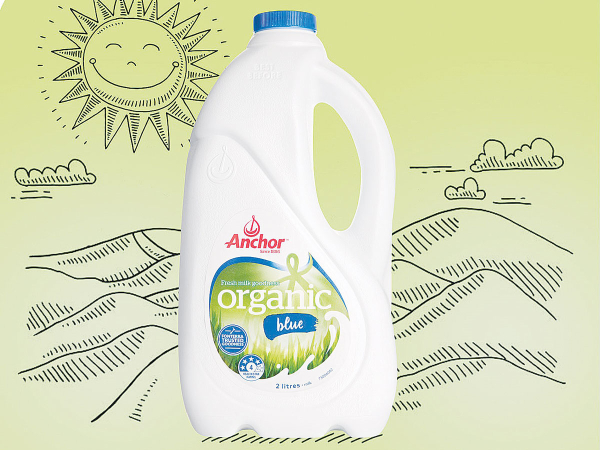 Fonterra organic milk suppliers received a record milk price of $10.80/kgMS last season.
Fonterra's organic farmers received a record milk price of $10.80/ kgMS last season.
It processed 85 million litres of certified organic milk in 2022-23. For the current season, Fonterra is forecasting 105 million litres.
The co-operative’s organic milk price has fluctuated over the years. In 2016-17 it paid suppliers $8.83/kgMS before dropping to $7.50/kgMS the following year. In 2019-2020, it broke the $10 barrier for the first time. In 2020-21, the organic milk price dropped to $8.85/kgMS before topping $10.02/ kgMS two years ago.
A Fonterra spokesman told Rural News that demand for organic dairy continues to increase with consumers continuing to prioritise health and wellness, sustainability and animal welfare in their purchasing decisions.
However, despite the preference for organic, affordability remains a barrier. Inflation and other economic factors are impacting spending on premium and discretionary products such as organic.
“Organic milk supply seems to be coming back into balance after surpluses across the USA and EU in recent years, which is resulting in increasing demand for NZ dairy.”
Fonterra supplier Adrian Townsend, who runs Durham Farms in Waipu, told Rural News that a higher milk price is always welcome and reflects the hard work and cost that goes into producing an organic product.
Townsend points out that this was the first time that the organic milk price was decoupled from the conventional milk price – the price of conventional milk price decreased while the organic milk price increased.
“This would be due to the increase in demand globally for organic milk, and a continued shortage of organic dairy producers,” he says.
On organic milk price fluctuation over the years, Townsend says that a lack of price certainty and consistency is always a challenge for any business. “As operational costs are always there and with higher inflation, staff shortages, higher interest rates and extreme weather events become a real challenge, especially for small operators,” he explains.
“Our approach is to minimise reliance on outsider suppliers with their associated costs and keep everything in-house, for example growing all our feed on farm.”
Durham Farm milks 240 cows. Townsend says moving to an organic operation was the right choice at the time.
“For us, it was the best way to produce milk whilst looking after the land.
“We are now going the extra step and making our farming regenerative. Over the long term, a regenerative approach to farming should also provide better resilience to climate change.”
Durham Farm also produces branded milk for sale in Auckland. Townsend says this shows the demand is there and growing.
“As such, we are looking to expand our dairy range to meet this demand.”
Fonterra produces a range of organic dairy ingredients – wholemilk powder, skim milk powder, butter, pure milk fat, proteins and cheese – as well as a range of consumer milks, butters and cheeses.
Its largest organic market is the US. However, the co-op also sells across NZ, Australia, Canada, Mexico, China, South Korea, Taiwan and South East Asia.
Fonterra shareholders can begin voting on Tuesday 20 October in the 2026 Board of Directors’ election, a Co-operative Council election in one Ward, and seven Annual Meeting resolutions.

Fonterra Co-operative Group chief financial officer Andrew Murray has resigned to take up a role outside the dairy giant.
Four candidates have been confirmed for two director positions on Fonterra’s board.
A record farmgate milk price and strong global demand is laying the foundation for continued growth of organic dairy farming in New Zealand.
Waikato milk processor Tatua has again declared a record milk payout to farmer shareholders, leaving other processors in the dust.


Farmers are being encouraged to rethink how they manage waste on farm with the launch of ruralwastesorted.co.nz, a new website bringing together practical tips, real farmer experiences and resources.

New Zealand Winegrowers (NZW) is celebrating the India-New Zealand Free Trade Agreement (FTA) coming into force today, bringing New Zealand wine improved access to one of the world’s fastest-growing economies.
New Zealand’s red meat sector has welcomed the India-New Zealand Free Trade Agreement taking effect, which removes India’s 33% tariff on New Zealand sheepmeat.
More than 95 per cent of New Zealand’s forestry and wood exports to India can now enter tariff free as the New Zealand-India Free Trade Agreement comes into force today.
Federated Farmers is backing Feilding High School’s call to keep Agriculture and Horticultural Science as a standalone subject in Year 11.
Food and fibre exports have returned a billion- dollar bonus to the country.


OPINION: The same mainstream media muppets that brought you Jacindamania in 2017 have been flat out pimping for the Opportunities…
OPINION: Your old mate reckons the atrocious way farmers in the UK are treated by their lords and masters in…




