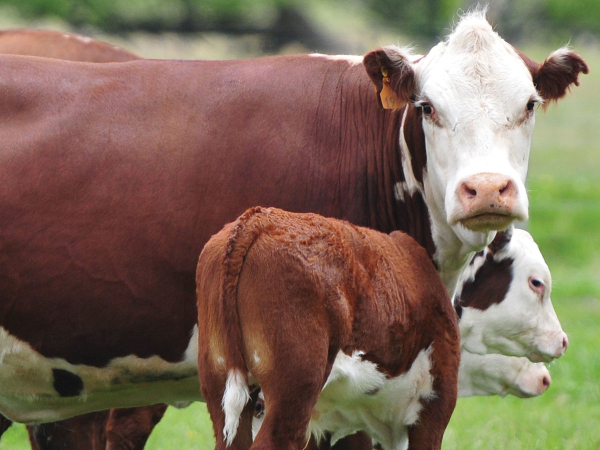
Beef + Lamb NZ Wormwise consultant, vet and farmer, Mary Bowron outlines how to set beef weaners up for success in the war against worms.
Autumn on the farm usually means a busy time in the cattle yards.
Cows and calves are mustered, and the weaning process gets underway. As this is often the first yarding since calf marking, it's a good chance to not only weigh calves, but assess cow condition, cull non-performers and map out a plan for the winter. For any calves staying on farm, whether future mums or future steaks, a weaning drench is recommended in nearly all situations.
In most beef breeding-only systems, the overall worm challenge is fairly low. By the time beef calves are weaned at around five to six months of age, they have already passed through some of their most vulnerable months for worm infection. Well-grown calves with good weaning weights are better equipped to handle the transition away from mum and the milk-bar that she provided.
However, weaning can still be a tough time for calves, particularly for those weaned early or at lighter weaning weights.
Good nutrition is a calf’s best defence against worms. The quicker they grow, the less time they are vulnerable to a worm challenge, needing less drench overall. Starting weaners on high quality feed with low larval contamination is the key. Aim for post-grazing pasture covers of 1600kg DM/ha.
Remember calves in their first year are the main source of pasture contamination for other cattle.
Some will be wormier than others, depending on how well grown they are, how well mum was still milking, and the quality of pasture they’ve had up until weaning. For the warmer parts of the country, larval development on pasture continues for longer into winter and weaned calves can continue to be a source of pasture contamination for next spring. Avoid having weaned calves by themselves in a rotation if possible, as they’ll likely be creating a worm ‘hot spot’.
Using a drench product demonstrated to be effective on your farm is also very important if you want to avoid populating weaner grazing areas with drench resistant worms. Leaving worms behind after drenching is also not a smart move for promoting great liveweight gains in your weaners either.
So which drench should you use?
In terms of formulation, the best option for calves at weaning is an oral combination drench.
injection might seem easier, or just what you’ve always done, but they simply don’t stack up the same. Studies have shown they are not as effective as oral drenches when it comes to tackling drug-resistant Cooperia. This worm is common in calves in their first summer and autumn, so using an oral combination drench in their first year of life is the best option. An added bonus is that oral products tend to be cheaper as well.
Another time-bomb for calves is Ostertagia. This worm tends to become more of a threat as cattle approach their first winter. Historically, ‘Mectin drench products have been more effective against Ostertagia than the Benzimidazole and Levamisole products and it is recommended that combination treatments for calves should contain a ‘Mectin component from late autumn onwards.
Drenching the calves isn’t the end of the story. Assuming the product is doing its job without checking may result in calves not thriving - drench resistance is not just the realm of sheep farmers anymore!
Drench Check
Doing a drench check at weaning is worth the effort and can inform your drench choices for the rest of the winter. Ideally collect fresh poo samples for faecal egg counts (FECs) and worm species identification on the day you give your drench (so you know what was there to start with) and then repeat the samples 10-14 days after drenching. Ideally FECs will have dropped to zero after your treatment. Your vet can help you set this test up correctly.
When to drench next depends on the age and size of calves at weaning along with quality of feed available and the level of worm contamination where they are grazing. FEC monitoring may be appropriate in calves six months of age or younger, and/or weaned at light bodyweights. FECs don’t tell the whole story, knowing what worm species are affecting your calves can mean a targeted approach to drench treatments. Ostertagia is a low egg producer but can still pack a punch due to the burrowing of immature larvae as well adult worms into the abomasal wall, so an infection can fly under the radar until it is too late.
Use larval culture or the newer fast-turnaround GIN PCR to pinpoint what worm species are present. GIN PCR can give you a result within a few days, enabling timely drench decisions. Monitoring growth rates is also a valuable part of tracking how calves are going.
So, make sure your beef weaners are set up to win the war against worms. Provide good nutrition, try to wean them onto an area that’s likely to present a low cattle worm challenge, use an effective oral combination drench and do a quick check of the treatment to set your calves up for a strong start.