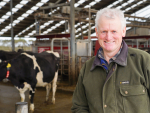
Inside the Southland Dairy Farm Where Robots and Pasture Work Together
In Dacre, near Invercargill in New Zealand’s South Island, Bruce Dinnington is running a dairy operation unlike any other.




 increase font size

Massey University's Professor of Animal Welfare Science, David Mellor has just presented a paper to an international conference on laboratory animal science. Nothing unusual you might say, except that in this case Mellor and all the other participants were based at home or at work and not at the conference venue because this was a 'virtual conference'.
It was organised by the Veterinary Bioscience Institute and LabRoots in the United States. Mellor says there is world-wide interest in the management and care of animals used in laboratories for testing procedures. The conference focused on looking at ways of minimising the invasiveness or impact of experiments on animals.
"For example if you are going to undertake a procedure that might cause pain, then you have an obligation to minimise that. You can't do that unless you can recognise the animal is in pain. Some very interesting work is being carried out on rats and even sheep on the use of facial expressions to indicate whether these animals are in pain."
Mellor is an expert in this area and says his paper was directed at widening the perception of what animals experience in a negative sense and what they can experience in a positive sense. He says by understanding this, researchers can do more to minimise negative impacts on animals.
New Zealand uses animals widely in research and this is well regulated by the National Animal Ethics Advisory Committee. But he says there is always a drive to do better.
"For example, in my paper I pointed out that whenever there is going to be a negative impact on an animal, there is a requirement to demonstrate that precautions and measures that have been taken keep that negative impact to an absolute minimum. What we can do better is keep on learning how animals perceive their world and how they experience it so we can better minimise negative impacts on them."
About 60 scientists from nine countries viewed his presentation. He based himself at Massey University in Palmerston North because of its high speed broadband. He simply logged onto a website and at an allotted time began his presentation.
"There was an opportunity for the participants to ask questions. They did this by typing their questions and it comes out on your desktop and you answer the question verbally."
The advantages of the virtual conference are time, cost and low carbon footprint. But he says he missed the informal interaction that occurs at normal conferences.
"But in a world of today this sort of conference will increase and organisers will find ways of setting up that 'between sessions interaction'."
In Dacre, near Invercargill in New Zealand’s South Island, Bruce Dinnington is running a dairy operation unlike any other.
Rural leader Mark Hooper has been appointed as an independent director to the NZPork board, bringing extensive farming, governance and advocacy experience to the role.
Climate, nature and animal wellbeing make up Fonterra's refreshed sustainability roadmap released last week.
B+LNZ's Wormwise veterinarian Mary Bowron has won the Best Sheep and Beef Vet of the Year Award in recognition of her outstanding contribution to New Zealand’s sheep and beef sector.
With lambing underway in many regions, Beef + Lamb New Zealand is encouraging farmers to put together a wellequipped lambing kit to help minimise lamb losses, particularly in bad weather.


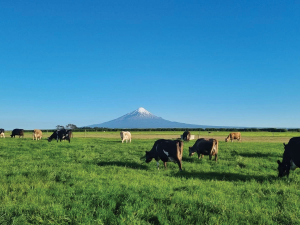
A spate of southerly winds bringing cold temperatures has presented challenges for Taranaki dairy farmers.
Converting a longstanding cropping farm to dairy was the only way to ensure the land stayed in the family long term, says new dairy farmer Rod May.
As the election heats up, Organics Aotearoa New Zealand (OANZ) has launched its election scorecard designed to help voters wanting to support policies that grow organic and New Zealand's organic sector.
A 'tsunami' of milk from key exporting countries is winding down and this may be good news for New Zealand dairy farmers.
Will the good times last? That's one of the key issues to come out of the latest Federated Farmers confidence survey.
Outgoing Fonterra Co-operative Council chair John Stevenson says that it has been a privilege to represent the co-op's farmer shareholders.




OPINION: The same mainstream media muppets that brought you Jacindamania in 2017 have been flat out pimping for the Opportunities…
OPINION: Your old mate reckons the atrocious way farmers in the UK are treated by their lords and masters in…




