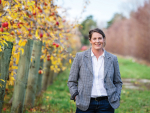
Horticulture New Zealand's chief executive Mike Chapman is impressed by the level of enthusiasm for country of origin labelling (CoOL) seen in Australian government, business and consumer circles.
CoOL is implemented in Australia and is being embraced and accepted, he told Rural News.
“It is clear that trade and consumers in Australia are excited about country of origin labelling. They were obviously into ‘buy fresh, buy local’, with television advertising, etc.
“Everywhere you went there was commentary about country of origin programmes being implemented. There [was a lot] about how to do CoOL, which our exporters will have to comply with.
“The television ad the government is running is very interesting – clearly designed to give consumers confidence in the programme.”
Chapman said this after attending the Hort Connections Conference in Adelaide, run by AusVeg with the Produce Marketing Association of Australia and NZ (PMA ANZ). At least 2000 people attended.
A bill to introduce CoOL is in the parliamentary select committee stage in NZ.
Asked about Beef + Lamb NZ’s belief that CoOL could be viewed as a trade barrier, Chapman says it is “bollocks” -- an argument the milk and meat lobbies are “trying out at the moment”.
“Most countries we trade with have some sort of country of origin labelling,” he says.
It only becomes a trade barrier if a country puts it into action in a discriminatory way.
“The US, for example, I think [imposed] on pork or beef meat a CoOL programme [that discriminated against] imported meat. The requirements on the importers of food from other countries were onerous compared to US [labelling]. That was considered discriminatory.
“If you don’t set up a level playing field system you might have a WTO issue, but if everyone is treated the same you don’t.”
A Horticulture NZ submission to the NZ parliamentary select committee says that if a large country we export to requires CoOL, it is allowed under international trade rules; it is only discriminatory if it breaches WTO rules and it gives governments social licence to pursue trade agreements by meeting consumers’ wishes.
A ConsumerNZ survey showed 71% of respondents want CoOL required by law for fresh fruit and vegetables and 72% want to know where their fresh fruit and vegetables come from.
Sixty-six percent of survey respondents look for CoOL labelling but find it only 32% of the time for fruit and 29% of the time for vegetables, the HortNZ submission says.
Fresh fruit and vegetables are often labelled by producers but by the time they reach the point of sale this has been removed, e.g. from packing crates.