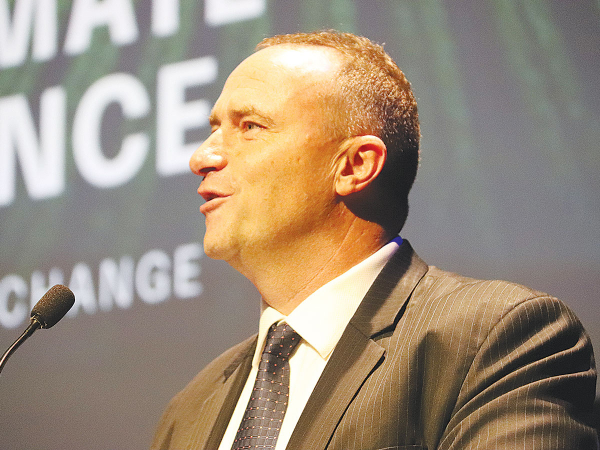
Some of the world's major food companies are demanding even more severe environmental targets than New Zealand has provision for in its own climate change legislation.
That's the view of Ministry for Primary Industries chief science advisor John Roche, who is also in charge of the ministry's recently set up On Farm Support organisation. Roche was one of the keynoe speakers at the recent Agricultural Climate Change conference held in Wellington.
He told the conference that consumers understand that the food system has a significant greenhouse gas footprint. Roche says somewhere between 20% and 30% of antigenic climate change is associated with food.
"So, the major food companies of the world have got the message from consumers to lower that and in turn are demanding that producers lower it as well."
Roche believes the charge for change is being led by the Europeans and they are pushing their farmers and growers to implement policies on farm to reduce their environmental footprint. He says such policies can have an economic impact on European farmers and they in turn are demanding that exporters, such as NZ, also comply with their standards.
Arguably this could be seen as a non-tariff trade barrier, but Roche claims if NZ wants to sell in certain overseas markets it has little choice but to comply with what amounts to local rules.
Roche noted at the conference that Agriculture Minister Damien O'Connor said that while NZ is a high quality and efficient producer of food, it is a small player in the global market and unless we comply with certain standards, people can source their food from other countries.
Roche says it's pretty clear that major global food companies are looking for carbon neutrality from the food system. He says agriculture accounts for 90% of the carbon footprint in food systems and that is inside the farm gate.
"We need to start there," he says.
On the positive side, Roche reckons he's never met a farmer anywhere in the world who doesn't want to do the right thing by climate change.
"Go to any farmers' conference and you will hear genuine conversations about their willingness to deal with climate change. It's a case of continuing the conversations and providing solutions and not just criticising, which is unhelpful."