Damien O’Connor Criticises Budget 2026 as ‘Miserable’ for Rural New Zealand
A miserable budget that didn’t deliver much for anyone.




 increase font size
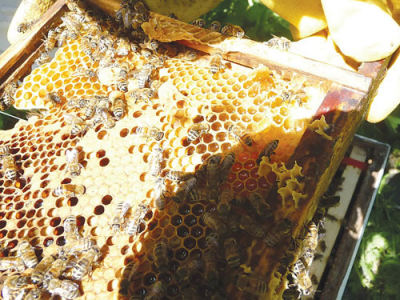 Many beekeepers are strongly opposing ApiCulture NZ's proposed commodity levy.
The bee and honey industry group ApiCulture NZ is proposing a commodity levy to support producers, but the idea is controversial: many beekeepers strongly oppose it.
Levy talks are going on NZ-wide and a formal vote is planned for mid-October; opponents believe it could be a close call.
The plan is to levy beekeepers 10 cents/kg on their honey at the point of extraction from the hive. Hobby beekeepers and honey packers would be exempt.
Commercial beekeepers are raising their voices in opposition.
Allan Pimm, acting president of NZ Beekeeping (mid-size professional beekeepers) says beekeepers’ concerns are many.
“The levy, seen as a tax on honey, would just be unfair,” Pimm says. “Some producers of high-quality manuka honey are still commanding high prices. But most producers of other honeys are facing falling prices in a crowded and increasingly competitive market. Proportionally, non-manuka producers will pay a lot more than the lucky ones.”
And there’s more, Pimm says.
“Many beekeepers will find this tax hard to pay. It seems unfair that packers, marketing firms and hobbyists beekeepers would all get to participate in the benefits of ApiCulture NZ’s work – even setting policy on the use of the levy – without paying.”
Other beekeepers see a conflict of interest in the proposed levy. They say non-beekeeper businesses that buy bulk product off beekeepers could get to influence policy affecting their suppliers.
NZ Beekeeping has told Agriculture Minister Damien O’Connor of its concerns that levy money would be used to fund unnecessary research and that administrative cost estimates are ‘optimistic’.
“The proposed use of funds is either unconnected to the concerns of potential levy payers, and/or would be duplicating existing provision by the government or commercial enterprises,” it said in a letter.
“We simply disbelieve the extraordinarily low administrative budget proposed by Apiculture NZ. The proposal is seriously flawed and not at all in the interests of potential levy payers.”
Russell Berry, the immediate past president of NZ Beekeeping, says it’s become a “matter of trust”.
“Commercial beekeepers aren’t opposed to a well-managed, fair and well-targeted levy,” he says. “But beekeepers tell us they just don’t trust ApiCulture NZ to manage a levy effectively and fairly. We agree with them and that’s why we’re opposing the levy.”
Berry says so far the mood in consultation meetings has been mixed, with a lot of opposition being voiced.
He believes the real issue facing beekeeping is biosecurity -- the risk of further exotic bee pests and diseases entering NZ.
“Such an incursion would affect pollination and honey production; and MPI estimates pollination of pasture and horticultural crops by bees at over $6 billion of value each year,” Berry says.
“Yet even the management plan for American foulbrood (AFB), an endemic disease we know we can defeat with diligent bee husbandry, has run into problems.
“The management agency -- ApiCulture NZ -- has been unable to get beekeepers to manage their hives well enough to defeat the disease. We don’t think ApiCulture NZ is competent to manage large levy programmes, on this basis.”
NZ Beekeeping says it has long called for a formal review of the management agency for AFB and believes the management of AFB by ApiCulture NZ has been a failure.
A miserable budget that didn’t deliver much for anyone.

National's decision to ‘dribble’ information about the NZ/India to Labour contributed to the delay in it deciding to supported the FTA.
When it comes to international trade, politicians from all sides of the aisle are united, says Labour's trade spokesman Damien O'Connor.
A big shakeup in the honey sector is about to take place with the news that the industry good body, ApiNZ, and the export focused Unique Manuka Factor Honey Association are looking to merge to form a new industry body.
Federated Farmers have reiterated their support for the coalition Government to abolish the present ban on the live export of animals.
New Zealand dairy farmers are set to be the first in the world to receive access to a new digital physical milk pricing tool that enables them to fix the price for their physical milk.
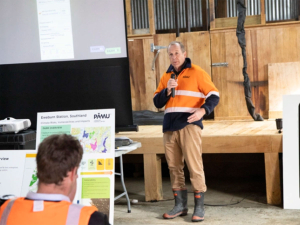
State farmer Pāmu is opening its farm gates this summer in an effort to give the rural sector the opportunity to see how large-scale, multi-system farming is delivering productivity and profitability across New Zealand.
A five-year study has found that the cost of reducing emissions without technology may be significant and unsustainable for Northland dairy farmers.
DairyNZ says Waikato farmers need certainty on Plan Change 1, but they say that certainty must be matched with practical, workable rules and a clear transition that doesn't get ahead of the new resource management system currently under review.
While the Government has moved quickly to make commercial hauliers' lot easier during the current fuel crisis, they appear to be stuck in the creep box when it comes to the agricultural industry.
Waikato farmers have been told that the Government’s new planning system legislation and the region’s Plan Change 1 (PC1) “won’t mesh together very well”.




OPINION: Central Hawke's Bay farmer Mark Warren recently told the Hawke's Bay Times it's time for a conversation about allowing…
OPINION: A nation that relies as heavily as NZ does on functional global shipping lanes will have to do its…