New minister's hort focus
The new Minister of Horticulture, Nicola Grigg, says the reason that she came into Parliament was because of her interest in and commitment to agriculture.




 increase font size
 National Party local government spokesperson Simon Watts.
National Party local government spokesperson Simon Watts claims Labour is planning to rush a backdown bill through Parliament with as possible in what he describes as “another undemocratic Three Waters play”.
In amongst a series of scandals impacting the Labour Government, Local Government Minister Kieran McAnulty introduced new legislation into the House to cover the changes to the Three Waters reforms announced in April of this year.
The legislation would see the initially proposed four entities expanded to ten, with boundaries established roughly along the lines of New Zealand’s 16 regional councils.
However, the decision has been made to have the bill go through Parliament before it rises for the election, meaning it would have to be back from select committee by the end of next month, Watts claims.
“A shortened process will rob Kiwis of the chance to have their say on Three Waters, which is what Labour wants,” he says.
“Over 80,000 Kiwis submitted on the bill, and they should have the chance to have their voices heard on this too. That can’t happen with the shortened process required to ram this through Parliament.”
Watts says that questions remain around the conduct of Department of Internal Affairs officials who made edits to the last Three Waters bill without select committee approval.
He says McAnulty – who wasn’t Local Government Minister at that time – needs to explain why DIA officials tampered with the bill before he tries to push another one through.
“Apart from being undemocratic, Labour has already shown how shambolic it gets when it tries to push through bills quickly,” Watts says, pointing to the issue with the entrenchment clause in the Water Services Enitites Act late last year, which he says caused a constitutional crisis.
If passed, the Water Services Entities Amendment Bill will see all entities go live between 1 July 2024 and 1 July 2026, with the Northland and Auckland Entity set to go live first on 1 July 2024.
The new Minister of Horticulture, Nicola Grigg, says the reason that she came into Parliament was because of her interest in and commitment to agriculture.

New Northland MP Grant McCallum is calling for cross Parliament consensus on long-term issues like water quality.
According to a new policy position from Infrastructure New Zealand, long-term financial independence is critical for enabling local water entities to sustainably manage water assets and water standards into the future.
Former Labour agriculture and trade minister Damien O'Connor hopes the new coalition Governent will continue the direction of travel initiated by his government in terms of ensuring the high reputation of our primary exports.
Former agriculture minister and speaker of Parliament Sir David Carter says the new National-led coalition faces significantly more important issues to deal with than previous governments.



During the nesting season, from September to December, industrious starlings can quickly build nests in the darker areas behind tractor and vehicle, usually close to hot engines, typically resulting in localised damage or in some cases complete write-offs.
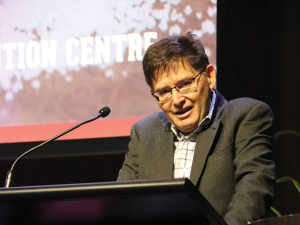
The meat processing industry is much more collegial than it was in the past and is now more focused on common goals.
With the last couple of months having seen some potential tractor purchases put on hold with the impending election and continued input cost rises, year-to-date figures, ending September, has seen deliveries up around 5% over the same period in 2025, with a total of 2026 units.
Beef+Lamb New Zealand is calling for nominations for director roles in the Northern South Island and Northern North Island electoral districts.
Fonterra chief executive, Richard Allen says being resilient has helped the dairy industry overcome extreme volatility in recent years.
The head of the Ministry for Primary Industries (MPI) trade and international relations group says New Zealand is well-positioned to secure trade access and compete internationally as the world becomes more complicated, demanding and uncertain.




OPINION: The same mainstream media muppets that brought you Jacindamania in 2017 have been flat out pimping for the Opportunities…
OPINION: Your old mate reckons the atrocious way farmers in the UK are treated by their lords and masters in…