Life in China is starting to get back to some semblance of normality, according to MPI’s deputy director general of China Relations.
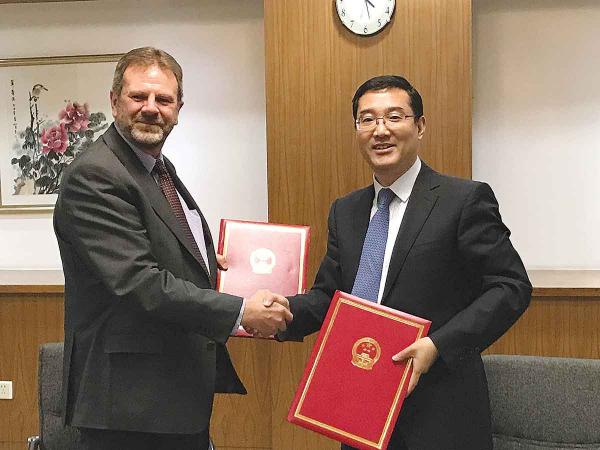
Tim Knox has just arrived back in New Zealand for a brief visit and spoke to Rural News from a hotel where he is isolating for 14 days. After a few weeks back in NZ, Knox and two other Ministry for Primary Industry staff will be heading back to the NZ Embassy in Beijing to become part of a complement of 10 staff MPI has based there.
Knox says he noticed that in most areas, volume patterns of food sales are consistent with previous years and – in some cases in the past few months – have exceeded what they were a year ago. He has also noticed a gradual return of people to restaurants.
However, Knox says the biggest change he’s observed is the acceleration in the use of online platforms by consumers as the means of purchasing their food. He says at the height of Covid-19, there was a sudden switch from going out to eat, which is very much part of Chinese culture, to staying home and ordering online. Knox believes the phenomenon of buying online is likely to continue.
“It [online shopping] was already big in China, but it has really gone a lot further forward,” he told Rural News. “People have to eat but the way they are eating has definitely changed and I suspect that may not return to what it was prior to Covid.”
At the height of Covid in China, as in NZ, there was a trend towards people buying food to cook at home as people could not go to restaurants. Knox says NZ food exporters have a strong focus on the Chinese middle class and are well attuned to their needs and adapted well to societal changes.
He says they are closely monitoring consumer trends and behaviours, but says the obvious trend is Covid itself. “There is a heightened awareness about Covid and how it’s transmitted. There has been quite a bit of media comment in recent times about it being present in food markets and packaging so there is a big focus on food in Chinese consumers’ minds.
“In the wider sense, they have a focus on food safety, authenticity and quality generally. In that respect, NZ is well positioned on all those points and there is high degree of confidence by the Chinese regulators about our food safety systems,” he says.
Because African Swine Fever has wiped out about a large percentage of China’s pig population, Knox says there is a huge shortage of protein in China. He says NZ has benefited from this situation, but while the opportunities are great now, NZ is taking the prudent step of continuing to export to a diverse range of markets around the world.
MPI's role in China
China is one of NZ’s most valuable export markets.
Last year, it took $20 billion worth of products from us. The MPI team headed by Tim Knox plays a vital role in maintaining that flow of primary product exports. He was appointed to head the MPI office in China in February.
MPI plays a ‘technical’ role – liaising directly with Chinese officials in their Ministry of Agriculture and Rural Affairs on such issues as biosecurity, food safety and product labelling to name a few. For NZ exporters having people with the technical expertise on the ground in China can mean the difference to getting, or not getting, products across the border and into markets.
MPI also plays a major role in ensuring that Free Trade Agreements operate as agreed and also work to improve or change access arrangements.
“We also oversee agricultural cooperation projects which are important for both parties,” Knox told Rural News.
“By having an involvement in these, we have a better understanding of the regulations that China is introducing. As well, we are there to fly the flag and tell the NZ story, so I speak at a lot of conferences and events telling the great NZ story about our primary industries and food exports.”