
Federated Farmers Welcomes ACT’s New Farming Policies
Federated Farmers has welcomed new rural policies released by ACT, saying they align closely with its own election priorities.




 increase font size
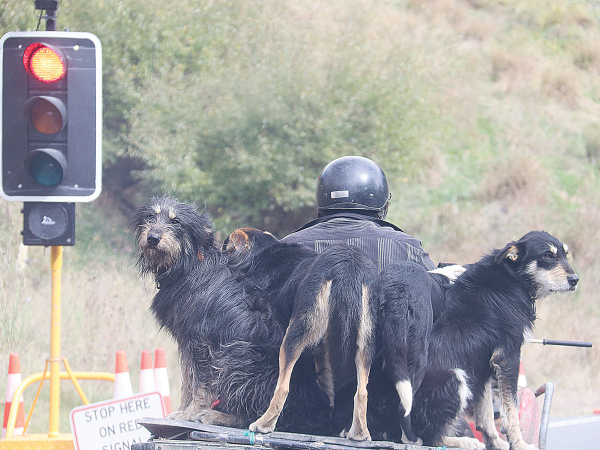 South Canterbury farmers are worried about continuing to farm their land due to new rules around the Sites and Areas of Significance to Māori.
South Canterbury farmers are worried about continuing to farm their land, with a local council bringing in rules around the Sites and Areas of Significance to Māori (SASM).
Local Federated Farmers chair Greg Anderson describes the new regulation as "death by a thousand cuts". He says farmers are worried about how the propsed regulations will impact on what they can do with their land.
Timaru District Council (TDC) has identified the first 4,000 property owners in the region whose land fits into the five categories of the SASM regulations - including cultural landscapes, land-based places, sacred land, waterways and sacred areas.
Under the Resource Management Act, councils must recognise and provide for the relationship of Māori culture and traditions of ancestral lands, water, sites, wāhi tapu (sacred place or site), and other taoka (treasure, especially items of historical cultural significance) through their district plan.
"We've already got SNAs, outstanding landscapes and biodiversity rules and now with SASMs. It is driving the farming community mad," Anderson says.
He is critical of the TDC who involved local rūnanga in developing the policy but did not consult the farming community.
"TDC did not involve landowners at the start of this consultation process in helping identify these sites."
The lack of farmer consultation is confirmed on the council's website, where it describes the process on how SASMs were identified.
"TDC has worked closely with local rūnanga, Arowhenua, to identify SASM. Rūnanga used a wide range of information from historic maps, oral histories and document archives held by agencies such as Te Rūnanga o Ngāi Tahu and NZ Heritage to identify areas that are culturally significant to Arowhenua Rūnanga," it says.
"Sites that were identified include for example, sites in which mana whenua lived/camped and gathered kai, burial sites, battle grounds, sites of spiritual significance and that is of importance to ancestors. These were looked at closely and their extents mapped and then how these SASM could be protected into the future."
Anderson claims that farmers are reasonable people and if any had rock art, a pa site or a burial ground on their properties most would go out of their way to look after these sites.
"But TDC is trying to bring in heavy-handed rules, which leads to needing resource consents to carry on farming and costs money," he adds. "Then you have to conult with the local rūnanga and get a cultural report done, which again, all costs money."
Anderson says while farmers will still have existing use rights, meaning if they have cultivated a paddock before or farmed in a certain way they will be able to continue.
"However, if you want to change or tweak your farming regime then you have got problems."
Federated Farmers has welcomed new rural policies released by ACT, saying they align closely with its own election priorities.

Federated Farmers is backing Feilding High School’s call to keep Agriculture and Horticultural Science as a standalone subject in Year 11.
National’s pledge to introduce 19 new national standards shows the party is serious about getting Wellington out of farming, Federated Farmers says.
Mobile phone coverage and reliability are deteriorating in rural areas, and farming families are bearing the cost, according to a Federated Farmers survey.
Central Otago District Council (CODC) has voted against a plan to spread treated sewage sludge from Cromwell and Alexandra on farmland near Lauder, a decision Federated Farmers says reflects strong opposition from rural residents.



Federated Farmers has welcomed new rural policies released by ACT, saying they align closely with its own election priorities.

Rural Contractors NZ says proposed changes to land transport rules for agricultural vehicles are a welcome response by the Government to out of date regulations which have seen members hit with huge fines.
Alliance is calling for final applications for its 2027 Graduate Programme, with applications closing on Sunday 25 October.
Decades piloting planes has ensured vet and farmer David Hayes is focused on safety. So, after a serious accident while welding on farm, he is sharing his experience so others can learn from it.
Canterbury milk processor, Synlait Milk has confirmed Leon Fung as its chief executive officer.
OPINION: Making it easier to collect rainwater and use it to grow crops and livestock is a no brainer.




OPINION: The same mainstream media muppets that brought you Jacindamania in 2017 have been flat out pimping for the Opportunities…
OPINION: Your old mate reckons the atrocious way farmers in the UK are treated by their lords and masters in…




