Though it may be wishful thinking in an election year, he says, if the Government wants effective results in a growing economy, policy changes -- especially on work visas -- should be aligned to skills shortages in different industries and regions instead of hampering an industry such as dairy.
Staff shortages in dairy farming are well documented and policy should align with this, the Hamilton owner of Greenstone Global Immigration Advisors says.
“This way there is flexibility to change settings as the labour market changes; that is why the skills shortage lists exist,” he told Rural News.
Sharratt isn’t surprised recent changes to immigration flagged by the Government haven’t gone down well in the South Island.
Prime Minister Bill English last week confirmed that the proposed immigration crackdown will be watered down after a backlash from provincial bosses. English says the policy won't be scrapped, just changed "around the parameters".
The Government announced in April an overhaul of the skills requirements for work visas as immigration heated up as an election year issue.
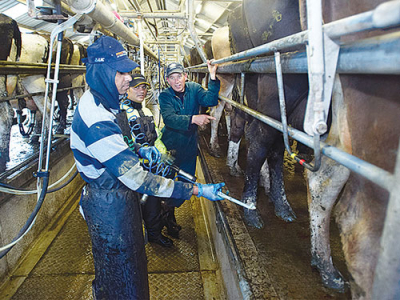
The dairy industry has complained about the proposed changes especially to temporary visas. Dairying has been short of skilled workers for many years and this appears to be worsening, Sharratt says.
“It makes no sense to place unnecessary roadblocks to obtaining key skills from overseas when unemployment figures are near historic lows. This will merely constrain the economy from further growth if businesses and farmers cannot find New Zealand staff to support their growth."
Sharratt says the table proposed by Government catches virtually all dairy staff below farm manager level, as only two ANZSCO codes exist: ANZSCO code 1 'farm manager' and ANZSCO code 5 'farm worker' with nothing in between.
This means the partners of a large portion of overseas staff will have no work rights and their children will not be able to attend school as domestic students; and getting them into a one-year cycle of visas will be unhealthy for the industry.
“Replacing a trained, established worker in NZ (due to the proposed stand-down period) with another one from overseas (likely because of the prevailing skills shortages) makes no sense.”
Sharratt points to the Federated Farmers remuneration survey of 2017 that shows 46% of dairy respondents found it “not at all easy” or “not very easy” to find employees.
WINZ skills-match reports show consistently thatNZers able to fill farming roles are unavailable.
Sharratt says market shortages show clearly that the categories 'herd manager' and 'assistant herd manager' should be returned to the skills shortage list.
All applicants who meet skills shortage list criteria should be allowed longer term visas, their partners to work and their children to attend school as domestic students, as they do now.