What Would Synlait Be Worth to Fonterra or a2 Milk?
Speculation of a possible joint move by Fonterra and a2 Milk to buy Synlait raises a much bigger strategic question, says agribusiness expert Dr Nic Lees.




 increase font size
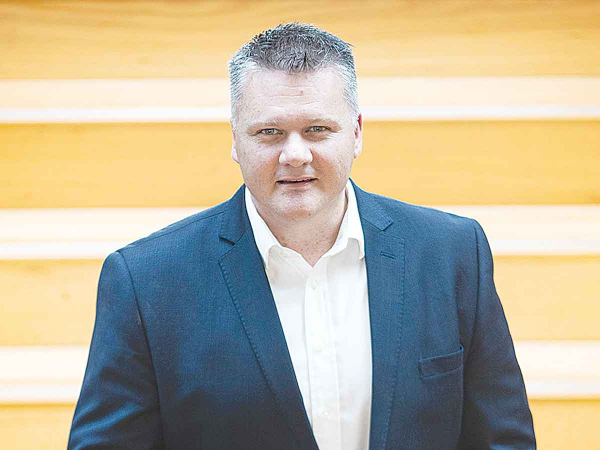 Fonterra chief executive Miles Hurrell has warned suppliers that many of its key customers have sustainability requirements that the co-op must meet and improve upon or risk losing their business.
Fonterra has told its farmer shareholders that on-farm sustainability must improve further or the co-op could lose $300 million of annual business from key customers.
The co-op says sustainability on farm is a fundamental requirement for most of its customers now.
In an email to farmer shareholders last week, Fonterra chief executive Miles Hurrell said many of its key customers have sustainability requirements “that we must meet and improve upon, and they regularly check up on us”.
“Collectively these customers represent over $2 billion in revenue annually and it’s estimated that approximately $300 million could be at risk if we do not meet their expectations.”
Hurrell made the comments as he announced a new milk payment linked to higher quality milk from supplying farms.
The new maximum payment of 10c/kgMS will be paid from the next season to farms meeting the co-op’s on-farm sustainability and value targets.
Presently, Fonterra farmers producing milk with lower somatic cell counts receive Farm Source dollars that can be redeemed at its stores. The new payment replaces Farm Source dollars and will be funded out of the farmgate milk price.
“The total farmgate milk price will remain the same across the cooperative, but the amount that each individual farm is paid will vary depending on their contribution,” says Hurrell.
“We’ve always paid our farmers based on the value that milk provides to the cooperative. The reality is that the drivers of value are changing, and we need to reflect that. Our customers want to know that the products they are buying are not only safe, but also produced sustainably.
“This payment helps us meet the changing needs of our customers, so they continue to choose our milk and enjoy dairy as a sustainable and nutritious choice.”
Hurrell says Fonterra is now seeing customers from across the globe requiring it to not only meet and improve upon their requirements, but also provide proof of completion.
“The risk is that these customers will move to competitors if they can demonstrate better performance, or a substitute for non-dairy products with lower footprints,” he says.
Nestlé spokesman Robert Erhard says at the world’s largest dairy company, how milk is produced matters.
“Now more than ever, people expect farmers to act as good stewards of the land – safeguarding the climate, enhancing animal welfare and carefully managing water and the health of soils.”
Northland farmer Terence Brocx says farmers put in a lot of effort to produce the best quality milk possible.
“Over recent years, large numbers of farmers have spent a significant amount of time and money to improve their local environment and waterways to make their farms sustainable for the future.
“It’s great to see these farmers distinguished and rewarded for their efforts to produce and deliver a product that Fonterra can capture the highest value from,” says Brocx.
Speculation of a possible joint move by Fonterra and a2 Milk to buy Synlait raises a much bigger strategic question, says agribusiness expert Dr Nic Lees.

In the past, much has been made of the concept of farm to fork, but an Australian expert in food science and marketing with experience in the dairy industry, Dr Angeline Achariya, says the reverse of this slogan is critical to win modern day consumers.
A four year trial has reaffirmed that mixing plantain into dairy pastures can help reduce nitrogen losses to freshwater while maintaining milk production and profitability, say researchers.
Fonterra has opened its upgraded Chengdu Application Centre, bringing New Zealand dairy expertise closer to customers in one of China's fastest-growing regions.
Tatua chair Stephen Allen says he leaves the co-op with a deep sense of gratitude for the people who have contributed to its success.

Chinese beef trade quotas and a looming suspension of Brazilian beef imports into the European Union are expected to reshape global beef trade flows over the remainder of 2026, with implications for New Zealand exporters, according to Rabobank's Q3 Global Beef Quarterly report.
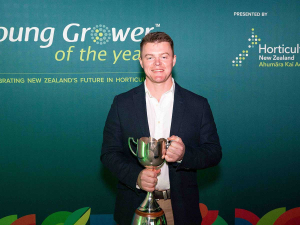
James Blair, an agronomist for AS Wilcox and the Pukekohe regional champion, has won the 2026 Young Grower national title.
An Auckland gelato shop and an established New Zealand ice cream maker have both been named Supreme Champions at the NZ Ice Cream & Gelato Awards 2026.
As the cost-of-living crisis continues to put pressure on household grocery budgets, new figures show pork remains one of the most affordable fresh meat options for New Zealand families.
OPINION: In politics, credibility is and should be big. It must surely rank higher than charisma, which is quite trite and superficial. Yet, voters nowadays are often wooed and influenced by how someone looks or talks at a superficial level. TV plays a huge role in this.
Farmers can spend less time on paperwork, thanks to a new data sharing agreement between DairyNZ’s DairyBase and LIC’s MINDA software.



OPINION: The same mainstream media muppets that brought you Jacindamania in 2017 have been flat out pimping for the Opportunities…
OPINION: Your old mate reckons the atrocious way farmers in the UK are treated by their lords and masters in…