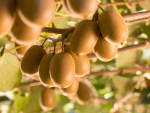
NZKGI Responds to Migrant Worker Exploitation Reports
Where any worker in the kiwifruit industry is mistreated, we expect the authorities to take action.




 increase font size
 MyFarm’s head of investment research Con Williams.
Despite its good market returns, growth capital is limited for the horticulture sector.
The two most significant growth areas in the primary sector are currently horticulture and forestry.
Forestry is sourcing capital from a range of places such as private investors, government support programmes and foreign investment to fund its growth.
However, in the horticulture sector the sources of growth capital are more limited. There is no direct government incentives and both foreign investment and bank credit terms are restrictive at present. This leaving it largely to New Zealand owner-operators and companies with some support from banks to fund growth.
It’s an unusual time in many respects with the good market returns and expanding production since 2012 defying many of the normal 101 rules of economics that apply to fresh produce and food products.
In terms of sector expansion in horticulture, the big three of vineyards, kiwifruit and apples are leading the charge with their greater critical mass, which allows them to move quickly. However, in terms of the rate of growth there are some other rising stars with increasing critical mass such as hops, cherries and manuka honey.
The sectors are delivering unique products, often with protected intellectual property. The best current example is SunGoldTM kiwifruit, which is protected under licence for the next 20 years. It has been both a market hit, but also yields well. There are many other examples across the pipfruit and berry sectors.
Export companies are generally targeting affluent market segments in high growth Asian countries and traditional western markets. The cherry industry is a great example having become a luxury good purchased for festive occasions during the Chinese New Year which has supported prices.
Operators within the sector are often vertically integrated and there is often a high degree of collaboration between supply chain participants. This results in efficiencies, consistent quality and market access to desired consumers. In a development that was unthinkable a decade ago, the New Zealand cherry sector, for example, is selling increased volumes through e-commerce channels in Asia which accelerates the time it takes for a product to get to the consumer and this lowers supply chain costs.
Growers and industry organisations have also invested in strong brands that emphasise uniqueness, quality, service and the New Zealand story. This is best demonstrated by Rockit™ miniature apples. It is not only a great product but has curated a strong brand based around its unique packaging.
Growers are incentivised with market-based payments that reflect the quality characteristics most desired by customers. Green kiwifruit maybe viewed as a commodity, but growers are heavily rewarded for quality (40% of Orchard Gate Returns) and this means New Zealand products achieve significantly higher premiums than other producers.
The industry focuses on high margin, high growth product categories within the health, wellness and convenience segments of a market channel. Manuka honey is a great example where a wide range of health and wellness products, such as throat lozenges, have been created off the back of its special properties.
Finally, the sector has a great record of applying best-practice management from orchard through to the end customer and innovating through all stages of the supply chain, from production to processing, storage and distribution.
Thanks to these factors, the sector’s growth has been fantastic. But it has also brought with it challenges. The perennial issue of access to labour at key times of the year has become more acute, the growing demand for water is seeing the need for new investment in dams and irrigation technology, while root stock of key cultivars is sometimes limited.
What is perhaps more surprising is the recent tightening in the sector’s access to capital to help solve some of these issues and fund further expansion. This is a surprise especially since the current blueprint is lifting confidence in the sector’s ability to maintain the current healthy earnings performance into the future.
The main culprits of tightening access to capital is the government’s current restrictions on foreign investment in New Zealand farmland and tighter bank credit. Of course, money never sleeps, and others are stepping up to the plate. Many involved in the kiwifruit sector are using recent earnings to diversify and invest in other horticultural sectors. Iwi groups are doing a similar thing with treaty settlements and to provide employment opportunities.
There are also some new institutional investors that are building horticultural portfolios. In MyFarm’s case we are partnering with others in the various sectors to create investment opportunities. This can take a range of forms depending on the opportunity and partner requirements.
A great example is the commercialisation of RockitTM apples where demand for the product is well-outstripping supply. In this case, MyFarm investors are helping provide capital to support production and RockitTM takes care of everything else.
These relationships are providing a new avenue for those outside of the sectors to put their money to work in an area that has traditionally been difficult to access.
(Up to 24.9% of a business/farmland greater than 5 hectares can be owned by foreign investment without regulatory approval).
• Con Williams is head of investment research for MyFarm, which syndicates primary sector investment opportunities for wholesale investors.
Where any worker in the kiwifruit industry is mistreated, we expect the authorities to take action.

Kiwifruit growers are watchful but remain optimistic as concerns around the potential effects of the El Niño weather pattern this season.
James Blair, an agronomist for AS Wilcox and the Pukekohe regional champion, has won the 2026 Young Grower national title.
Claimed to be the first autonomous robot for New Zealand vegetables growers, the first Kilter AX-1 unit has arrived in the country.
After delivering a strong financial year, rural trader PGG Wrightson says the coming months will depend on customer confidence and weather.


Farmer-owned fertiliser company, Ballance Agri Nutrients is welcoming National’s plan to negotiate security agreements with key supplier countries to protect New Zealand-bound products from export restrictions and greater supply chain certainty.

Carrfields has announced the appointment of Stu Hall to the newly created role of chief operating officer, Carrfields Ltd, reflecting the continued growth of their agribusinesses and the need to ensure the company has the leadership capacity and support in place as it pursues the emerging opportunities ahead.
New Zealand's role is not to compete with Indian growers, according to NZ Apples and Pears.
The potato industry is celebrating the success of two rising stars - James Blair, the 2026 Young Grower of the Year and runner-up and innovation award winner, Amber Davy.
Twenty-eight emerging leaders from across the horticulture sector spent two days last month learning valuable skills and connecting with industry experts.
There are five entrants in this year’s Young Horticulturist of the Year, competing in a series of technical, practical, business and leadership challenges.



OPINION: The same mainstream media muppets that brought you Jacindamania in 2017 have been flat out pimping for the Opportunities…
OPINION: Your old mate reckons the atrocious way farmers in the UK are treated by their lords and masters in…




