BCS Targets: Why Body Condition Score Matters at Calving
Body Condition Score (BCS) is a critical element in managing the health and reproduction of the dairy herd.




 increase font size
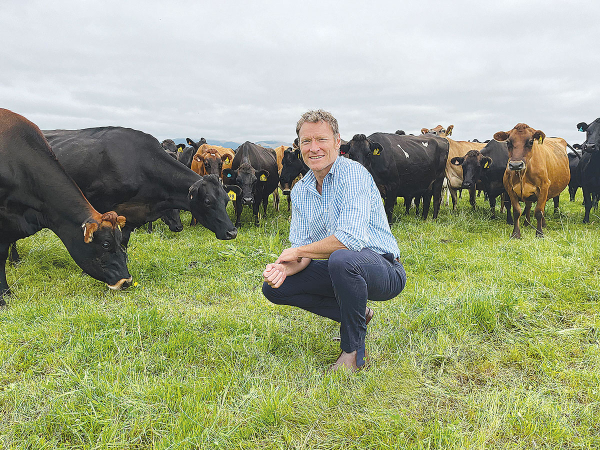 DairySmart chief executive Ben Davidson says he is proud to help play a pivotal role in helping tackle antibiotic resistance head-on.
A mastitis management company claims to deliver the fastest and most accurate mastitis testing available at scale for New Zealand dairy farmers.
DairySmart, winner of the 2023 Technology Innovation at the National Primary Industries Awards, says it is on a mission to transform mastitis management in New Zealand. In the process, it claims its testing systems can make less stressful for farmers and their staff, improve cow well-being, reduce antibiotic use and tackle antibiotic resistance - all while reducing costs.
The company's leading edge diagnostic system centres on a novel system of whole herd milk culture-based pathogen screening and the Jupiter machine. This is said to be world first AI and machine learning software technology for sample analysis, from which DairySmart feeds results back to farmers and their vets within 48 hours of taking a milk sample.
The technology identifies infected cows and which pathogen, giving a clear picture of cows with harmful bacteria lurking in their milk.
The company adds that its validated in-flow sample tool fitted to each milking line is different from existing techniques and has applied for a patent for the design. It means no hand sampling and allows its techs to on-farm test 160-200 cows per hour.
Human error is removed from the process via a specially designed wand, which reads each cow’s ear tag and logs it directly to RFID embedded sample pottles.
There is no need for handwriting in this system.
The company claims farmers who have implemented DairySmart say it has been a game-changer, empowering them and their teams with hard data, enabling better decision making, and easing the frustration, stress and cost of repeatedly dealing with mastitis cows.
Over 50,000 cows have now been sampled across NZ and farmers have apparently seen up to a 45% reduction in drycow antibiotic use compared to other strategies.
Antibiotic Use Drops
On Mike Prattley’s 2200 cow North Canterbury farm, antibiotic usage is down 90% after two years of using DairySmart diagnostics.
Meanwhile, mastitis is down 55% and SCC are down 33%, according to DairySmart.
Chief executive Ben Davidson puts the potential impact for DairySmart in perspective.
“When you think of the NZ autumn, we have got about five million cows that are dried off in a two-month window,” he explains.
“Some of them need certain antibiotics, but many of them don’t and up until now, there hasn’t been a fast, accurate way to mass sample and culture these cows for identifying individual mastitis pathogens, or to mass process the results.”
Davidson says DairySmart can process thousands of cow’s milk samples a day, and any result that its Jupiter machine is not 100% sure about is referred to SVS Labs for their microbiologists to analyse. The results are then fed back into the software, constantly improving the machine’s ability to diagnose milk cultures.
“The way the whole antibiotic resistance issue is shaping up for our veterinary industry,” he adds. “Vet practices are becoming a really important part of supporting responsible, strategic use of antibiotics and DairySmart is what they’ve been missing.”
Body Condition Score (BCS) is a critical element in managing the health and reproduction of the dairy herd.
Bull management involves ensuring the right number of healthy bulls for your herd, minimising stress and reducing injury risks.
It's easy to look over a lush spring paddock and assume cows are getting enough usable nutrition. But while fast-growing pasture can give plenty of volume, in high moisture, variable dry matter and uneven mineral profile can leave real nutrition gaps when cows need it most.
Rearing facilities should be set up and maintained well to ensure calves stay healthy.
Solid biosecurity practices, regular monitoring and timely vaccination are the three key pillars of effective Bovine Viral Diarrhoea (BVD) control on New Zealand farms. Zoetis veterinary technical advisor, Karley DeFrees, explains BVD is a costly but preventative disease that impacts a significant number of dairy farms in New Zealand. Implementation of a BVD control plan can help protect your herd from this avoidable disease.



Celebrating 50 years in the rural landscape of Central Canterbury and beyond, Ashburton-based Carrfields, has been the exemplar for all aspects of modern agriculture via its extensive range of services including supply, growing, agronomic advice and marketing.

For Taupiri dairy farmers Logan and Sian Dawson, their involvement in the NZ Dairy Industry Awards has been a key catalyst in the growth of their business - the experience helping shape how they approach the farm ownership pathway they are pursuing today.
West Otago dairy farmer Luke Kane has been awarded the 2026 Rabobank Dr John Morris Business Development Prize.
OPINION: As the general election approaches, political parties are churning out policies in the hope of attracting more votes.
An LIC bull, Tronnoco AR Sadio-ET S3F, bred by Tony and Keri O'Connor of Tronnoco Farming Co Ltd near Timaru, has won the 2026 Mahoe Trophy.
With forecasters advising El Niño conditions will develop through winter and strengthen into spring and summer, Ballance Agri-Nutrients is encouraging farmers and growers to think ahead about nutrient planning and be prepared to work around challenging weather conditions.





OPINION: The same mainstream media muppets that brought you Jacindamania in 2017 have been flat out pimping for the Opportunities…
OPINION: Your old mate reckons the atrocious way farmers in the UK are treated by their lords and masters in…