A landmark Māori agribusiness programme has been launched by Waikato University in partnership with the NZ Institute of Primary Industry Managers (NZIPIM).
The reason for initiating this programme comes from NZIPIM, which says it has received feedback from members who deal with Māori. They say consultancies are struggling to recruit people who could effectively advise and engage with Māori landowners, whenua Māori entities and primary sector businesses - which is a significant and growing part of the sector.
NZIPIM says there is a need to grow the total talent pool in this area, noting the capability and capacity building is a key purpose of their organisation.
Based on the obvious need for more Māori rural professionals, NZIPIM worked with the University of Waikato to further develop the idea for a cohort model that will attract in a group of school leavers and students to study a Bachelor of Business.
The students will major in agribusiness and then can do a second major or a couple of minors in areas like Māori & Indigenous studies, or finance/accounting, earth science and law.
Waikato University says the Māori food and fibre sector is integral to the economic, cultural and environmental prosperity to New Zealand with the wider Māori agri economy, including seafood contributing more than $2.4 billion to the GDP.
It says that Māori agribusinesses must be supported to make the most of their primary sector assets to meet future needs and aspirations. Waikato University says for Māori, the capability required from their primary industry advisors is high and specialist and the current availability of such support is low.
"The Māori Agribusiness Programme aim to solve this problem by growing the capacity and capability of advisors to support whenua Māori", says the university.
As part of the new programme students will industry exposure through field trips to businesses and summer internship placements to ensure that they get real world experiences.
There will also be up to 15 scholarships for students entering the programme. At present additional sponsors are being sought to help fund the programme.
Good Education
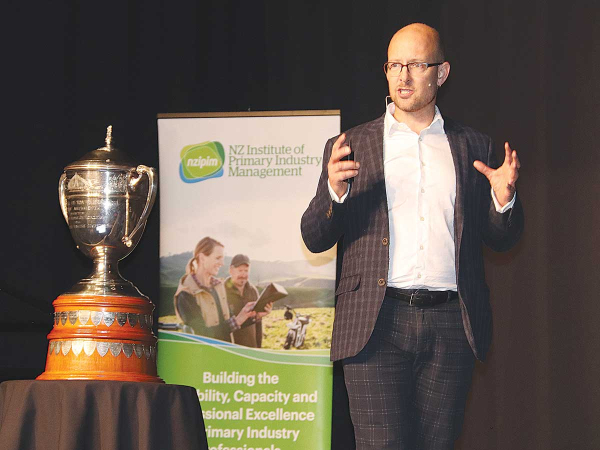
The late afternoon session on the first day of the NZIPIM conference was taken up with the session on Māori agribusiness. It included keynote addresses by people who work alongside Māori in the agri space.
One of these was Lee Matheson from Perrin Ag who described Māori agri as a vibrant diverse and innovative sector and noted that Māori's relationship with the land is different.
He says often people accuse Māori of taking a long time to make decisions, but says they fail to realise that Māori need time to get consensus from their people. He also offered a couple of good tips to consultants dealing with Māori.
"Understand Māori politics and then stay out of the way," he says.
Local Māori leader Leigh Bason says he's right behind the initiative by Waikato University and NZIPIM. He says there is a lot of Māori land that needs to be managed and to do this, young Māori need a good education - something he says he didn't really have.
He says he sent all his children to boarding school, which kept him poor, but he doesn't regret it.
But he points out that those young Māori taking up the course need to realise that they are doing this for mokopuna - not themselves.
"It's about the next generation," he says.