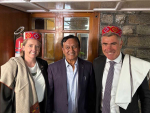
NZ Apple Growers Ready to Share Expertise in India
New Zealand's role is not to compete with Indian growers, according to NZ Apples and Pears.




 increase font size
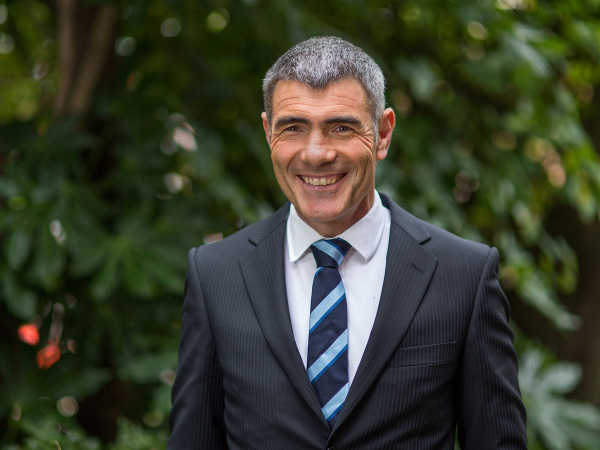 Meat Industry Association chair Nathan Guy.
The Meat Industry Association (MIA) and Beef + Lamb New Zealand (B+LNZ) say they welcome the announcement that the European Union’s Deforestation-free supply chains Regulation (EUDR) will be delayed by 12 months.
The red meat sector has been advocating strongly for a delay and a review for almost two years.
The two industry bodies say the announcement shows that the haste with which the regulation was designed and implemented was going to disrupt global supply chains and threaten $200 million worth of NZ exports.
MIA chair Nathan Guy says while the red meat sector supports the intent to tackle global deforestation, both MIA and B+LNZ believe the EUDR has been poorly designed, poorly drafted, and is not fit for purpose.
“The EUDR would impact approximately $200 million worth of beef and leather exports to the EU," Guy says.
“Instead of incentivising the trade of deforestation-free products, the EUDR sees exports from countries with extremely low instances of deforestation, like New Zealand, treated the same as countries where there is a high-risk of this occurring.
“New Zealand beef exports’ sustainability credentials need to be formally recognised and treated differently to competitors with deforestation issues.”
B+LNZ chair Kate Acland says New Zealand has strong sustainability credentials and is committed to preserving forests.
“Sheep and beef farms contain approximately 25 percent of the total native vegetation (tussock, native bush, and scrubland) in New Zealand, comprising 2.8 million hectares.
“This should be recognised by New Zealand’s trading partners, particularly those we have a Free Trade Agreement with.
“Unlike some of our competitors, New Zealand has a significant trend of afforestation, not deforestation. This regulation was not appropriate for New Zealand’s situation and risks adding additional unnecessary cost into the supply chain.
“Maintaining market access settings for New Zealand’s beef is critical with approximately 60 percent of export revenues flowing through to farmers.”
B+LNZ’s UK-based Regional Manager for the EU and UK, as well as in market activity from NZ-based staff, has been integral to securing the delay, she says.
“New Zealand’s voice was key in helping EU regulators understand that even their most sustainable trading partners would struggle to comply with these regulations.
“This is not the first time the sector has been successful in its advocacy efforts to address non-tariff trade barriers with the EU and follows the successful exclusion of sheep products from the EUDR in 2022," she says.
“The desire to extend EUDR to sheep products still exists in some EU circles and we will continue our advocacy efforts in this space.
“B+LNZ and MIA thank the Minister for Trade and Agriculture, Hon Todd McClay, and New Zealand government officials for their hard work in advocating for this outcome. We look forward to working together to secure a more permanent solution.”
New Zealand's role is not to compete with Indian growers, according to NZ Apples and Pears.
New Zealand's red meat and fifth-quarter exports reached $867 million in August, up 23% on the same month last year, as stronger returns lifted earnings across all major markets.
Meat Industry Association data, released alongside the Red Meat Sector conference in Wellington, shows export value climbing across the US, China, UK and Canada.
Esther Guy-Meakin has been announced as the new chief executive of the New Zealand Meat Board (NZMB).

Farmer-owned fertiliser company, Ballance Agri Nutrients is welcoming National’s plan to negotiate security agreements with key supplier countries to protect New Zealand-bound products from export restrictions and greater supply chain certainty.

Carrfields has announced the appointment of Stu Hall to the newly created role of chief operating officer, Carrfields Ltd, reflecting the continued growth of their agribusinesses and the need to ensure the company has the leadership capacity and support in place as it pursues the emerging opportunities ahead.
New Zealand's role is not to compete with Indian growers, according to NZ Apples and Pears.
The potato industry is celebrating the success of two rising stars - James Blair, the 2026 Young Grower of the Year and runner-up and innovation award winner, Amber Davy.
Twenty-eight emerging leaders from across the horticulture sector spent two days last month learning valuable skills and connecting with industry experts.
There are five entrants in this year’s Young Horticulturist of the Year, competing in a series of technical, practical, business and leadership challenges.



OPINION: The same mainstream media muppets that brought you Jacindamania in 2017 have been flat out pimping for the Opportunities…
OPINION: Your old mate reckons the atrocious way farmers in the UK are treated by their lords and masters in…




