
NZ Food Safety Boss on Balancing Speed and Risk in Approvals
Striking a balance between meeting the needs of industry to speed up approval time for products but on the other hand ensuring that risks are properly assessed.




 increase font size

New Zealand's policy makers' misunderstanding of 'food safety,' may be adding thousands of dollars to the individual cost of agricultural production at the farm gate.
The World Bank in New York made this major admission to Massey University's Executive MBA students, says one of those students Letitia Isa.
"I was stunned to learn what we know as 'food security' is defined by the World Bank as 'food safety'. It may sound like semantics but it carries a huge implication for our agricultural producers and exporters," says Isa.
"This simple but fundamental misapprehension may see New Zealand jumping ever higher but illusionary hurdles. Instead of higher standards boosting returns, they may in fact be eroding them for almost no financial gain.
"When the World Bank says food safety they are not talking stainless steel, the National Animal Identification and Tracing Scheme or the Emissions Trading Scheme. What the World Bank means is how New Zealand can contribute to the feeding nine billion people by 2050.
"That carries with it a powerful but different policy message.
According to the University of Waikato's Professor of Agribusiness, Jacqueline Rowarth, New Zealand can feed some 24 million people. The United Nation's Food and Agriculture Organisation says developed countries need to increase output by 70% to do their bit.
"It might sound provocative, but we need to seriously weigh the cost-benefits of adopting polices that do not generate tangible revenue at the farm gate, or increase production," says Isa.
"While European supermarkets seem to be a de facto political and policy benchmark, are ever higher compliance costs worth it?
"It may sound counter intuitive, but perhaps quantity does have a quality all of its own. A simple metric maybe if a policy adds a dollar of cost, does it produce well over a dollar of added revenue at the farm gate?
"Moreover, are our other policy settings, particularly around Genetically Modified Organisms, retarding New Zealand's ability to do its fair global share?
"Certainly, the way the World Bank defines food safety needs to become central to New Zealand policy formation. If not, we risk unprecedented global disorder that New Zealand could not escape," Isa concluded.
Striking a balance between meeting the needs of industry to speed up approval time for products but on the other hand ensuring that risks are properly assessed.
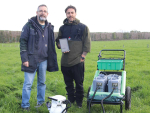
Researchers at Massey University are using a special piece of scientific equipment to improve the measurement of greenhouse gas emissions from pasture soils.
A partnership between state-owned enterprise Pāmu (Landcorp Farming Limited) and charity Meet the Need is putting more than quality New Zealand beef into food bank parcels this year.
Interest in agritech and production animal systems has prompted Massey University's School of Agriculture and the Environment to new majors to its popular animal science degree.
Testing confirms H5 bird flu in a single northern giant petrel, found dead on a remote Cape Palliser beach in the Wairarapa, says Dr Mary van Andel, the Ministry for Primary Industries' (MPI) Chief Veterinary Officer.


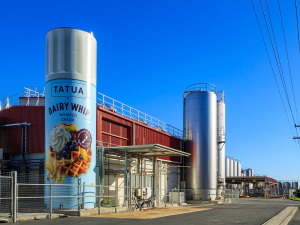
Waikato milk processor Tatua has again declared a record milk payout to farmer shareholders, leaving other processors in the dust.

A Labour-led Government won’t be bringing back the controversial freshwater rules of 2020.
National’s much-touted free trade deal with India featured in the Rural Issues Debate at Mystery Creek, Hamilton on Wednesday night.
New Zealand's 2026-27 freshwater fishing season has opened, with anglers encouraged to head to rivers and lakes over the coming days as conditions look favourable across much of the country.
Central Otago District Council (CODC) has voted against a plan to spread treated sewage sludge from Cromwell and Alexandra on farmland near Lauder, a decision Federated Farmers says reflects strong opposition from rural residents.
Pāmu has released its FY26 Integrated Annual Report, reporting a Net Operating Profit of $113 million, more than double the $49 million recorded in FY25.





OPINION: The same mainstream media muppets that brought you Jacindamania in 2017 have been flat out pimping for the Opportunities…
OPINION: Your old mate reckons the atrocious way farmers in the UK are treated by their lords and masters in…




