Federated Farmers Welcomes ACT’s New Farming Policies
Federated Farmers has welcomed new rural policies released by ACT, saying they align closely with its own election priorities.




 increase font size
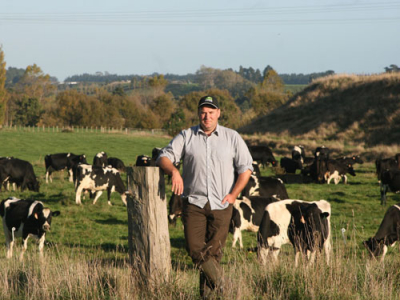 Feds Vice-President Andrew Hoggard.
Pessimism about the economic outlook is a sour note among the otherwise generally positive indicators in the Federated Farmers July Farm Confidence Survey.
This is the 19th time the twice-yearly survey has been conducted and for the first time farmer optimism has increased in all areas except their continuing negative perceptions of the economy, Feds Vice-President Andrew Hoggard says.
"We should take heart that perceptions of farm profitability, production and spending have become more positive, and that farm debt levels have dropped slightly since the January survey.
"The concern is that when asked how they feel general economic conditions will fare over the next 12 months, nearly half of the more than 1,100 farmers who responded expected conditions would worsen. That’s the lowest level of confidence since July 2012, and a five-fold increase in pessimism in the last 12 months," Hoggard says.
"There seems to be a fear factor at play here. Farmers are feeling very uncertain about what the coalition Government will do next on key issues such as water regulations, climate change and industrial relations."
In spite of this, expectations for farm profitability over the next 12 months are up slightly, with 30% anticipating an improvement and 48% expecting profits to remain stable.
Dairy and arable farmers are noticeably more optimistic about profitability than they were in the January survey. However, meat and wool farmers are noticeably less optimistic, perhaps reflecting a concern that the past season’s excellent farmgate prices might not be sustained this season, Hoggard says.
The survey, conducted by Research First, found four to six times more farms across the sector groups (dairy, meat & wool, arable and ‘other’) are making a profit vs making a loss. However, more arable farms are just breaking even compared to making a profit, and the number making a loss - 9.7% - is equal highest with dairy.
In a ranking of their greatest concerns, regulation and compliance costs remains No 1 (down 3 points to 18%). Heightened concern about pests, diseases and biosecurity (up 7 points to 12%) is thought to be driven by the stress and uncertainty caused by the campaign to eradicate the cattle disease Mycoplasma bovis.
"Climate change policy and the ETS is at No. 3 (up 3 points to 10%). That reflects farmer uncertainty over the Government’s more ambitious approach to reducing greenhouse gas emissions, and concern agriculture biological emissions may be included in the ETS even though there are - as yet - no significant mitigating actions farmers can put in place," Hoggard says.
Federated Farmers has welcomed new rural policies released by ACT, saying they align closely with its own election priorities.
Federated Farmers is backing Feilding High School’s call to keep Agriculture and Horticultural Science as a standalone subject in Year 11.
National’s pledge to introduce 19 new national standards shows the party is serious about getting Wellington out of farming, Federated Farmers says.
Mobile phone coverage and reliability are deteriorating in rural areas, and farming families are bearing the cost, according to a Federated Farmers survey.
Central Otago District Council (CODC) has voted against a plan to spread treated sewage sludge from Cromwell and Alexandra on farmland near Lauder, a decision Federated Farmers says reflects strong opposition from rural residents.


Federated Farmers has welcomed new rural policies released by ACT, saying they align closely with its own election priorities.

Rural Contractors NZ says proposed changes to land transport rules for agricultural vehicles are a welcome response by the Government to out of date regulations which have seen members hit with huge fines.
Alliance is calling for final applications for its 2027 Graduate Programme, with applications closing on Sunday 25 October.
Decades piloting planes has ensured vet and farmer David Hayes is focused on safety. So, after a serious accident while welding on farm, he is sharing his experience so others can learn from it.
Canterbury milk processor, Synlait Milk has confirmed Leon Fung as its chief executive officer.
OPINION: Making it easier to collect rainwater and use it to grow crops and livestock is a no brainer.



OPINION: The same mainstream media muppets that brought you Jacindamania in 2017 have been flat out pimping for the Opportunities…
OPINION: Your old mate reckons the atrocious way farmers in the UK are treated by their lords and masters in…




