While the ASB is predicting lamb prices will stay elevated, Rabobank says the outlook is positive for “most New Zealand producers across an unusually broad base of sub-sectors”.
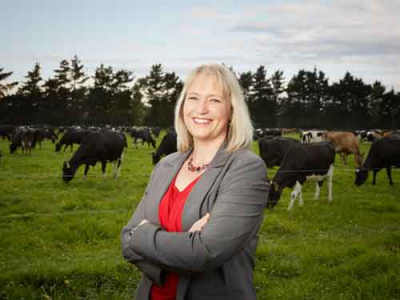
As the second consecutive good year after a run of tougher years, 2018 looks set to generate a sense of sustained recovery in agriculture, says Rabobank NZ country banking general manager Hayley Gourley (formerly Moynihan).
“The world economy is enjoying a broad-based recovery and the prices of the key commodities produced in NZ are generally high, while prices for key farm inputs, especially fertiliser, are generally low,” she said.
“The bank retains a bearish outlook for the NZ dollar over the next 12 months, which further plays into the hands of the country’s export-focused agricultural producers, and we anticipate a strong performance from NZ’s key agricultural sectors in 2018.”
Gourley says an additional positive for the sector was the settled nature of NZ agriculture’s downstream processing and marketing industry.
“Fonterra is making money in its offshore businesses and has cleared overhanging litigation, while other dairy processors are performing well. In the meat sector, recent ownership changes have now been bedded down which have contributed towards increased profitability and reduced debt levels and there now appears to be far greater certainty about industry structure and strategy than evident in recent years,” she says.
“The horticulture industry has lately made great strides in its processing capability and the recent investment in post-harvest processing, storage and infrastructure looks set to continue this year.”
However, she says, there could be ‘curve balls’ – dry weather limiting capacity to capitalise on better markets.
“Considerable uncertainty also remains about how policy decisions made by the new coalition government will impact the rural sector, while the outbreak of Mycoplasma bovis is a further local industry development which must be addressed.”
Gourley says discussion continues as to where the industry should place itself on the spectrum between low cost/nimble producer and the niche/high value/sustainability-led positioning.
“The direction of government policy will become clearer as the year progresses and we will learn a lot more about the how far the government is willing to push policy on wages, foreign direct investment, carbon emissions and water. To sustain the sense of momentum in NZ agriculture, a sensible regulatory approach will be required which has the buy-in of farmers and consumers.”
ASB’s senior rural economist Nathan Penny says 2018 has started where 2017 left off for lamb prices. In fact, average prices over January 2018 have been higher only in January 2012.
“From here, we expect a modest seasonal decline through late summer and autumn, with lamb prices remaining strong for this time of the year.”
Per kg lamb prices fell only 10c/kg over January 2018 versus 20c/kg average fall in the same period over the past five years.
“There remains a risk that drought could see slaughter levels spike and lead prices lower than we expect. However recent rain has reduced this risk, except in the southern South Island.
“All up, the 2017-18 season is shaping up as one to remember,” Penny says.