
NZ dairy farmers repay $1.7 billion in debt as milk price hits $10/kgMS
Dairy farmers are shoring up their balance sheets, with almost $1.7 billion of debt repaid in the six months to March 2025.




 increase font size
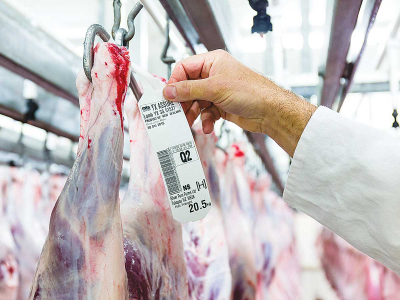 Confidence in the meat sector is strong due to good returns for beef, lamb and mutton.
Despite generally strong commodity prices, farmer confidence remains at near record lows, according to the latest Agri Focus report from ANZ Bank.
“Confidence at the farm level remains subdued despite returns being near record levels,” the bank’s December 2019 report says.
“Farmers remain concerned as to how future environmental legislation will impact the profitability of their business.”
It adds that dairy land values are also under pressure for the same reason.
“These factors are more than offsetting the confidence that would normally be associated with a strong milk price.”
The bank says sheep are likely to be favoured over cattle where changes to farming practices are required in order to meet tightening water quality rules.
“Water quality regulations aimed at keeping cattle out of waterways and reducing sediment runoff will generally have a greater impact on cattle farming than sheep farming,” it says.
“However, the tighter regulation will have an even greater impact on the dairy sector. Any reduction in dairy intensity is likely to result in lower demand for grazing for young stock and wintering of cows.”
ANZ believes beef cattle numbers may need to increase to partially offset the reduction in dairy grazers.
Meanwhile, it reiterates that looming regulations on water quality and carbon emissions are negatively impacting on farmer sentiment.
“Over the longer term, environmental regulations focussing on greenhouse gas emissions are likely to have the greatest impact on production systems. But in the near term, water quality is where the immediate focus sits for much of the industry.
“While there are many scientific solutions being worked on at present to mitigate impacts, there is still a huge amount of uncertainty as to whether any of these potential solutions will succeed.”
ANZ also says the rising costs of production are also a concern.
“Farm operating costs have lifted nearly twice as much as the general rate of inflation. Costs which have lifted the most in percentage terms are fertiliser, fuel, insurance premiums and shearing costs.”
It also reports that “significant increases” were also recorded in the cost of feed and the price of livestock.
“Interest rates are the only cost category to have fallen,” the bank says. Meanwhile, it reports that confidence in the meat sector is strong due to returns for beef, lamb and mutton all being ‘extremely high’.
“Meat prices have sky-rocketed due to the global shortage of meat primarily caused by the reduction in pork production in China. While prices have eased marginally both in-market and locally, the price of meat is expected to remain elevated in the coming months.
“Mutton prices have hit record levels internationally and locally. Lamb schedules have just eased back below the record price of $9/kg CW attained in November.”
On the beef front it says strong competition between buyers from China and the United States has pushed beef manufacturing prices up significantly.
“Bulls are now worth more than prime steers.”
The ANZ report also point out that dairy prices have also lifted.
“Strength in milk powders combined with a subdued NZ dollar has allowed our milk price forecasts for the current season to lift to $7.45/kg MS,” it says. “Our 2020-21 forecast is up 10c to $7.60/kg MS.”
The banks says forestry’s outlook remains uncertain due to global markets.
Dead cat bounce?
After plunging in the previous quarter to its lowest level since early 2016, farmer confidence has lifted in the final Rabobank rural confidence survey of the year.
However, the bank says farmer sentiment still remains at net negative levels.
Rabobank’s November survey found improved confidence among farmers from all sector groups. This saw the overall confidence reading rise to -12% in the latest quarter – from -33% in the previous survey.
The survey found the number of farmers expecting the rural economy to improve in the next 12 months increased to 21% (from 8% last quarter), while the number expecting the rural economy to worsen fell to 33% (from 41%).
Dairy farmers are shoring up their balance sheets, with almost $1.7 billion of debt repaid in the six months to March 2025.

With further extreme weather on the way, ANZ Bank is encouraging farmers and business owners impacted by the recent extreme weather and flooding to seek support if they need it.
OPINION: Two years on from Cyclone Gabrielle, I've learned that while the power of Mother Nature is formidable, it is more than matched by the extraordinary capacity of locals to recover and rebuild.
There is uncertainty in the dairy industry despite a 'normal' pricing outlook.
A report by the ANZ bank says New Zealand is failing to take full advantage of promoting our quality food to tourists to this country.


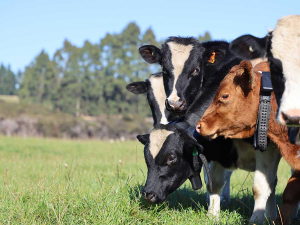
High country stations, mixed sheep and beef farms, Māori-owned farms, corporates and family operations are among the nine commercial farms taking part in the Livestock Innovation Farming Transformation programme, known as LIFT.
OPINION: New health and safety guidance unveiled by the Government recently provides farmers greater certainty about what is expected of them when managing risks on farm.
The National Animal Welfare Advisory Committee (NAWAC) is seeking public feedback on proposed changes to the Code of Welfare for Rodeos.
A New Zealand initiative supporting farmers to restore the health of grazing landscapes has received international backing through the Regenerative Fund for Nature, a global collaborative fund supporting regenerative agriculture and the communities that produce natural fibres for the fashion industry.
Combine premium New Zealand products, blend in a family ritual and what do you get? A world-class functional drink.
Entries are now open across eleven regions for the 2027 New Zealand Dairy Industry Awards (NZDIA).



OPINION: The same mainstream media muppets that brought you Jacindamania in 2017 have been flat out pimping for the Opportunities…
OPINION: Your old mate reckons the atrocious way farmers in the UK are treated by their lords and masters in…




