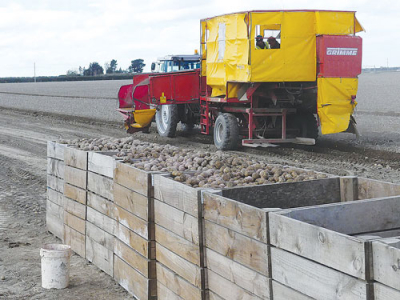
Some Pukekohe potato growers are reporting up to 30% losses due to rot, says Potatoes NZ chief executive Chris Claridge.
“We don’t have as many potatoes as we normally do and that is driving up prices,” he told Rural News.
Some processors and some brands are experiencing difficulties with supplies for chips, he says. He does not have the exact detail of the supply chain management behind the scenes.
“We know processors in the North Island must have been affected by the wet weather,” he says.
“It has been raining since March in the north. We have been getting these wet nor’easterlies, which are relatively unusual and there hasn’t been the corresponding dry weather to dry out the fields to harvest or plant.
“So we are behind in the planting.”
Reports are coming from Pukekohe that crops planted in July are rotting because of ongoing rain.
“Some growers are reporting up to 30% losses in Pukekohe due to rot.”
The industry appears to be about one to two weeks behind in planting; most of the processing, i.e. chipping, potatoes get planted this month.
However it depends where the crops are and Claridge says South Island crops are not so affected.
“There has been a fair amount of rain in Canterbury, but not nearly as much as in the North Island. About 50% of the potato crop is grown between Timaru and Rakaia. They are not experiencing the same losses as Pukekohe and seem to be in reasonably good shape.
“The North Island is a different story though. In Pukekohe it still keeps raining,” he says.
“Table-top potatoes grown in Pukekohe will also be affected and some North Island chip processors get their potatoes from Pukekohe, Matamata, Hawkes Bay and Horowhenua. They have all been impacted to a degree.
“There is a general processing potato shortage. Normally those potatoes are grown under contract.”
But he says people shouldn’t worry about potato shortages for Christmas.
“November is new potatoes month -- when new season potatoes become available in supermarkets.”
Claridge says the wet is affecting all vegetable suppliers and overall vegetable prices are 6.5% higher than this time last year.