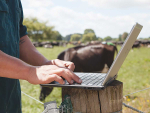
DairyBase and MINDA Link Up to Cut Farmer Paperwork
Farmers can spend less time on paperwork, thanks to a new data sharing agreement between DairyNZ’s DairyBase and LIC’s MINDA software.




 increase font size
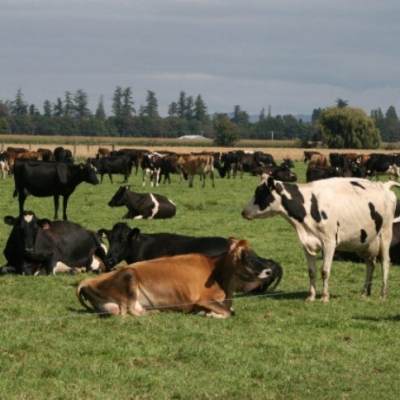
GOOD GRASS growth, high production and a record payout will see many of New Zealand's dairy farmers look back on the 2013-14 season as one of the best in history – and now the statistics prove it.
The New Zealand Dairy Statistics 2013-14, released by LIC and DairyNZ last week, show the country's 4.92 million cows achieved a new record in milk production, surpassing 20 billion litres in the 2013-14 season. The milk contained 1.83 billion kgMS, worth $15.5 billion with the season's $8.47 average dairy payout.
DairyNZ senior economist Matthew Newman says the past season's record milk production and prices have helped put farmers in a better position to cope with the rapid decline in milk prices this season.
"Sixty-five per cent of the increase in milk production last season came from the North Island, following the drought in 2012-13, so the increase reflects greater production of milksolids per cow up 30 kilograms to 357kgMS/cow. In the South Island there has been new milk in the industry from extra cows (+103,000).
"It has all added up to a great combination for farmers – the best season many can recall. We had good pasture growth, a high payout and farmers responded by making the most of the opportunity to produce a lot more milk."
Across the country, the national herd grew by 138,600 cows (2.9%) and production from each cow was up 7.2%. Genetic merit also improved, with the average cow's breeding worth (BW) and production worth (PW) increasing 14% and 10% respectively.
BW and PW measure profitability of livestock, to help farmers identify their best animals and the best genetics to mate their herd.
Dr Steve Harcourt, LIC commercialisation & industry relations manager, says the statistics confirm the progressive attitudes of New Zealand dairy farmers and the value of good genetics to improve productivity and prosperity.
"It's no accident that the increasing trend of production correlates to the increase in Breeding Worth.
"Around three-quarters of the national herd are sired by an LIC bull. They are bred to deliver high quality offspring that will perform and produce in New Zealand conditions, with each generation bred to be better than the last.
"Combined with the proactive attitudes of farmers, their willingness to adopt new solutions that drive efficiency gains on-farm and their ongoing commitment to the fundamentals of herd improvement – that's what has delivered this season's great results."
Harcourt believes "it's those attitudes that will help farmers get through this season with the lower payout, and continue to set new benchmarks in the future."
The New Zealand Dairy Statistics document provides a review of the industry for the 2013-14 season, with statistics from the LIC database, Animal Evaluation database, NZ dairy companies, TBfree New Zealand, NZ Real Estate Institute and Statistics New Zealand.
The Dairy Statistics represent all New Zealand dairy farmers and include cow production and population, operating structures, breed breakdown, herd testing, artificial breeding, calving, milk prices, land prices, and disease control.
The full document is online at: www.lic.co.nz/publications and www.dairyatwork.co.nz/industry.
Farmers can spend less time on paperwork, thanks to a new data sharing agreement between DairyNZ’s DairyBase and LIC’s MINDA software.
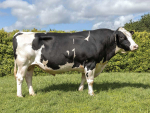
An LIC bull, Tronnoco AR Sadio-ET S3F, bred by Tony and Keri O'Connor of Tronnoco Farming Co Ltd near Timaru, has won the 2026 Mahoe Trophy.
Bovine Viral Diarrhoea (BVD) is estimated to cost New Zealand's dairy and beef industries more than $150 million every year, yet many of the tools needed to control it are already well understood. After more than 25 years in veterinary practice, Andrew Weir, animal health technical specialist at LIC, has seen firsthand the impact BVD can have on herd performance. We asked him about the role of persistently infected (PI) animals and the practical steps farmers can take to reduce their risk.
In the past, a bull could sit comfortably in a breeding team for several years with little change, but today, that’s no longer the case.
Paynes Titus Excelsior ET, an LIC bull bred by Brad Payne and Claire Brodie in the Waikato, has won the JT Thwaites Sire of the Season 2026 Award.


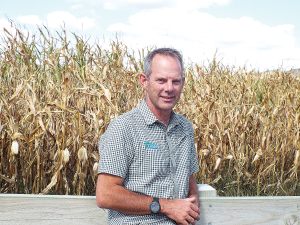
Surprised, humbled and quite thrilled. That’s the reaction of James Allen, one of the founding partners and now chief executive of AgFirst, on being made a life member of the Institute of Rural Professionals.
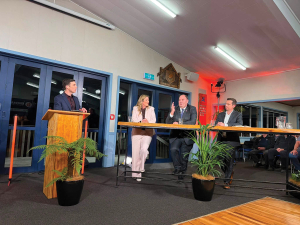
It was billed as a chance for all the political parties to woo the rural vote, but question marks hang over just how effective this was.
Minister of Conservation Hon Tama Potaka has appointed Susan O'Regan as Chair of the Queen Elizabeth II National Trust (QEII) for a three-year term.
Red meat farmers are welcoming Labour’s plan to review the Emissions Trading Scheme and not to campaign on pricing agricultural emissions.
Where any worker in the kiwifruit industry is mistreated, we expect the authorities to take action.
Mid Canterbury Federated Farmers arable chair, Bevan Lill, said Beef + Lamb NZ data indicated that for the last six years, the average arable return on investment was about 0.8% while inflation ran about 4% - so the average arable farm was going backwards at about 3% a year.


OPINION: The same mainstream media muppets that brought you Jacindamania in 2017 have been flat out pimping for the Opportunities…
OPINION: Your old mate reckons the atrocious way farmers in the UK are treated by their lords and masters in…




