
FAR Eyes NZ Grain as Dairy Supplementary Feed
Dr Scott Champion, Foundation for Arable Research chief executive, says that everyone in the supply chain had a role to play in driving the sector's long-term success.




 increase font size
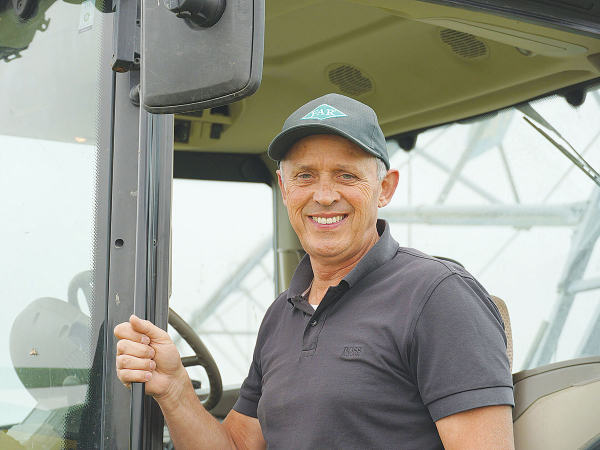 FAR chair Steven Bierema supports the Future Fields 2030 strategy.
The arable sector, which contributes $2 billion to the economy annually, has launched a new strategy.
Called Future Fields 2030 - the New Zealand Arable Production Growth Strategy, it builds on the arable sector's strong base of agronomy-focused research and extension, adding three priorities: building skills for success, standards of excellence, and enabling infrastructure.
The strategy was launched at Foundation for Arable Research (FAR) CROPS field day at its Chersey Arable Research Site near Ashburton last week.
FAR chair Steven Bierema says it is pleased to support the Future Fields 2030 strategy.
"This strategy is crucial for ensuring that our growers are equipped to meet emerging market demands and is directly aligned with FAR's commitment to driving research and development to enhance farmer profitability and sustainability."
Federated Farmers arable industry group chair David Birkett says the strategy "will enable growers to better capture future opportunities and develop more autonomy within their businesses".
The strategy has set timelines and measures for delivery through to 2030, with funding sought from levies, industry and government.
Bierema says arable farmers are the unsung heroes of New Zealand's primary sector, contributing more than $2 billion to the economy through their production of grain, high value seed and an increasing range of other crops.
In addition to growing cereals such as wheat, barley and oats, New Zealand is the largest radish and white clover seed producer in the world and major player in grass seeds, contributing to exports more than $270 million per annum. Outputs from the arable sector are also vital to the $35b livestock industry, through seeds for pastures, grains and other inputs for animal feed.
He says New Zealand's arable growers manage complex farming systems, often with a wide range of crops grown in rotation, usually in combination with livestock.
The new strategy is a collaboration between FAR, Federated Farmers' Arable Sector Group, United Wheat Growers and the Ministry for Primary Industries.
The strategy considers how arable growers' businesses, and the sector overall, might be strengthened and better equipped to identify and pursue high value opportunities into the future.
During the strategy's development, the initial focus was identifying potential new crops for the arable sector. However, it became clear that arable grower are already managing complex crop rotations and, with support from entities such as FAR, continually upskilling to enable the growing of new crops.
Building skills include everything from improving financial literacy to evaluating value chain opportunities beyond the farm gate, enabling arable farmers to connect with food innovators, start-ups and existing food businesses.
Standards of excellence involves identifying and verifying the production and environmental assurance standards required to provide customer confidence and build preference for New Zealand arable growers and their products.
The third tier involves identifying infrastructure opportunities, both on and off farm. This includes exploring possible machinery pools/syndicates to reduce costs of production, addressing infrastructure gaps on-farm and opportunities for investment off-farm in arable transport, storage and processing infrastructure.
Dr Scott Champion, Foundation for Arable Research chief executive, says that everyone in the supply chain had a role to play in driving the sector's long-term success.

Flat pricing in the face of significant increases in costs is the greatest problem facing the arable sector, says Foundation for Arable Research (FAR) chief executive Dr Scott Champion.
OPINION: Warning bells are ringing in the arable sector.
Mid Canterbury Federated Farmers arable chair, Bevan Lill, said Beef + Lamb NZ data indicated that for the last six years, the average arable return on investment was about 0.8% while inflation ran about 4% - so the average arable farm was going backwards at about 3% a year.
Four years since it was first detected in New Zealand, researchers and growers now know much more about management of maize pest fall armyworm (FAW).


Federated Farmers has welcomed new rural policies released by ACT, saying they align closely with its own election priorities.

Rural Contractors NZ says proposed changes to land transport rules for agricultural vehicles are a welcome response by the Government to out of date regulations which have seen members hit with huge fines.
Alliance is calling for final applications for its 2027 Graduate Programme, with applications closing on Sunday 25 October.
Decades piloting planes has ensured vet and farmer David Hayes is focused on safety. So, after a serious accident while welding on farm, he is sharing his experience so others can learn from it.
Canterbury milk processor, Synlait Milk has confirmed Leon Fung as its chief executive officer.
OPINION: Making it easier to collect rainwater and use it to grow crops and livestock is a no brainer.


OPINION: The same mainstream media muppets that brought you Jacindamania in 2017 have been flat out pimping for the Opportunities…
OPINION: Your old mate reckons the atrocious way farmers in the UK are treated by their lords and masters in…




