
China No Longer Just A Commodity Story - Luxon
China remains New Zealand’s biggest market, taking $23 billion of our exports, but it’s no longer a commodity story, says Prime Minister Christopher Luxon.




 increase font size
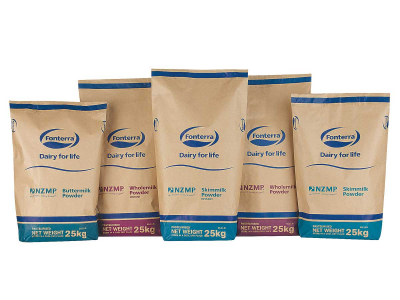 Whole milk powder prices were down 6.2% in last week’s GDT on the back of coronavirus.
Demand for dairy products in China hangs on what further steps the Chinese Government takes to stem the spread of coronavirus.
Westpac market strategist Imre Speizer says there are risks to near-term demand which could be affected by coronavirus developments.
The steps that China has taken to contain the outbreak – such as extending the Lunar New Year holiday period, and limiting the movements of people – has kept many factories closed.
Speizer told Rural News has meant less demand for their inputs, including milk powder.
“These disruptions might prove to be short-lived, but that depends on what further steps the government might take to contain the spread of the virus.”
Last week, global prices tumbled; whole milk powder price dropped 6.2% to hover just above the US$3000/MT mark.
Speizer says the obvious explanation for last week’s decline is uncertainty regarding the coronavirus outbreak.
“Financial markets have been reacting to those developments for around two weeks, with global equities, interest rates, industrial commodities and risky currencies falling sharply,” he says.
“Moreover, whole milk powder futures prices had been falling since late January. It was unsurprising, then, that last week’s GDT auction followed suit.”
The forecast milk price also hinges on supply coming out of New Zealand: persistently dry conditions in the upper North Island and eastern South Island could see milk production fall short of what the market is expecting.
Fonterra figures show in December 2019, the co-op collected 184 million kgMS from farmer suppliers: 0.6% down for the same month in 2018, according to its monthly global dairy update.
Season to date collection was over 909m kgMS, 0.5% down on the previous season.
North Island milk collection in December was 106.4 million kgMS, down 2.5% on last December. Season to date collection was 564 million kgMS, down 0.4% on last season.
Fonterra says December weather had some impact on pasture quality in some northern regions, however grazing crops are doing well, and cow condition remain very good.
South Island milk collection in December was 77 million kgMS, up 2.2% on last December. Season to date collection was 345 million kgMS, down 0.6% on last season.
“Favourable weather conditions across Canterbury continued, allowing for excellent pasture growth rates,” it says.
Westpac is still maintaining its $7.40/kgMS forecast milk price for Fonterra suppliers.
China remains New Zealand’s biggest market, taking $23 billion of our exports, but it’s no longer a commodity story, says Prime Minister Christopher Luxon.

Fonterra is strengthening its foodservice presence in China with the launch of a new cream for professional bakeries at Bakery China 2026 in Shanghai.
OPINION: What does the birth rate in China have to do with stock trading? Just ask a2 Milk Company.
Additional tariffs introduced by the Chinese Government last month on beef imports should favour New Zealand farmers and exporters.
One of the most galling aspects of the tariffs whacked on our farm exports to the US is the fact that, now more than ever, US farmers are being propped up by government welfare – a direct result of Trump’s hardline on its trading partners.


Farmer-owned fertiliser company, Ballance Agri Nutrients is welcoming National’s plan to negotiate security agreements with key supplier countries to protect New Zealand-bound products from export restrictions and greater supply chain certainty.

Carrfields has announced the appointment of Stu Hall to the newly created role of chief operating officer, Carrfields Ltd, reflecting the continued growth of their agribusinesses and the need to ensure the company has the leadership capacity and support in place as it pursues the emerging opportunities ahead.
New Zealand's role is not to compete with Indian growers, according to NZ Apples and Pears.
The potato industry is celebrating the success of two rising stars - James Blair, the 2026 Young Grower of the Year and runner-up and innovation award winner, Amber Davy.
Twenty-eight emerging leaders from across the horticulture sector spent two days last month learning valuable skills and connecting with industry experts.
There are five entrants in this year’s Young Horticulturist of the Year, competing in a series of technical, practical, business and leadership challenges.




OPINION: The same mainstream media muppets that brought you Jacindamania in 2017 have been flat out pimping for the Opportunities…
OPINION: Your old mate reckons the atrocious way farmers in the UK are treated by their lords and masters in…




