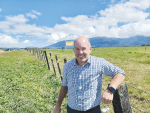
Top dairy CEO quits
Arguably one of the country's top dairy company's chief executives, Richard Wyeth has abruptly quit Chinese owned Westland Milk Products (WMP)




 increase font size
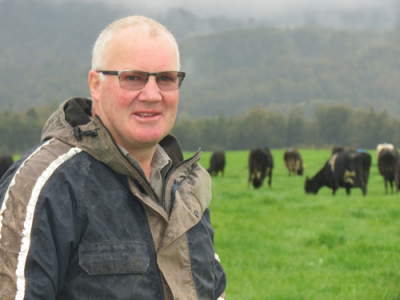 Outgoing chairman Matt O’Regan.
Problems in the Chinese market and delays in commissioning its new nutritional plant are being blamed by Westland Milk Products for some of its recent financial woes.
The company incurred a $14.5 million net loss after tax for the financial year ended March 31, 2016.
Revenue fell by $51m to $588m, attributed to the weakness of the international dairy market and the continued global oversupply of milk – mainly from Europe.
Outgoing chairman Matt O’Regan says the problems were exacerbated by the strong NZ$ against the US$. The move into higher value added products required new plant and the returns have not been as good as anticipated.
Delays in commissioning the nutritional plant, and the changing rules in China for nutritional products made it difficult for Westland Milk to perform to its expectations, O’Regan says.
General market uncertainty is also a problem.
“There was a lot more competition from milk out of Europe so the nutritional one has been slow; the same with UHT. UHT from Europe especially has filled the gap we were looking to have a share of with our premium product in China and we are currently working on new markets and options for our UHT.
“Overall, UHT has been disappointing and there is work to be done there to build the market so we can get the returns we need to benefit from our UHT plant.”
Westland has an office in China and while the results there were disappointing, it would have been worse had they not had a presence there, he says.
“China has always been a difficult market and it is important to remember that 20% of WMP’s products go there. They want premium quality imported milk, be that nutritional or different types of UHT, and there is a premium there that is not in the rest of the world.
“While the new regulations have put a dampener on the market, the reality is more babies will be born there and it is a growing market for imported infant formula.”
O’Regan says despite the present downturn he’s confident that with quality products and good customer relations WMP can do reasonably well there.
Westland cannot compete by relying on commodity returns from its milk, O’Regan says. And the co-op remains confident in its strategy of recent years, underpinned by UHT and nutritional product processing capability built during the last year.
Arguably one of the country's top dairy company's chief executives, Richard Wyeth has abruptly quit Chinese owned Westland Milk Products (WMP)
OPINION: This old mutt well remembers the wailing, whining and gnashing of teeth by former West Coast MP and Labour Agriculture Minister Damian O’Connor when Chineseowned Yili took over the troubled dairy company Westland Milk a few years back.
Westland Milk has reaffirmed its commitment to pay farmer suppliers 10c above Fonterra farm gate milk price for the following two seasons.
Not all milk processors in New Zealand are struggling; just look at Westland Milk Products on the West Coast.
Dairy farmers supplying Chinese-owned Westland Milk Products in Hokitika had another reason to celebrate this holiday season.

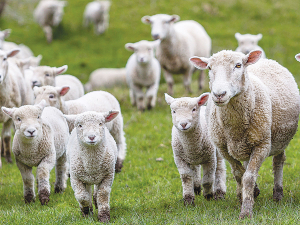
A New Zealand initiative supporting farmers to restore the health of grazing landscapes has received international backing through the Regenerative Fund for Nature, a global collaborative fund supporting regenerative agriculture and the communities that produce natural fibres for the fashion industry.
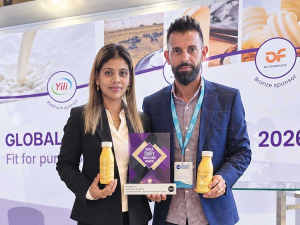
Combine premium New Zealand products, blend in a family ritual and what do you get? A world-class functional drink.
Entries are now open across eleven regions for the 2027 New Zealand Dairy Industry Awards (NZDIA).
Safer Farms is urging farmers to make sure everyone working on farm has safe, suitable footwear for the job.
The Government is backing work on a community-led water storage scheme that could irrigate up to 11,000 more hectares of the Poverty Bay flats, Agriculture Minister Todd McClay says.
Agri-tech company Herd-i has become a new all-region sponsor of the New Zealand Dairy Industry Awards (NZDIA), the largest nationwide celebration of excellence in the dairy sector.


OPINION: The same mainstream media muppets that brought you Jacindamania in 2017 have been flat out pimping for the Opportunities…
OPINION: Your old mate reckons the atrocious way farmers in the UK are treated by their lords and masters in…




