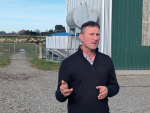
Farm Safety Improves Through 'Incremental Gain', Says Birkett
Improving health and safety is about incremental gain rather than a sudden decision, says Leeston farmer and Federated Farmers health and safety spokesman David Birkett.




 increase font size
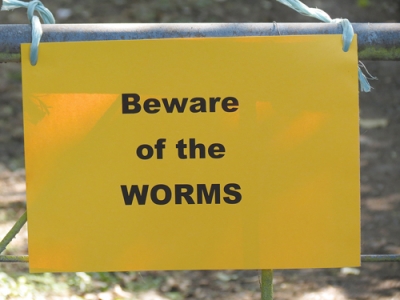
The minister for Workplace Relations and Safety, Michael Woodhouse, says he’s concerned about the ridicule dogging the passage of the Health and Safety Reform Bill.
MPs in Parliament laughed about some aspects of the bill, for example, mini golf and worm farming deemed high risk activities while normal farming was classified as low risk.
Woodhouse says this has led to a misconception by some farmers that they are ‘off the hook’ on health and safety -- a complete fallacy.
While businesses with fewer than 20 staff, such as some farms, will not have to appoint a health and safety representative, that does not free them from the requirements of the act.
“In fact the bill creates a framework which sets a much higher expectation of everybody participating at work – workers, managers, owners, directors; they all have greater obligations to themselves and others to be safe,” Woodhouse told Rural News.
“In some organisations the appointment of a health and representative may be the easier rather than the harder path. The way the modern workforce is changing, in particular smaller business, there can’t be a one-size-fits-all approach to a health and safety framework.
“But there has to be an approach and not having a health and safety rep does not let farmers off the hook.”
Woodhouse says too many farmers take a fatalistic approach to risk, saying accidents ‘just happen’. He believes the biggest challenge facing the farming community is a commitment to reduce or eliminate tolerance of injury.
“I support the comments by Federated Farmers’ Katie Milne, who said often where a farmer or manager is working side by side with workers, they don’t need a health and safety rep to tell them what the hazards and risk are; they are living them every day along with their workers.
“But there needs to be clear and open communication about the management of those hazards and any new ones that emerge. And zero tolerance of poor industry practice.”
Woodhouse says while he’s disappointed the bill has caused some sideshows, health and safety is being talked about and he expects a positive spin-off.
Improving health and safety is about incremental gain rather than a sudden decision, says Leeston farmer and Federated Farmers health and safety spokesman David Birkett.
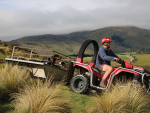
A safety push across New Zealand has revealed significant gaps in hazardous substances management, farm vehicles, tractors, quad bikes and side-by-sides.
Keeping healthy and safe during vintage 2026
Following a side-by-side rolling into a gully, Safer Farms has issued a new Safety Alert.
Farmers are welcoming new Government proposals to make farm health and safety rules more practical and grounded in real-world farming.


Dairy processors are ready to further boost New Zealand’s export earnings but want the incoming government to match their ambition with good policy.
Massey University is best placed to solve the “problems” facing the dairy industry, says vice chancellor, Pierre Venter.
Synlait's longest serving employee – a man who joined the Canterbury-based milk processor even before it began processing milk – is now its newest executive.
A dairy industry leader believes eradicating the common and costly disease, Bovine Viral Diarrhoea (BVD) is within reach.
A farmgate milk price of $10/kgMS this season is firming up as milk powder prices soar and the New Zealand dollar weakens.
Federated Farmers has welcomed new rural policies released by ACT, saying they align closely with its own election priorities.

OPINION: The same mainstream media muppets that brought you Jacindamania in 2017 have been flat out pimping for the Opportunities…
OPINION: Your old mate reckons the atrocious way farmers in the UK are treated by their lords and masters in…




