Despite conditions in the farm machinery industry, which can only be described as difficult, the German-headquartered Claas Group has reported net sales of €5 billion for the 2024 financial, around €1.1 billion, or 19% lower than the corresponding period in 2023.
A company spokesperson says tight producer prices, elevated interest rates, extreme weather conditions and geopolitical tensions have all combined to elevate levels of uncertainty, meaning farmers and contractors have been hesitant in buying new tractors and machinery.
Despite the drop in sales, the business has successfully navigated a tough 2024 fiscal year, ending on September 30, delivering an operating profit before depreciation of €584 million compared to €769 million in 2023, alongside a net income of €253 million, against €347 million in the previous year.
“We have performed well in the highly competitive agricultural machinery market,” says CFO Henner Böttcher. “Despite a significant decline in sales, our strong earnings demonstrate our resilience. Today, it is paying off that we adapted our structures and processes early, amid a phase of high market dynamics and increasing geopolitical uncertainties.”
Claas chief executive officer Jan-Hendrik Mohr says that the business has remained on course and managed costs efficiently, while also proactively advancing the business.
“We have again increased our R&D expenditure to over €330 million and made targeted investments in future projects, new technologies and our production network to ensure sustainable growth and drive innovation.”
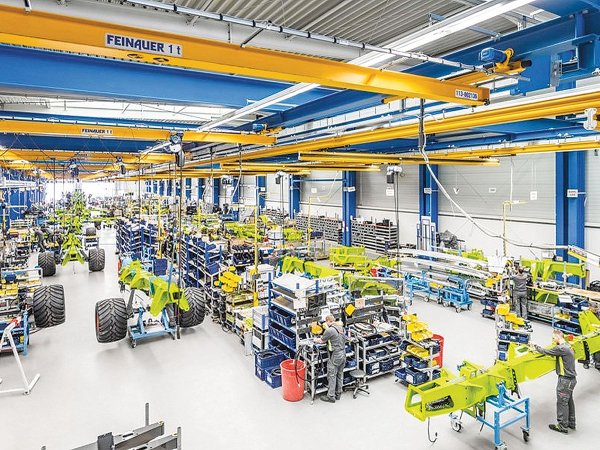
Targeted investments in the production network have seen modernisation work currently taking place at several Claas plants. At Bad Salgau (forage harvesting technology) in Germany, the infrastructure and production facilities have been updated to facilitate the expanded product portfolio, and expand production capacities. The Harsewinkel plant (combine harvesters, forage harvesters and Xerion tractors) will be modernised with more automated systems soon.
Looking ahead, Claas says that the current industry trend of reduced investments by farmers, most of whom have seen producer prices fall sharply, suggest that with no upward trend currently in sight, a moderate decline in sales for 2025 and a noticeable decline in income before taxes is expected.