Precision agriculture portfolio expands
Canterbury-based Vantage New Zealand has recently acquired Carrfields soil moisture technology and services business.




 increase font size
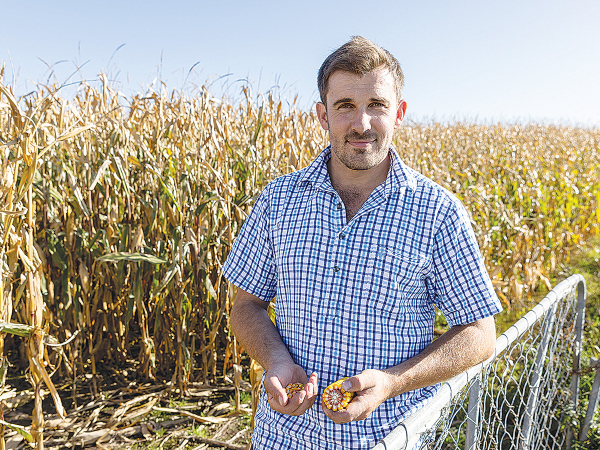 Roscoe Taggart says precision agriculture has allowed him to reduce his use of nitrogen fertiliser by approximately 80 kilograms this season.
Reduced input costs and nitrogen fertiliser use, along with improved environmental outcomes, are key benefits of a precision agriculture project designed to help farmers meet tough nitrate caps while maintaining their viability.
As part of this project, farmers like Roscoe Taggart are using innovation to demonstrate productivity and environmental benefits to their neighbours in the region and beyond.
Taggart says, over the last two years on his family’s 730 hectare arable and sheep farm in Cust, North Canterbury, he has achieved greater efficiency via the use of a new Yara N sensor during a Next Generation Farming project.
Waimakariri Landcare Trust (WLT) and Waimakariri Irrigation Limited (WIL) have partnered with the Ministry for Primary Industries (MPI) for the project, with support from MPI’s Sustainable Food and Fibre Futures fund – along with Environment Canterbury, Ballance, and DairyNZ.
As the harvest season draws to a close, Taggart says this harvest has been a mixed bag due to wet weather conditions. However, his new maize for seed and evening primrose crops have provided positive results.
“At the beginning of harvest, we had really good results. Unfortunately, then the tap just turned on and we had huge amounts of rain coming through at the wrong time which cost quite a bit in terms of yield for the later crops,” he explains.
“We have just harvested our evening primrose and it’s been surprising to see how well it has done, especially for a paddock that was pretty wet early on. We’ve exceeded our target for the seed yield off it.”
Taggart tried maize for grain for the first time this year and is pleased with how the crop went. He will plant it again next season, as it works well in his crop rotation and returns potassium to the soil.
“It’s a crop with nice deep roots so it breaks up the soil nicely and while it does require a bit of fert up front you end up returning a lot of K to the soil instead of removing it which is what happens if you grow it for silage instead of for grain.”
He adds that it also works well because they harvest it in early June.
“It extends the season out further, which means we are harvesting from November through to June.”
For Taggart, one of the most important precision agriculture tools is his Yara N sensor, which has allowed him to reduce his use of nitrogen fertiliser by approximately 80 kilograms this season.
“We have saved around three units of N per tonne of grain so on a twelve-tonne paddock you are saving 36 units of N per hectare, which gives us an overall saving of 80 kilograms of urea for the season,” he explains.
“It’s been a game changer for us, especially using the N sensor in absolute mode, where the N sensor decides how much fertiliser to apply. We’ll keep using it in absolute mode because it is minimising our N use which is important not just in terms of cost savings but also environmental impact.”
One thing that has surprised him over the last two years during the N sensor trial is the amount of variability he has throughout his farm.
“There’s more variation in our relatively flat, uniform farm that I ever could have imagined and looking at the maps that come out of the N sensor there’s no consistency in paddocks that before using the sensor I would have thought of as very consistent.”
Taggart sees precision agriculture as critical in ensuring the future viability of farming in New Zealand.
“Precision ag makes your farm more efficient and there are some real social, environmental, and economic benefits that you don’t realise until you get into this.”
Canterbury-based Vantage New Zealand has recently acquired Carrfields soil moisture technology and services business.
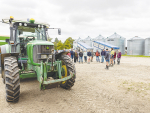
North Canterbury farmer Roscoe Taggart has reduced his use of nitrogen fertiliser by approximately 80 kilograms this season through trialling a Yara N sensor.
A world expert in precision agriculture says there is much misplaced hype about the use of UAV’s (drones).
Farmers can now order, initiate and record fertiliser and spray applications on their farms at the click of a button.
An expert on precision agriculture says he’s surprised at the lack of uptake of the technology in New Zealand.

Forestry Minister Todd McClay has today congratulated the winners of the 2026 Growing Native Forests Champions Awards at Fieldays.

The Government has announced $60,000 to provide one-off grants of $1,000 to each of the 60 New Zealand Young Farmers (NZYF) clubs across the country.
New Zealand’s rural sector has once again demonstrated its generosity, with the second Rural Industry Leaders Dinner, Debate and Auction raising an impressive $400,000 for the Rural Support Trust.
There has been another twist to the Federated Farmers annual election fiasco.
Analysis of decades of research has revealed the implementation of good farming practices plays a critical role in reducing nutrient losses to improve freshwater outcomes.
Yesterday the Government used the opening of Fieldays to announce a major investment, as part of its Land Use Flexibility package, to support a more productive and sustainable future across six sectors including dairy.




OPINION: While we're on the topic of lumberjacks, Biosecurity Minister Andrew Hoggard has no doubt used a chainsaw hundreds of…
OPINION: To a chorus of crying greenies, and not a minute too soon, the Government has moved to put the…