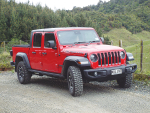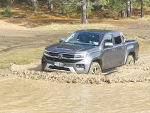
Second generation Amarok ups the stakes
The first-generation VW Amarok – launched back in 2010 – has built a reputation based on comfort, handling and ability that has led to more 7700 of the vehicles being driven on New Zealand’s roads.




 increase font size
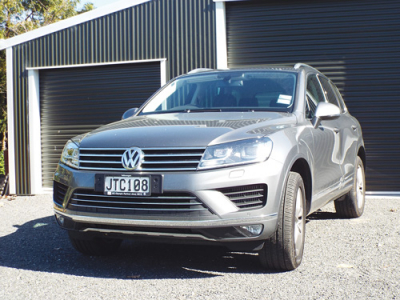 The Volkswagen Touareg.
You wonder how the marketing people in the motor industry come up with new model names.
For example, the Volkswagen Touareg name originates in the name of the Tuareg people of North Africa, pastoral nomads who eke out a living in the Sahara Desert.
Scarce in New Zealand, the VW Touareg started life in 2002 as a joint venture, branded alongside the Audi Q7 and the Porsche Cayenne, before an upgrade in 2011.
Depending on your vantage point you get the impression of a big SUV; viewed from the rear it appears extremely wide.
Jump in and close the door; a reassuring ‘thump’ suggests it’s nicely put together; of course – it’s made in Germany. But that’s not quite correct, because it’s built alongside the Audi and the Porsche at VW’s plant in Bratislava, Slovakia; they obviously do it right.
The Rural News test car was fitted with a V6, 3.0L turbo diesel pushing out 180kW and 550Nm torque at 2000rpm. Despite its kerb weight of close to 2200kg it showed a reasonable turn of speed, hitting 100km/h in around 7.5 seconds, at sensible fuel consumption of 7.4L/100km.
Interestingly, even when pushed hard in ‘sport’ mode the engine noise was always restrained, no doubt helped by that ‘German’ fit and finish and serious sound deadening between the engine compartment and the passenger area.
On-road progress was equally smooth, the 8-speed transmission slipping through the box like a knife through butter; it was best left to sort out what ratio it wanted to be in, but drivers who like to fiddle would find that the pair of flappy paddle shifters under the wheel work just fine.
On a Coromandel drive on the infamous Thames-Hikuwai road (lots of bends), ‘sport’ mode and a slow in-fast out approach brought a grin to this tester’s face; the car pulled away strongly while maintaining lots of poise, irrespective of changing cambers or surfaces mid-bend.
In the cabin, the five seat layout works well, giving plenty of space for all occupants, with none of the trap of trying to jam seven seats into a space designed for five. This is probably the reason the rear load area is a healthy 580L with space for a crew of five on a weekend away. The seats are firm yet comfortable and provide plenty of lateral support when hustling through bends, and -- a big plus for this reviewer -- the seat squabs are extendable, giving great support to a tall driver’s rear thigh.
Suspension is largely conventional: double wishbones and coils front and rear, working with gas dampers which provide active suspension adjustment and combine with roll bars to keep things on a level plane. 4Motion all-wheel drive ensures power is pushed to all corners and senses the need for more or less action depending, for instance, on whether you’re in mud or on loose gravel.
Safety gear included electronic brake force distribution, stability control, auto levelling suspension, traction control and hillside descent systems. Our car also had blind spot monitoring, land departure warning and adaptive cruise control.
Also in the package was a full colour, 8-inch infotainment system – requiring Germanic logic for best use – and a first-rate camera set-up offering 360 degree visibility and bang-up-to-date parking sensors.
This SUV is right up with the best and warrants a much closer look; but hear one word of warning: a neighbour had visitors from Australia who drove from Auckland in a hired Touareg with their kids, just when the test vehicle was on our drive. After their first day in Waikato the little darlings did a runner with the keyless entry fob which is very effective; for the next four days entry was denied even the finest locksmiths; the car proved impenetrable. Moral: don’t lose the key.
The first-generation VW Amarok – launched back in 2010 – has built a reputation based on comfort, handling and ability that has led to more 7700 of the vehicles being driven on New Zealand’s roads.
Kiwis remain fixated on utes of every shape, size and price, but we wonder whether in the rural sector the clever folk may be looking to diversify into a good van.
When we reviewed the VW Amorak in February 2016, it was fair to say we quite liked it. For 2017, that ‘like’ has just moved up to a ‘love’, especially because of the new V6 engine offering.
At a recent vehicle launch I mentioned to a fellow journalist that I was getting the Volkswagen Passat Alltrack to test and he replied "you'll enjoy it".

Farmer-owned fertiliser company, Ballance Agri Nutrients is welcoming National’s plan to negotiate security agreements with key supplier countries to protect New Zealand-bound products from export restrictions and greater supply chain certainty.

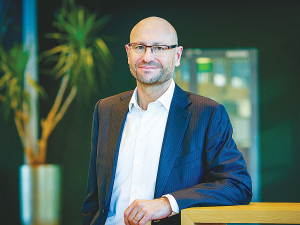
Carrfields has announced the appointment of Stu Hall to the newly created role of chief operating officer, Carrfields Ltd, reflecting the continued growth of their agribusinesses and the need to ensure the company has the leadership capacity and support in place as it pursues the emerging opportunities ahead.
New Zealand's role is not to compete with Indian growers, according to NZ Apples and Pears.
The potato industry is celebrating the success of two rising stars - James Blair, the 2026 Young Grower of the Year and runner-up and innovation award winner, Amber Davy.
Twenty-eight emerging leaders from across the horticulture sector spent two days last month learning valuable skills and connecting with industry experts.
There are five entrants in this year’s Young Horticulturist of the Year, competing in a series of technical, practical, business and leadership challenges.


OPINION: The same mainstream media muppets that brought you Jacindamania in 2017 have been flat out pimping for the Opportunities…
OPINION: Your old mate reckons the atrocious way farmers in the UK are treated by their lords and masters in…