Ploughman eyes podium
Waikato farmer John Guy began competitive ploughing “many moons ago” as a member of the Young Farmers Club.




 increase font size
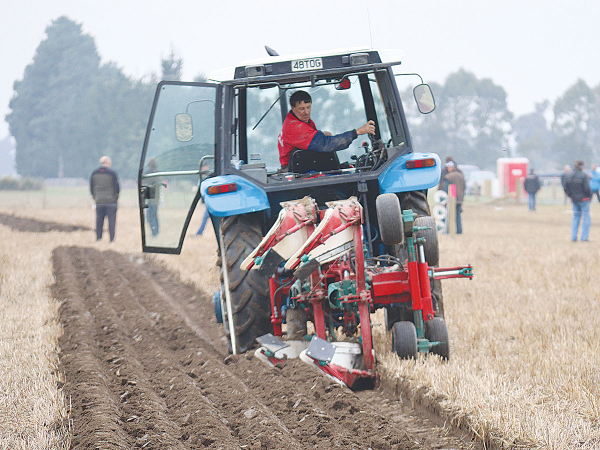 Over the years, NZ ploughmen have won three world championship titles.
OPINION: Ever since the invention of the plough, man has always made improvements to this unique farm implement.
However, despite these improvements the implement's use has remained the same - to prepare the soil for growing food.
The plough first arrived in New Zealand in 1820 - a single furrow, pulled by bullocks. It has since changed and developed into a multiple furrowed implement, both conventional and reversible. Over this time, the competition plough was born. In the 1950s, a group of enthusiastic farmers got together to form the New Zealand Ploughing Association.
Competitions are held countrywide and these culminate in the annual NZ Ploughing Championships. Winners of the NZ event get to represent the country at the world finals, which are held in different countries around the globe every year.
Over the years, NZ ploughmen have won three world championships.
Recently, a successful workshop was recently held about making mouldboards using Teflon. This was followed by a demonstration on the correct way to attach these mouldboards to ploughs with adjusters.
There are three adjustments on a normal two-furrow farm plough, while a competition plough can have as many as eight adjustments.
The groups were encouraged to assemble the adjusters and to find out how and why these worked in conjunction with the mouldboards.
These adjustments allows a ploughman to increase or decrease the pressure on the furrows to better make soil suitable for crops to grow.
Another important aspect is the balance of the plough, whether it's a two furrow or a reversible plough. A well ploughed paddock should not require spraying.
More workshops are in the pipeline - including one on showing the art of ploughing a 'perfect plot'.
Anyone interested in finding out more about the 'Ploughman's Academy' can email: This email address is being protected from spambots. You need JavaScript enabled to view it.
John Guy is a Waikato farmer who began competitive ploughing "many moons ago" as a member of the Young Farmers Club.
Waikato farmer John Guy began competitive ploughing “many moons ago” as a member of the Young Farmers Club.


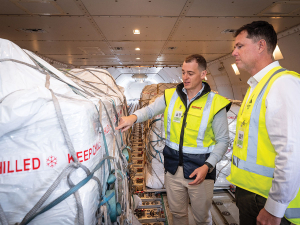
Silver Fern Farms has tackled the ongoing war-induced shipping challenges to mideast markets by airlifting 90 tonnes of chilled New Zealand lamb and beef to the United Arab Emirates.

The primary sector is leading New Zealand's economic recovery, according to economist and researcher Cameron Bagrie.
Dairy industry leader Jim van der Poel didn't make much of the invitation he received to the recent New Zealand Dairy Industry Awards in Rotorua.
Farmers around the country are going public big time, demanding their local district, city and regional councils come up with amalgamation plans that meet the needs of rural communities and don't allow urban councils to dominate.
The battle for the rural vote is on and parties are securing high profile names to try and bolster their chances at the general election.
Horticulture New Zealand says proposed changes to the Plant Variety Rights Act 2022 will drive innovation, investment and long-term productivity.



OPINION: It's been an eye-opener watching the big media companies behaving exactly like the powers-that-be who the crusading hacks from…
OPINION: Town and country find themselves on the same page when it comes to anger over price hikes from NZ…