India FTA Removes 33% Tariff on NZ Sheepmeat
New Zealand’s red meat sector has welcomed the India-New Zealand Free Trade Agreement taking effect, which removes India’s 33% tariff on New Zealand sheepmeat.




 increase font size
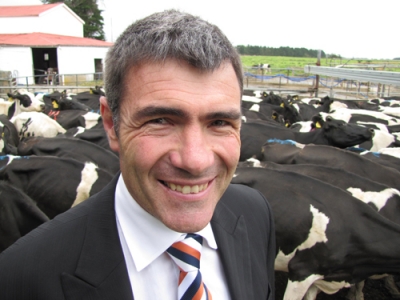 Nathan Guy
Farming in New Zealand in 2015 can be summarised in two words: challenge and opportunity; it is through resilience that the former turns into the later.
Whether it’s fluctuations in commodity prices or the weather, 2015 has already thrown many examples of farmers being presented with challenges and responding with resilience. There remain many challenges ahead.
MPI’s recent ‘Situation Outlook for Primary Industries’ shows total primary industries export revenue for the year to June 2015 estimated at $35.2 billion – 8% down on the previous year, due to falling dairy and forestry prices.
But this is slightly offset by increases in meat and wool prices, expected to increase by 8.2% to $8.8b.
Horticulture, in a record year, has seen total earnings top $7.5b for the first time. Kiwifruit, in particular, has bounced back strongly from Psa with at least $1b in exports, and wine is enjoying huge growth.
A tight year looms for the dairy sector with reduced commodity prices. While the global dairy markets look to be volatile for most of 2015, MPI expects dairy export revenue to recover by June 2016 and rise to $18.4b by June 2019.
Importantly, remember that the medium-long term outlook for all primary sectors is positive: 17% growth to at least $41b by 2019. Notably, as the nearby Asian countries grow in wealth they demand more of our protein and products.
Droughts are challenging our farmers and growers and most of the East Coast of the South Island has suffered a tough drought. Even now conditions are very dry in North Canterbury.
Hence the Government’s focus on water storage projects and the $25m allocated to the Irrigation Acceleration Fund to help kickstart these important regional projects.
Making an opportunity out of a challenge is called innovating, and innovating is something Kiwis do well.
One great untold stories in NZ innovation is the Global Research Alliance. I recently announced that Doug Avery and Zach Mounsey have won the 2015 Global Research Alliance on Agricultural Greenhouse Gases (GRA) - World Farmer Organisation Study Tour in Argentina later this year.
The purpose of this study tour is to increase global understanding and engagement on agricultural greenhouse gas research.
These two winners will represent NZ in sharing environmental management practices that support sustainable productivity.
The primary sector gets a lot of criticism over environmental performance and climate change, and we are often accused of sitting on our hands. This is untrue. The reality is often lost on our detractors that NZ is the source of only 0.15% of global emissions, and the challenges of climate change are greater than any one country can address.
NZ prompted the setting up of the Global Research Alliance on Agricultural Greenhouse Gas Emissions to support collaborative research to enhance productivity and reduce emissions intensity. We need to work with other farming countries to develop practical responses to the challenges that help, not hinder, agriculture.
Research and innovation is critical; it takes many different forms depending on context, but at its heart always lies coupling the insights of farmers and land managers at the frontiers of science.
The early breakthrough of our top scientists to potentially reduce greenhouse gas emissions from sheep and cattle without reducing production is cutting edge research.
• This is an edited version of a speech given by Primary Industries Minister Nathan Guy to the Federated Farmers national conference last month.
New Zealand’s red meat sector has welcomed the India-New Zealand Free Trade Agreement taking effect, which removes India’s 33% tariff on New Zealand sheepmeat.

New Zealand's role is not to compete with Indian growers, according to NZ Apples and Pears.
The red meat sector is in great heart.
Testing confirms H5 bird flu in a single northern giant petrel, found dead on a remote Cape Palliser beach in the Wairarapa, says Dr Mary van Andel, the Ministry for Primary Industries' (MPI) Chief Veterinary Officer.
The apple sector is working with the Government to unlock access to two key markets that could bring millions in revenue for apple growers.


Federated Farmers has welcomed new rural policies released by ACT, saying they align closely with its own election priorities.

Rural Contractors NZ says proposed changes to land transport rules for agricultural vehicles are a welcome response by the Government to out of date regulations which have seen members hit with huge fines.
Alliance is calling for final applications for its 2027 Graduate Programme, with applications closing on Sunday 25 October.
Decades piloting planes has ensured vet and farmer David Hayes is focused on safety. So, after a serious accident while welding on farm, he is sharing his experience so others can learn from it.
Canterbury milk processor, Synlait Milk has confirmed Leon Fung as its chief executive officer.
OPINION: Making it easier to collect rainwater and use it to grow crops and livestock is a no brainer.

OPINION: The same mainstream media muppets that brought you Jacindamania in 2017 have been flat out pimping for the Opportunities…
OPINION: Your old mate reckons the atrocious way farmers in the UK are treated by their lords and masters in…




