WorkSafe Safety Push Reveals Major Farm Safety Gaps Across New Zealand
A safety push across New Zealand has revealed significant gaps in hazardous substances management, farm vehicles, tractors, quad bikes and side-by-sides.




 increase font size
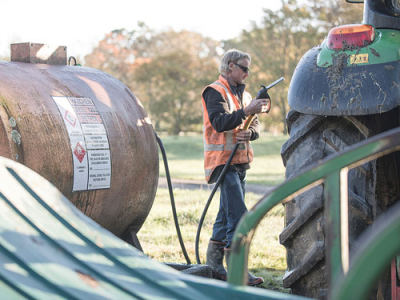 Hazardous substances are part of everyday farming.
Fuels and chemicals are widely used on farms to help improve productivity, but there can be a cost to the health of you and your workers.
Randall Walker, from WorkSafe NZ, explains why it’s important to know the risks of the substances farmers are working with and what they must do to protect people from harm.
On December 1, 2017 the Health and Safety at Work (Hazardous Substances) Regulations 2017 will come into force.
The aim is to reduce the harm from work-related activities involving hazardous substances. Petrol, diesel, pesticides, fertilisers and cleaning solutions are common examples onfarm.
Used safely, these contribute to productivity and efficiency, but they also pose risk to the people working with and around them.
“Farmers often underestimate the risks from using sprays and fertilisers. The harm from these substances can take 25 to 30 years to show, which is usually too late to prevent the serious, sometimes fatal, consequences,”
WorkSafe chief inspector Darren Handforth says.
“Exposure to agrichemicals is a major contributor to the deaths from work-related health risks in the agricultural sector. We are using a wide range of them on farms, but not necessarily managing those risks very well.”
The regulations will bring greater focus to managing hazardous substances safely at work. It’s not wholesale change: the rules for the work-related use of hazardous substances are moving from the Hazardous Substances and New Organisms (HSNO) Act to the Health and Safety at Work Act (HSWA).
Many of the existing requirements continue under the new regulations, so if you are complying now, there may not be much more you have to do. However, there are key changes that will help ensure you are doing your duty to protect people from harm.
Risk management
The starting point for all farmers is to identify and assess the risks. Make a list of the hazardous substances on your farm, the quantities and where these are stored. Then read the safety data sheets to understand the risks they pose, how to use and store them safely and what to do if there is a spill or you are exposed to them.
“From 1 December it will be mandatory to keep both an inventory of your hazardous substances and their safety data sheets, so if you haven’t already got this in place you should act now,” Handforth says.
The simplest way to prepare an inventory is to use WorkSafe’s hazardous substances calculator. It will also provide clear guidance about what you need to do to be compliant, i.e. the controls you need to have in place to protect people from harm.
“Keeping an inventory of hazardous substances will help you look at what substances you have, and whether you need them or can substitute them with a safer product.”
Storage
A big area for improvement on farms is the storage of hazardous substances, Handforth adds.
“WorkSafe inspectors still find stocks of hazardous substances dating back decades in farm sheds. This presents an unnecessary risk, given the options for disposing of old agricultural chemicals.
“The best method at present is offered through AgRecovery, a charitable trust set up to dispose of unwanted chemicals and their containers. You can book a chemical collection online, and this is free or subsidised depending on the chemical. AgRecovery also provides collection sites around New Zealand for containers.”
As well as reducing risk, keeping the amount of substances you hold to a minimum can save you money and time. Quantities above certain limits may trigger additional requirements, such as location compliance certificates.
Keeping others safe
Farmers have a duty to protect workers and others from the dangers of hazardous substances.
Workers need to be informed of the risks and have the training, supervision and equipment to do their work safely.
“For example, if you send someone out to spray diazinon, you need to make them aware of the health risks of exposure as well as providing the necessary personal protective equipment,” Handforth explains.
Some substances may need to be secured and only handled by people with the appropriate training. Approved handlers become certified handlers under the new regulations. There will be fewer substances that require a certified handler, but a greater emphasis on making sure all workers handling hazardous substances can do so safely.
“And don’t forget, even the most safety-conscious farmer can have an accident. Make sure you have an emergency plan in place, including who to contact and who is responsible for what.”
What to do now
As well as looking at what is changing on December 1, it’s important to remember there are already rules in place.
Now is a great time to review your hazardous substances management and make sure you are complying with your duty to protect people from harm in your workplace.
A safety push across New Zealand has revealed significant gaps in hazardous substances management, farm vehicles, tractors, quad bikes and side-by-sides.
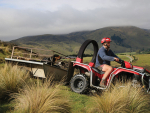
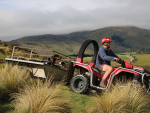
Decisions you make in an instant on the farm can be the difference between life and death.
WorkSafe New Zealand is calling on farmers to consider how vehicles move inside their barns and sheds, following a sentencing for a death at one of South Canterbury’s biggest agribusinesses.
Following a sentencing for a death at a South Canterbury agribusiness, WorkSafe New Zealand is calling on farmers to consider how vehicles move inside their barns and sheds.
WorkSafe is recommending the dairy industry reassess its use of slide pulsators, following a recent death in a Waikato milking shed.


Pāmu has released its FY26 Integrated Annual Report, reporting a Net Operating Profit of $113 million, more than double the $49 million recorded in FY25.

Meat Industry Association data, released alongside the Red Meat Sector conference in Wellington, shows export value climbing across the US, China, UK and Canada.
Applications are set to open for the 2027 Zanda McDonald Award, a trans-Tasman award recognised for identifying and fast-tracking talented young leaders in agriculture and agribusiness.
The Royal New Zealand College of General Practitioners (the College) and Hauora Taiwhenua Rural Health Network are calling for investment in a proposed new training pathway for rural GPs, warning that many rural practices are struggling to recruit while a large share of the existing workforce nears retirement.
Federated Farmers has called on Central Otago District Council (CODC) to drop or vote down a plan to truck sludge from Alexandra and Cromwell to farmland near Lauder, warning it would compound an "outrageous" situation created by a separate council's decision weeks earlier.
Synlait has swung to second-half profit as operations stabilise, but the dairy processor still posted a $75.4m annual loss.




OPINION: The same mainstream media muppets that brought you Jacindamania in 2017 have been flat out pimping for the Opportunities…
OPINION: Your old mate reckons the atrocious way farmers in the UK are treated by their lords and masters in…




