Look out for coccidiosis
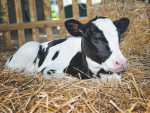
With calving underway, dairy farmers are being urged to be vigilant for coccidiosis by planning their calf feeding regimes and using nutrition to combat the potentially fatal disease.




 increase font size
 Gemma Chuck.
Autumn is here and with it come diseases associated with damp conditions. One such can be coccidiosis during the post-weaning period.
Coccidiosis is a disease of young stock that causes big losses economic losses in dairy and beef industries worldwide – estimated to be US$400 million per year.
Coccidiosis is caused by a parasite (Eimeria bovis and Eimeria zuernii) that infects the intestinal cells.
The life cycle of these parasites is complex. Single cell oocysts (eggs) are passed in the faeces of cattle and can remain in the environment for a long time, where they can remain infective. This is especially true in moist, shady areas.
The oocysts are ingested by susceptible cattle and after many stages of transformation and replication another generation of oocysts are produced and passed in the faeces of the infected animal.
The multiplication rate of these parasites is phenomenal, with one ingested oocyst producing as many as 23 million oocysts in the next generation. This helps explain why coccidiosis outbreaks can quickly get out of control.
Oocysts mature within the intestinal cells of the animal, leading to rupture of the cell; this is what is responsible for the disease and the clinical signs that develop.
The severity of disease is directly related to the number of oocysts ingested. In mild infections, there is minimal damage to the intestinal cells as they can rapidly be replaced and the damage can be quickly repaired.
It is estimated that 95% of coccidial infections are subclinical where the animals do not show any obvious signs of disease.
However, while there is often no sign of disease these mild infections can cause a reduction in growth rates.
Low exposure to coccidia will result in development of immunity to that particular species to coccidia.
In severe infections, most of the intestinal cells are infected which, upon rupturing, results in severe intestinal damage and blood loss in the faeces.
As few as 50,000 infective oocysts are required to cause severe disease in a susceptible young calf.
Coccidiosis primarily occurs in susceptible young stock when there is crowding, stress and high environmental exposure. Stress such as transport, weaning, dietary changes, management procedures and other health problems can precipitate an outbreak of coccidiosis.
The clinical signs of coccidiosis can include diarrhoea (which may contain blood), straining, loss of appetite, weight loss and even death. Severely affected animals often have faecal staining around their tail and hind legs and may stand away from the mob.
Your veterinarian will make a diagnosis of coccidiosis based on clinical signs, faecal samples and sometimes post-mortems of affected animals. Diagnosis is essential for prompt and specific treatment to enable the best prognosis.
Recovery can be slow and some animals remain permanently unthrifty.
There is a high risk of coccidiosis in dairy heifers where the same 'calf paddocks' are used year after year.
Coccidial oocysts can survive in the environment for up to two years in optimal conditions. Outbreaks often occur in different groups of calves reared in the same paddocks from one season to the next.
Paddocks should be managed to reduce the environmental exposure to coccidial oocysts. This can be achieved using an 'all-in all-out' system with rotation of smaller paddocks or use of moveable hot wires in larger paddocks.
Reducing the stocking density will reduce the risk of disease during 'at-risk' times of the year.
The use of in-feed coccidiostats such as monensin (Rumensin) and lasalocid (Bovatec) can help prevent coccidiosis. The ration (grain, pellets) should be checked prior to feeding to determine the level of coccidiostat.
• Gemma Chuck is a member of the The Vet Group, Victoria, Australia.
With calving underway, dairy farmers are being urged to be vigilant for coccidiosis by planning their calf feeding regimes and using nutrition to combat the potentially fatal disease.
Coccidiosis is one of the most prevalent diseases affecting calves in New Zealand, says animal health company Zoetis.

Forestry Minister Todd McClay has today congratulated the winners of the 2026 Growing Native Forests Champions Awards at Fieldays.

The Government has announced $60,000 to provide one-off grants of $1,000 to each of the 60 New Zealand Young Farmers (NZYF) clubs across the country.
New Zealand’s rural sector has once again demonstrated its generosity, with the second Rural Industry Leaders Dinner, Debate and Auction raising an impressive $400,000 for the Rural Support Trust.
There has been another twist to the Federated Farmers annual election fiasco.
Analysis of decades of research has revealed the implementation of good farming practices plays a critical role in reducing nutrient losses to improve freshwater outcomes.
Yesterday the Government used the opening of Fieldays to announce a major investment, as part of its Land Use Flexibility package, to support a more productive and sustainable future across six sectors including dairy.


OPINION: Reckless action by Greenpeace in 2024 forced Fonterra to shut down a drying plant for four hours, costing the co-op…
OPINION: The global crusade against fossil fuel is gaining momentum in some regions.