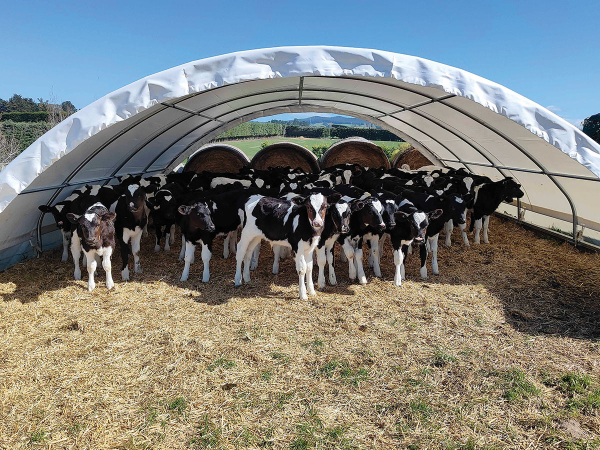

For many years, calf rearing systems have focused primarily on developing the rumen of the young calf, so that by the time the calf is weaned, it is able to effectively utilise pasture and other forages. In many cases, maximising rumen development has been interpreted as minimising the amount of milk consumed by the calf to ensure high intakes of starch-based feed needed to help drive the development of rumen papillae.
While important, this focus on rumen development, has unfortunately distracted us from developing other key organs, essential for improved animal health and welfare and optimised lifetime productivity.
To understand how early life nutrition may impact lifetime productivity in dairy heifers, researchers at Cornell University investigated the effect of increased milk feeding on the development of key organs, including the mammary gland, in the first eight weeks of a calf’s life.
These researchers fed calves that weighed 39kg at birth, an average of 600g per day (control) or 1300g per day (enhanced) of milk replacer and found that calves fed the higher levels of milk replacer gained 820g per day compared to control calves which only gained 390g per day.
The researchers also reported a significant difference in the weight of the whole mammary gland and amount of mammary parenchyma (or milk-producing tissue) present at 54 days of age; Calves on the enhanced feeding programme had 6 times the parenchyma tissue of those calves fed the control treatment.
Similar results have also been reported in New Zealand, where calves were fed either 4L or 8L of whole milk from 10 to 73 days of age. Calves were weaned gradually by 84 days of age.
In addition to increased mammary parenchyma, the researchers also reported other benefits, relevant to both heifer or hogget replacements and those animals reared for meat. These include enhanced preweaning growth, with no negative effect on post weaning growth on pasture earlier development of the immune system supporting a more effective immune response.
An extensive review of rearing and production data from more than 140,000 spring born heifers from over 1300 herds in New Zealand reinforces these findings, with researchers reporting a strong positive correlation between first lactation milk production and body weight between three and 21 months of age regardless of breed.
Importantly these researchers also showed a strong positive correlation between body weight during rearing and milk production through to third lactation. This increased productivity combined with improved cow survival all contribute to improved farm profitability.
Improved early life nutrition has also been to shown to have positive benefits for beef animals. In a separate study New Zealand researchers fed one group of dairy beef calves a low milk allowance of 4L per calf per day, with weaning at seven weeks of age. A second group were fed a high milk allowance of 8L per calf per day and were weaned at 12 weeks of age. At 12 weeks of age, the calves fed the high milk allowance were 6.9kg heavier than the calves fed the low milk allowance and the impact of this increase in growth was sustained until 19 months of age.
In addition, those calves on the high milk allowances reached slaughter weight sooner and had higher marbling scores, with steaks showing less cook loss and better colour stability.
Article provided by Provico Rural NZ