Resilient Global Dairy Industry Overcoming Volatility
Fonterra chief executive, Richard Allen says being resilient has helped the dairy industry overcome extreme volatility in recent years.




 increase font size

Fonterra chairman John Wilson is confident of securing 75% support among farmer shareholders for a reduced 11-member board.
Wilson says 75% is "a big number" but is achievable.
"We held over 400 farmer meetings and had really good farmer engagement," he told Rural News online.
Fonterra today released its final proposal on governance and representation; it is sticking with the draft proposal for an 11-member board, down from the current board of 13 (nine farmer directors and four independents).
However, seven of the 11 directors will be farmer-elected and four appointed. An earlier proposal, released in April, recommended six farmer directors, three independents and two "hybrids", who could be either elected or appointed.
Farmer shareholders told Fonterra they wanted a strong majority of farmer-elected directors and expressed concern how the hybrid seats would be filled.
Wilson believes the 7-4 farmer/independent model strengthens farmer ownership of the co-op.
He says Fonterra had a good look around the world at similar sized companies.
Fonterra is diverse - it collects and processes milk, sells ingredients and is a major FMCG (fast moving consumer goods) player globally.
"In Australia, similar companies have big boards and co-ops around the world tend to have even larger boards."
Wilson acknowledges that not all farmers will be happy with the proposal.
But he is confident farmers will look at the proposal as "a total package".
The co-op has also brought forward the review of the Shareholders Council by 12 months.
Fonterra will hold its special meeting in Hamilton on June 10.
Wilson and board members will hold another round of farmer meetings over the next two weeks to brief shareholders and garner support.
"We will have to do a lot of work to get the 75% support," he says.
Fonterra chief executive, Richard Allen says being resilient has helped the dairy industry overcome extreme volatility in recent years.

Northland farmer Greg Collins has taken over as chair of the Fonterra Co-operative Council.
Fonterra’s 2026 financial year was a year of delivery, with record volumes of milk collected, processed and shipped by the co-op.
Dairy farmers, still holding onto their Fonterra shares despite switching milk supply elsewhere or exiting the industry, now face a stricter share sell-down requirement.
Milk powder prices are continuing their merry run, firming up a potential $10/kgMS farmgate price this season.

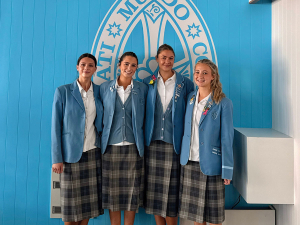
During the nesting season, from September to December, industrious starlings can quickly build nests in the darker areas behind tractor and vehicle, usually close to hot engines, typically resulting in localised damage or in some cases complete write-offs.
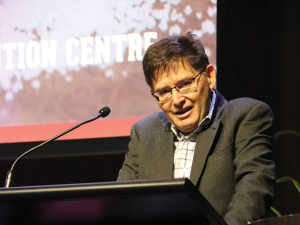
The meat processing industry is much more collegial than it was in the past and is now more focused on common goals.
With the last couple of months having seen some potential tractor purchases put on hold with the impending election and continued input cost rises, year-to-date figures, ending September, has seen deliveries up around 5% over the same period in 2025, with a total of 2026 units.
Beef+Lamb New Zealand is calling for nominations for director roles in the Northern South Island and Northern North Island electoral districts.
Fonterra chief executive, Richard Allen says being resilient has helped the dairy industry overcome extreme volatility in recent years.
The head of the Ministry for Primary Industries (MPI) trade and international relations group says New Zealand is well-positioned to secure trade access and compete internationally as the world becomes more complicated, demanding and uncertain.
OPINION: It seems Canterbury processor Synlait is still in the doldrums.
OPINION: Get offside with New Zealand First leader Winston Peters at your own peril.