New Zealand dairy companies say they are very disappointed at the Government's response to the He Waka Eke Noa partnership proposal.
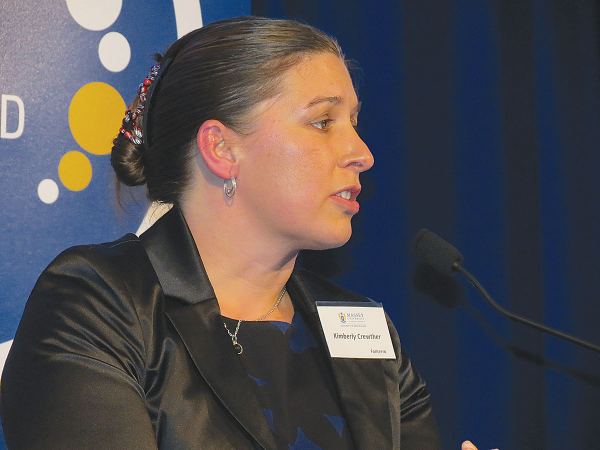
Dairy Companies Association of NZ (DCANZ) executive director Kimberly Crewther told that industry had worked really hard to come to a consensus position which took into account a broad range of considerations.
This, she says, included taking advantage of the opportunities that exist in NZ and managing the risk of undue economic impact on our rural communities, especially if that involves cuts in production in NZ.
"The Government's proposal is fundamentally different to what HWEN put forward and it raised some concerns for us that the changes made were leaning towards a system that achieved a reduction by cutting production. In our view that holds a very strong risk of emission leakage being counterproductive to the global emissions reduction outcomes that we are trying to contribute to," she says.
Crewther says the DCANZ submission is seeking changes to that and is also seeking to highlight where their analysis has weakness in it. That includes the way they have modelled emissions leakage. She says the data set the Government used in its modelling has produced a grossly inaccurate result for the dairy industry.
In its submission, DCANZ says rather than achieving emissions reductions by cutting agricultural production, which is what the Government is proposing, a better approach would be to incentivise the uptake of new tools and practices that reduce emissions. They say such a move would maintain the positive contribution of NZ dairy to global food systems.
DCANZ wants the Government to fully commit to a farm-level system from the outset through the removal of the processor-level backstop. It supports an integrated, whole-farm-system approach to managing agricultural emissions by pricing nitrous oxide from fertiliser at the farm level.
It also wants certainty for farmers as they transition into a pricing system by capping levy prices for the first five years and ensuring they are set at the minimal level required to fund incentives, sequestration, research & development, and administration.
Another issue raised by DCANZ in its submission is ensuring industry confidence in the system through the establishment of a System Oversight Group, with industry expertise to give Ministers advice on levy price setting and levy revenue recycling, rather than leaving the decision to just a Minister.
It calls for government to support farmers' positive engagement in actively managing emissions and offsets within their farm systems by recognising all scientifically valid sequestration alongside pricing of emissions from the start, as proposed by HWEN.
Crewther says DCANZ believes there needs to be changes that go back to the points made in the May HWEN proposals. She says there needs to be systems where the prices are working to incentivise emissions reductions through the uptake of technologies and other opportunities, rather than reducing emissions by driving production cuts.