Resilient Global Dairy Industry Overcoming Volatility
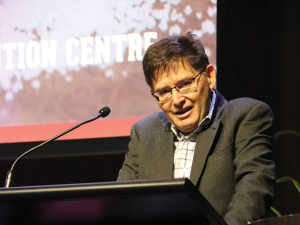
Fonterra chief executive, Richard Allen says being resilient has helped the dairy industry overcome extreme volatility in recent years.




 increase font size
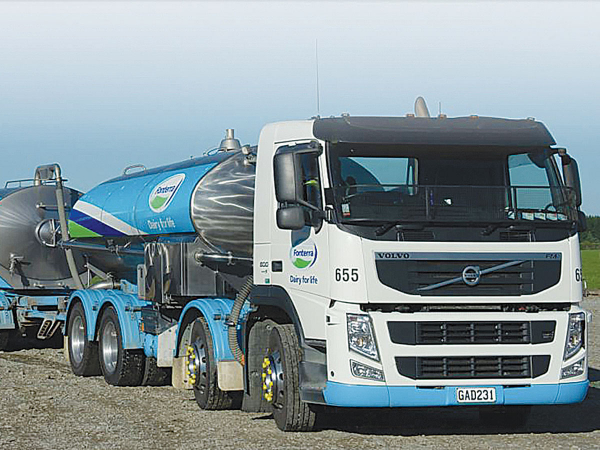 The Commerce Commission has released its draft report on Fonterra's base milk price manual for the 2021-22 season.
The Commerce Commission has released its draft report following a review of Fonterra’s base milk price manual for the 2021-22 season.
It is also inviting public submissions on the draft report.
The Manual describes the methodology used by Fonterra to calculate its base milk price – the amount farmers receive from Fonterra for each kilogram of milk solids in a dairy season.
The Commission says its preliminary conclusion is that the Manual is consistent with both the efficiency and contestability dimensions of the purpose of the base milk price monitoring regime, with the exception of the rule for the asset beta.
The Commission says it considers a number of issues from previous years to be resolved and there is more transparency overall.
Recent amendments to the Dairy Restructuring Act (DIRA), which came into force on 1 June 2021, mean Fonterra’s discretion in estimating the asset beta has been reduced.
The Commission’s view is that the Manual rule for the asset beta is inconsistent with new requirements set out in DIRA because it potentially allows for an approach different from the approach prescribed in the Act.
In previous Manual reviews and the review of the 2020/21 base milk price calculation, the Commission identified a number of potential issues with how the Manual gives effect to the DIRA definition of “commodity”
Based on the information available, the Commission says it does not consider these matters as rendering the 2021/22 season’s Manual as wholly inconsistent with the DIRA purposes, but the Commission says it intends to examine more closely how the Manual gives effect to the DIRA definition of “commodity” in a future Manual review.
Submissions on the draft report are welcomed and need to be submitted by 15 November 2021.
A final report will be published by 15 December 2021.
Fonterra chief executive, Richard Allen says being resilient has helped the dairy industry overcome extreme volatility in recent years.

Northland farmer Greg Collins has taken over as chair of the Fonterra Co-operative Council.
Fonterra’s 2026 financial year was a year of delivery, with record volumes of milk collected, processed and shipped by the co-op.
Dairy farmers, still holding onto their Fonterra shares despite switching milk supply elsewhere or exiting the industry, now face a stricter share sell-down requirement.
Milk powder prices are continuing their merry run, firming up a potential $10/kgMS farmgate price this season.



During the nesting season, from September to December, industrious starlings can quickly build nests in the darker areas behind tractor and vehicle, usually close to hot engines, typically resulting in localised damage or in some cases complete write-offs.
The meat processing industry is much more collegial than it was in the past and is now more focused on common goals.
With the last couple of months having seen some potential tractor purchases put on hold with the impending election and continued input cost rises, year-to-date figures, ending September, has seen deliveries up around 5% over the same period in 2025, with a total of 2026 units.
Beef+Lamb New Zealand is calling for nominations for director roles in the Northern South Island and Northern North Island electoral districts.
Fonterra chief executive, Richard Allen says being resilient has helped the dairy industry overcome extreme volatility in recent years.
The head of the Ministry for Primary Industries (MPI) trade and international relations group says New Zealand is well-positioned to secure trade access and compete internationally as the world becomes more complicated, demanding and uncertain.
OPINION: It seems Canterbury processor Synlait is still in the doldrums.
OPINION: Get offside with New Zealand First leader Winston Peters at your own peril.