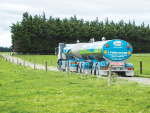
Fonterra FY26 Results: $9.69 Milk Price, $3.4bn Profit
Fonterra has unveiled its annual results for the 2026 financial year, posting $27 billion in revenue and close to $20 billion returned to New Zealand farmer owners and unit holders.




 increase font size

LABOUR SPOKESMAN on Primary Industries Damien O’Connor says Fonterra has been caught short in its crisis management during the botulism scare.
He told Dairy News the co-op’s public relations structure and management have been abysmal, based for years on an assumption that they could manage everything from the boardroom right up to the Prime Minister’s office on their own.
He says Fonterra needs to go back to basics and devise systems that enable them to “act appropriately” when mistakes occur.
O’Connor says he’s concerned about the balance of the Fonterra board – that it contains a growing number of bankers. He’s not convinced farmer shareholders are the problems.
“Perhaps it might be the independents or the mix of the two. It would be unfair to criticise the farmer directors of Fonterra when we have a growing number of directors disconnected from day-to-day farming.
“They’ve now got a responsibility to NZX and I suggest that the fear of unit price or unit values [falling] and responsibilities to the stock market may have led to PR and management decisions that are inappropriate and in hindsight were wrong.”
O’Connor says there is an assumption that the responsibility to the stock market makes everything is more clear and transparent.
“I suggest the exact opposite is true. If you look at some of the corporate failures that have littered the NZX over the last 30 years, that’s certainly the case.”
O’Connor says the true cost of the botulism scare has been grossly underestimated, and that the $2 million allocated by the Government to help companies affected by the fallout is “chicken feed” relative to the investment needed to re-build the integrity of the New Zealand brand.
Fonterra has unveiled its annual results for the 2026 financial year, posting $27 billion in revenue and close to $20 billion returned to New Zealand farmer owners and unit holders.
Fonterra Co-operative Group has confirmed the independently assessed candidates standing for election to its board in 2026.
Fonterra has revised its Farmgate Milk Price forecast for the 2026/27 season, lifting the midpoint and narrowing the range on the back of improving global dairy commodity prices.
Outgoing Fonterra Co-operative Council chair John Stevenson says that it has been a privilege to represent the co-op's farmer shareholders.
OPINION: It seems Canterbury processor Synlait is still in the doldrums.


Federated Farmers says it welcomes Labour's commitment to reviewing the Sharemilking Agreements Act, calling on other major parties to do the same.
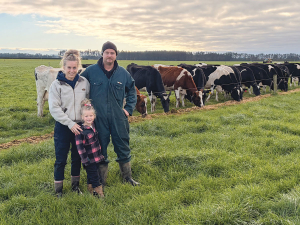
For Canterbury dairy farmers Sian Meijer and Rick Wobben, wearable technology has become one of their most valuable on-farm tools - helping manage 1850 cows across an expansive, high-performing dairy operation while improving efficiency, mating outcomes and day-to-day decision making.
Fonterra has unveiled its annual results for the 2026 financial year, posting $27 billion in revenue and close to $20 billion returned to New Zealand farmer owners and unit holders.
The first major update to the Dairy Cattle Code of Welfare in more than a decade has been released, marking what DairyNZ describes as an important step in ensuring animal welfare standards continue to evolve alongside scientific evidence and on-farm realities.
Ravensdown shareholders have elected Jane Montgomery and Kate Acland to the Ravensdown Board for three-year terms, following a closely contested director election.
Federated Farmers says new legislation replacing the Resource Management Act will cut red tape, unlock investment and help grow New Zealand's export-led economy, after the Planning Bill and Natural Environment Bill passed their third reading in Parliament yesterday.




OPINION: It seems Canterbury processor Synlait is still in the doldrums.
OPINION: Get offside with New Zealand First leader Winston Peters at your own peril.




