Resilient Global Dairy Industry Overcoming Volatility
Fonterra chief executive, Richard Allen says being resilient has helped the dairy industry overcome extreme volatility in recent years.




 increase font size
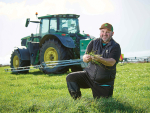
 Miles Hurrell.
Fonterra is dropping its 2018-19 forecast payout by up to 50c/kgMS.
The co-op says it is revising the forecast farmgate from $6.75/kgMS to a range of $6.25-$6.50/kgMS.
At the same time, the co-op is increasing its Zealand milk collection volumes by 1.3% cent to 1,550 million kgMS.
Fonterra chief executive, Miles Hurrell says the change in the forecast farmgate milk price was due to a stronger global milk supply relative to demand at this time.
“I know how hard it is for farmers when the forecast farmgate milk price drops, but it’s important they have the most up to date picture so they can make the best decisions for their farming businesses.
“We are still seeing strong production coming from Europe, US and Argentina. While the hot weather in Europe has slowed down the region’s production growth, it is still tracking ahead of last year. US milk production is up slightly and Argentina’s is up 6.8%.”
In New Zealand, the season has got off to a positive start, mainly thanks to good weather and early calving in the South Island.
As a result, Fonterra has increased its forecast milk collections for the year to 1,550 million kgMS – up from 1,525 million kgMS.
Hurrell says that global demand is simply not matching current increases in supply.
“At recent Global Dairy Trade (GDT) events, prices for all products that make up the milk price have fallen. Demand for WMP, in particular, continues to grow in China, and it remains strong across South East Asia, but it simply isn’t matching current levels of supply.”
Talking about the new move to provide a range for the forecast farmgate milk price, Hurrell says it was part of the co-op’s intention to provide the best possible signals.
“We operate in a hugely volatile global market place, so it is very difficult to pinpoint an exact forecast farmgate milk price this early in the season. For example, weather conditions can change suddenly and this can have a significant impact on the global milk supply.
“As a result, we have chosen to give a range of $6.25-$6.50/kgMS and be clear that the Advance Rate is based on $6.25/kgMS and the final price could be outside this range as we are still early in the season and up against considerable volatility. We therefore recommend farmers budget with ongoing caution.”
The timing of the update is driven by available market information and is not a DIRA requirement. Fonterra is required to give a forecast for DIRA purposes by 15 December 2018.
Fonterra chief executive, Richard Allen says being resilient has helped the dairy industry overcome extreme volatility in recent years.

Northland farmer Greg Collins has taken over as chair of the Fonterra Co-operative Council.
Fonterra’s 2026 financial year was a year of delivery, with record volumes of milk collected, processed and shipped by the co-op.
Dairy farmers, still holding onto their Fonterra shares despite switching milk supply elsewhere or exiting the industry, now face a stricter share sell-down requirement.
Milk powder prices are continuing their merry run, firming up a potential $10/kgMS farmgate price this season.



During the nesting season, from September to December, industrious starlings can quickly build nests in the darker areas behind tractor and vehicle, usually close to hot engines, typically resulting in localised damage or in some cases complete write-offs.
The meat processing industry is much more collegial than it was in the past and is now more focused on common goals.
With the last couple of months having seen some potential tractor purchases put on hold with the impending election and continued input cost rises, year-to-date figures, ending September, has seen deliveries up around 5% over the same period in 2025, with a total of 2026 units.
Beef+Lamb New Zealand is calling for nominations for director roles in the Northern South Island and Northern North Island electoral districts.
Fonterra chief executive, Richard Allen says being resilient has helped the dairy industry overcome extreme volatility in recent years.
The head of the Ministry for Primary Industries (MPI) trade and international relations group says New Zealand is well-positioned to secure trade access and compete internationally as the world becomes more complicated, demanding and uncertain.


OPINION: It seems Canterbury processor Synlait is still in the doldrums.
OPINION: Get offside with New Zealand First leader Winston Peters at your own peril.