Fonterra FY26 Results: $9.69 Milk Price, $3.4bn Profit
Fonterra has unveiled its annual results for the 2026 financial year, posting $27 billion in revenue and close to $20 billion returned to New Zealand farmer owners and unit holders.




 increase font size
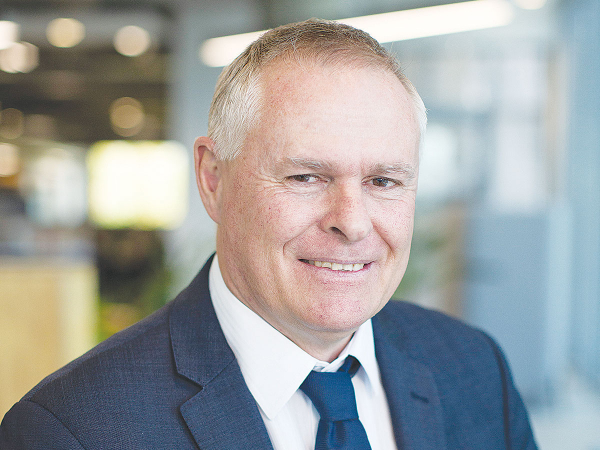 Fonterra chairman Peter McBride.
Fonterra farmer shareholders are being urged to have their say about how the co-operative's new capital structure should look.
Fonterra Shareholders Council chairman James Barron says the next few months will be crucial for the co-op's 10,500 farmers.
"Therefore, it is important for them to turn up at meetings and have their say about the co-operative's capital structure," he told Dairy News.
"For farmers this is not only about their individual farming business but the continuation of Fonterra as an inter-generational co-operative in the future," he says.
Barron says the council has been briefed on all the options on the table.
Over the next few months, councillors will accompany the Fonterra board and management as they seek feedback from farmer shareholders.
Barron says the council has a dual role to help farmers shareholders understand the options on the table, and ensure farmer perspective back to the board.
To help farmers, the council will engage external advisors who will provide their views on the proposal.
Post consultation, the council will work with the board to make any variations needed to get the final proposal over the line at the co-op's annual meeting.
Barron says the review process could be unsettling for some farmers but he urges them to be part of the discussions.
Fonterra chairman Peter McBride says the co-op is providing options so that all farmer shareholders can have a discussion and decide the best option.
"We are not saying here's our capital structure proposal, take it or leave it," he says.
"It's about understanding the hearts and minds of our shareholders; it's not the mind that just matters, it has to be the heart."
The co-op last reviewed its capital structure 10 years ago when Trading Among Farmers was introduced. Back then milk supply was growing rapidly in New Zealand. It now needs to be prepared for flat or potentially declining milk supply as a result of factors such as climate change impacts, regulatory changes, and alternative land uses, says McBride.
"Our co-op's financial performance will always be the main determinant of our share of New Zealand milk.
"But we also know that a more flexible capital structure, that caters for the diversity and different aspirations within our co-op, would support a sustainable future milk supply. This is critcial for us to deliver our strategy, which prioritises New Zealand milk."
Fonterra warns that declining milk volumes or more flexibility for farmers' shareholding requirements could cause the Fonterra Shareholders Fund size to grow significantly. That would mean the thresholds that were put in place to help protect farmer ownership and control could be exceeded within the next few seasons.
"To stay within the Fund size thresholds, our co-op would need to take action - such as buying back shares or units or increasing the thresholds to allow a greater degree of external investment. We don't think either of these are ideal outcomes.
"Buy-backs create an uncertain demand on our capital, potentially impacting our ability to invest in strategy and growth. Under the scenarios that we've modelled, buybacks could cost shareholders up to $1.2 billion over the next ten seasons," McBride says.
Fonterra has unveiled its annual results for the 2026 financial year, posting $27 billion in revenue and close to $20 billion returned to New Zealand farmer owners and unit holders.
Fonterra Co-operative Group has confirmed the independently assessed candidates standing for election to its board in 2026.
Fonterra has revised its Farmgate Milk Price forecast for the 2026/27 season, lifting the midpoint and narrowing the range on the back of improving global dairy commodity prices.
Outgoing Fonterra Co-operative Council chair John Stevenson says that it has been a privilege to represent the co-op's farmer shareholders.
OPINION: It seems Canterbury processor Synlait is still in the doldrums.


Farmers across parts of Southland and South Otago are continuing to deal with difficult conditions after a prolonged run of wet weather, with pressure building around feed supply, stock management, pasture damage, farm infrastructure and everyday workloads.
Federated Farmers says it welcomes Labour's commitment to reviewing the Sharemilking Agreements Act, calling on other major parties to do the same.
For Canterbury dairy farmers Sian Meijer and Rick Wobben, wearable technology has become one of their most valuable on-farm tools - helping manage 1850 cows across an expansive, high-performing dairy operation while improving efficiency, mating outcomes and day-to-day decision making.
Fonterra has unveiled its annual results for the 2026 financial year, posting $27 billion in revenue and close to $20 billion returned to New Zealand farmer owners and unit holders.
The first major update to the Dairy Cattle Code of Welfare in more than a decade has been released, marking what DairyNZ describes as an important step in ensuring animal welfare standards continue to evolve alongside scientific evidence and on-farm realities.
Ravensdown shareholders have elected Jane Montgomery and Kate Acland to the Ravensdown Board for three-year terms, following a closely contested director election.



OPINION: It seems Canterbury processor Synlait is still in the doldrums.
OPINION: Get offside with New Zealand First leader Winston Peters at your own peril.




